Archive for the ‘Ancient Africa’ Category
By: The Scribe on November, 2012
Well, some geek had a fantastic day at work. A new species of dinosaur, discovered in southeastern Morocco back in 2007, has been named after the flaming Eye of Sauron from J.R.R. Tolkien’s beloved Lord of the Rings novels and subsequent film adaptations by filmmaker Peter Jackson.
The dinosaur, which lived in North Africa around 95 million years ago, was identified only by a single fossil that included part of the upper skull, including—of course—the eye socket. Study leader Andrea Cau, from the Museo Geologico Giovanni Calpellini (Bologna, Italy) said that “the idea of a predator that is physically known only as its fierce eye reminded me of Sauron, in particular as depicted in Peter Jackson’s movies.”
Now named the Sauroniops pachytholus—literally “eye of Sauron” in Greek—the creature is considered a carcharodontosaur, a type of theropod dinosaur. And if you didn’t catch that, it means it’s a two-legged, flesh-tearing meat eater. Cau explained that the Sauroniops probably had “a long and deep skull bearing dozens of bladeline teeth.” When compared with other related species, the skull fossil suggests that the dinosaur was about 12 meters long (40 feet) during its lifetime.

This means the Eye-of-Sauron-asaurus may have been bigger than the more commonly known Tyrannosaurus Rex, but without additional fossils, it’s hard for palaeontologists to say for sure. This guy also had a distinctive bump on its forehead, which is thought to have been used for head-butting during things like mating displays or territory disputes.
Finally, it seems that the Sauroniops didn’t prefer living alone in a large tower, but along the banks of a wide delta in a hot climate, full of food like crocodiles and fish. Sounds somewhat preferable to a volcanic wasteland, all things considered.

By: The Scribe on March, 2012
 In a cave in South Africa, archaeologists discovered the layered remains of ancient mattresses from around 77,000 years ago—and if that isn’t interesting enough, it turns out modern humans aren’t the only ones concerned about bugs between the sheets! The ancient sleeping mat’s top layer was made with insect-repelling leaves that scientists believe were used to ward off mosquitos, flies, while also killing off lice.
This discovery from the Sibudu Cave site means the bedding is 50,000 years older than anything previously found at sites around the world. The compacted layers of bedding—accumulated over time during the site’s occupation—show that it was periodically burned, likely to prevent other pests and contamination from garbage or human excretions.
It’s also entirely possible that the insect-repelling plant layer represents the first known use of plants for medicinal purposes by early humans. The leaves of the tree species in the bedding, Cryptocarya woodii, excrete a chemical that repels insects.
Lyn Wadley, study leader from Johannesburg’s University of Witwatersrand, has said that “the mattresses would’ve been a very comfortable [and] long-lasting form of bedding. Hunter-gatherers tend to live with each other in kinship groups,” so it’s likely that the beds accommodated a whole family.
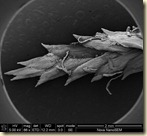 Although the ancient mattress layers only measured about 2 square meters (and 30cm high), it’s worth keeping in mind that ancient humans tended to be shorter and leaner than today’s average individual. Even if your family couldn’t fit on a space that small—and likely wouldn’t want to, considering the modern notion of “personal space” in Western society—that doesn’t mean humans who lived 77,000 years ago couldn’t sleep there or weren’t comfortable in such close quarters.
“The selection of these leaves for the construction of bedding suggests that the early inhabitants of Sibudu had an intimate knowledge of the plants surrounding the shelter, and were aware of their medicinal uses,” Wadley said. “Herbal medicines would have provided advantages for human health, and the use of insect-repelling plants adds a new dimension to our understanding of behavior 77,000 years ago.”
What were the rest of the mattress layers made of? Various collected grasses, sedges, and rushes… memory foam it wasn’t, but it sure beat sleeping on the cold ground!
By: The Scribe on December, 2007

In ancient times, the Kingdom of Mali was one of the wealthiest ancient Empires around – after all, it was the source of nearly half the world’s gold. Not surprisingly, this industrious Empire also had its own system of religious beliefs and customs, which included the production of complementary artifacts for those beliefs.
However, archaeologists also suspected that a little more than just plain sculpting went into many African artifacts, such as those from Mali – and so three analytical tests were done on seven Bamana and Dogon sculptures.
The results of the tests revealed that the beautiful, shiny patina on the outside of Malian works of art was created by a secret ingredient: blood. The ‘chemical fingerprint’ of blood showed up on each of the statues, confirming suspicions that these ritual statues were likely used for ceremonies that involved animal sacrifices, which may have made the statues representative of an animal’s death.
Want to read more?


Tomorrow: 2,000 year-old glue sticks!
By: The Scribe on October, 2007

Inside of a cave in South Africa, archaeologists discovered a half-meter of ancient trash that revealed a surprising amount of information about the people who lived at the cave site about 164,000 years ago. The tens of thousands of years worth of garbage included things like brown mussel shells, animal bones, and other remains of marine invertebrates.
During ancient times, the cave on Pinnacle Point would have been only a few kilometers from the ocean’s shore, which means that whoever lived in the cave had very easy access to the water’s resources – and it’s not too far-fetched to consider that these people probably had open fires on the beach where they ate their meals in good weather.
One odd thing that was found in the garbage was a whale barnacle. However, it probably isn’t that unlikely that – while these people wouldn’t have been sailing out to the sea to hunt whales – if a whale had washed up onshore at a some point, they probably would have eaten the whale and used its parts for resources.
Another thing that was found in the cave was a collection of ochre pieces. Ochre is a soft stone that can be scraped in order to create powders with strong, colorful pigments. The presence of bright ochre in ancient cultures is often associated with things like ritual and symbolism – namely, body painting! Most of the ochre found at the cave was red, so it’s entirely possible that the people living here liked to give each other red temporary tattoos, although the meaning of such decorations is impossible to determine.
Finally, the South African cave also yielded some tiny, sharp blades, often referred to as ‘bladelets’. At less than 10mm wide, they were probably attached to the end of a long stick, in order to create spear points – or they could have been lined up along a piece of wood or rope to create a deadly, barbed weapon.

Want to read more?


Tomorrow: a Peruvian drinking ritual & brewery burning
Next page


