Archive for the ‘Ancient Asia’ Category
By: The Scribe on November, 2013
It’s not every day that one discovers a secret monastery hidden underneath a historic tomb site… but that’s exactly what has happened in the Linzin Hill graveyard in Amarapura Township, Mandalay Division.
Archaeologists were excavating the tomb of King Uthumphon, who was brought as a prisoner of war to Mandalay Division in the 18th century, after being captured by Hsinbyushin, the third king of Burma’s Konbaung Dynasty.

In 1767, Hsinbyushin invaded Thailand’s ancient capital, Ayutthaya, and brought as many captured people back to his own capital, Ava, as possible for his army to move. The Thai king was among these people, and lived in monkhood until he died in captivity.
King Uthumphon’s life in monkhood during his captivity certainly helps to explain the monastery building hidden beneath his tomb, although archaeologists still aren’t certain whether the King actually lived there or if it was a home for other abbots.
It’s entirely possible that abbots lived there during King Bodawpaya’s reign between 1782-1819, or the building could be much, much older.
While there is still much excavation work to be done, plans are underway for a museum around Linzin Hill, and hopefully future work will shed addition light on the existence of this secret monastery underneath a king’s tomb!

By: The Scribe on May, 2013
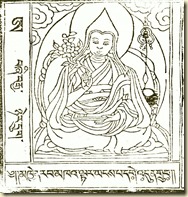 In the first post of this series, we learned about the origins of the ancient position known as Dalai Lama—leader of a Buddhist monastic sect which has been around for many centuries (and continues with the 14th Dalai Lama, alive today).
The first Dalai Lama came from humble beginnings as the son of Gonpo Dorjee and Jomo Namkha Kyi—nomadic tribespeople in central Tibet. Born in a cowshed in 1391 and given the name Pema Dorjee, he was raised as a shepherd until seven years old… when he was placed in the Narthang Monastery.
At the age of 20, he became a full-fledged monk and received his new name, Gedun Drup, as part of the vows. It wasn’t long before Gedun showed himself to be worthy of the position of abbot, and he quickly rose to prominence as one of the foremost scholar-saints in Tibet.
According to Buddhist tradition, Gedun received a vision from the sacred lake Lhamo La-tso’s female guardian spirit, Palden Lhamo, which said that she would protect the reincarnation lineage of the Dalai Lamas—essentially promising his reincarnation in a successor.
During his time as an influential scholar and spiritual man, Gedun founded several monasteries and wrote a number of philosophical texts. And unlike the Dalai Lamas of today, Gedun held no political power whatsoever.
It’s also notable that it wasn’t until long after his death in 1474—while meditating at 84 years old!—that he received the title Dalai Lama.
By: The Scribe on May, 2013
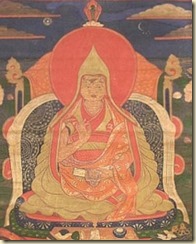 Believe it or not, the role of Dalai Lama hasn’t been around all that long! There have only been 14 Dalai Lamas since the first one took his position of authority in the late 14th century.
The first Dalai Lama was Gedun Drub, born in 1391. He became founder of the Tashi Lhunpo monastery, and wrote many books on philosophy. What was the point? To put it bluntly, he and some other Buddhists thought that people were getting lazy and stupid.
The monastery became home for the “Yellow Hat Sect” of Buddhist monks, or Dgelugs-pa. They’re known for restoring discipline to the monastic lifestyle, promoting vigorous and rigorous academic studies, and minimizing the increasingly common reliance on magical rites.
The renewal of the Buddhist monastic lifestyle also imposed a vow of celibacy and abstinence from alcohol and meat for all monks in the sect.
As tough as it might have seemed for the monks, the Dalai Lamas haven’t had it easy personally, either. Up until 1578, the first and second gentlemen were only known as “abbots”—they didn’t even have a fancy title! It was the third successor who received the title of Dalai Lama, meaning “Ocean of Wisdom,” from the Mongolian king Altan Khan.
During these early centuries, four successors to the position died in their youth.
What does it mean to be a Dalai Lama? Buddhists from this sect believe that the Dalai Lama is a reincarnation of a past lama who made the conscious decision to be re-born, in order to continue his very important work. All Dalai Lamas since the first abbot, Gedun Drub, are reincarnations of Gedun Drub, who lived until 1474.
This means it can take some time to find the new Dalai Lama after the previous one dies! How do they know who the reincarnated child is? There are a number of rituals that High Lamas endure to pinpoint the location of the reborn Dalai Lama, after which they will bring a number of artefacts to the child’s home. If the child chooses the correct artefacts—namely, those that belonged to the Dalai Lama—it’s seen as a sign of reincarnation.
By: The Scribe on April, 2013
This is a story that could be straight out of an Indiana Jones movie: An ancient artifact made from space rock, stolen by Nazis and recovered decades later!
 Sounds crazy, right? But that’s exactly what happened! In 1938, a Nazi expedition recovered a thousand-year old Buddhist statue that weighs about 10kg and is 9.5 inches tall. No one is quite sure how the statue was found, but a large swastika carved into the statue may have been the source of encouragement for the team to take it back to Germany (note that before the Nazis adopted the swastika for their own purposes, it was simply a geometric shape used by many ancient cultures).
Once the statue arrived in Munich, it went through its paces and ended up as part of a private collection… until 2009.
The statue, also called the “Iron Man,” was studied by a team from Stuttgart University. They were able to determine the statue is made of ataxite, a very rare class of iron meteorite. According to team leader Dr. Elmar Buchner, “the statue was chiseled from an iron meteorite, from a fragment of the Chinga meteorite which crashed into the border areas between Mongolia and Siberia about 15,000 years ago.”
Now, the statue itself isn’t actually of Buddha, but portrays a Buddhist god named Vaisravana, god of wealth and war. It’s believed to have originated from an 11th-century pre-Buddhist Tibetan Bon culture.
It’s not that unusual that this ancient culture would have carved a statue out of meteorite, either. Many ancient cultures worshipped meteorites through their own rituals and tributes, and it makes logical sense that a devotional statue would be created from the material… despite how hard it is to work with.
It’s also the only known meteorite statue to depict a human figure.
Little else is known about the statue at this time, due to the lack of information surrounding its Nazi retrieval. However, it’s still considered an invaluable artifact that reveals more about the ancient Bon culture—and Nazi artistic preferences.
Next page


