Archive for the ‘Ancient Egypt’ Category
By: The Scribe on May, 2013
Sadly, not all discoveries in archaeology are of the “amazing!” and “how fascinating…” variety. Sometimes we learn a little more about ancient times and are saddened by the truth of the past. It’s easy to idealize ancient cultures, because most of what’s left behind presents a one-sided picture of ancient society. Aside from the remnants of war, the ugly bits of everyday life aren’t as easily found or seen.
 One of those heartbreaking discoveries has come to light in the Dakhleh Oasis in Egypt’s Western Desert, at a 2,000 year old burial of a child. The body, buried in what’s known as the Kellis 2 cemetery, displays signs of what may be the earliest known case of child abuse in the archaeological record—and the first case ever found in Egypt.
The Dakhleh Oasis town of Kellis has been continually occupied since Neolithic times, making it a key site for understanding the archaeological record of the area. The cemeteries located near the oasis are also highly valuable in that they’re allowing scientists to examine the early beginnings of Christianity in Egypt.
The body of the 2 or 3-year-old child, buried during a Romano-Christian period, was buried according to early Christian mortuary practices. Burial 519, as it was first known, seemed like a typical burial until lead researcher Sandra Wheeler and colleague began to notice fractures on the skeleton—arms, collarbone, and elsewhere.
Although other child skeletons have shown skeletal trauma, “this is the only one that had these really extreme fracture patterns”, says Wheeler. X-rays and other procedures on the skeleton showed additional fractures on the ribs, pelvis, back, and forearm. The injuries were also at different healing stages when the child was buried, suggesting strongly that the trauma was repeated and nonaccidental.
And while researchers can’t say with absolute certainty that the fractures are diagnostic evidence of child abuse, one set of fractures on the child’s upper arms—fully broken bone, on each arm—would have taken significant force to create. Researchers have been able to deduce through modern clinical knowledge that in order to create those types of breaks, someone would have had to grab the child’s arms and used them to violently shake the toddler.
Other injuries, such as those to the ribcage and spine, were likely the result of direct blows to the body.
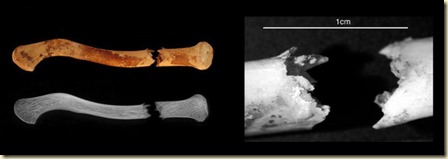 Did the abuse cause the child’s death? Archaeologists and researchers are not certain, though the collarbone break shown above may have contributed to it.
One good piece of news out of this discovery is that the child in Burial 519 was the only child skeleton (out of 158!) in the cemetery to show evidence of abuse, suggesting that child abuse was not a normal practice in this ancient community. Rather, all other evidence confirms the common belief that Egyptians highly valued children as members of society.
Carbon dating shows that the cemetery was in general use between 50 and 450 A.D., during a Roman period in Egypt—Romans had quite a different concept of children, and were not afraid to use corporal punishment. It’s possible this abuse case may have been a result of Roman influence, but we may never know for certain.
(Research on this case will be published in an upcoming issue of the International Journal of Paleopathology.)

By: The Scribe on May, 2013
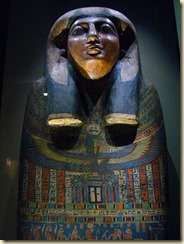
 Poor Princess Ahmose Meryet Amon. She lived around 3500 years ago, and died in her 40s. Like most royals, she was mummified and in this case, entombed at Deir Al-Bahri on Luxor’s west bank (though visitors to the Egyptian Museum in Cairo can now see her there).
Scans of the princess’s body revealed some interesting details about royal life and premature death in ancient Egypt. Indeed, she was revealed to be the earliest known sufferer of a condition caused coronary atherosclerosis: a buildup of plaque in the arteries, which can lead to heart attacks, strokes, and death.
Princess Ahmose evidently lived the good life in the royal household, because five of her major arteries contained blockages—including the ones that supply blood to the heart and brain. According to Gregory Thomas, professor of cardiology and co-leader on this major study about Egyptian mummies’ arterial health, said “if the princess was in a time machine and I was to see her now, I would tell her to lay off the fat, take plenty of exercise, then schedule her for heart surgery. She would require a double bypass.”
Normally, a mummy’s internal organs and heart are removed as part of the mummification process, but CT scans of the princess and other mummies from the Egyptian museum revealed calcification at organ sites that indicate artery damage.
In combination with the CT scan results, a medical text that dates back to around 1550/1580 B.C. (when the princess lived) describes the symptoms of chest and arm pain that precede severe or fatal heart attacks.
 And while the ancient Egyptians didn’t have many of the modern risk factors available to them that we tend to associate with heart disease and atherosclerosis (ie. smoking, obesity, trans-fatty foods, diabetes), royal persons like the Princess Ahmose were members of the elite… and therefore more prone to developing heart disease than the average ancient Egyptian.
Adel Allam, professor of cardiology at Al Azhar University in Egypt, commented that “even the very poor people would eat a lot of pork, and the bread became mixed with honey. If ordinary people at this time did get a lot of carbohydrates and fat in their diets, then of course the elite would have got even more unhealthy food.”
In fact, some previous studies have revealed evidence for diabetes in ancient Egypt, despite being often thought of as a modern disease. Medical papyri written by ancient physicians refer occasionally to diabetes symptoms in their patients.
Additional research is being done on the princess and the other mummies, however, because there may also be a genetic element involved in who developed atherosclerosis—as well as the possibility that it can be brought on by chronic inflammation through an ongoing immune system response (ie. autoimmune condition).
Princess Ahmose, sadly, was known to have suffered arthritis and joint inflammation, as well as from dental disease—all which may have been a result of poor diet, thereby contributing the the development of atherosclerosis and bringing about her early demise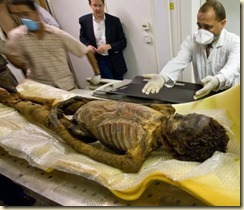
By: The Scribe on March, 2013
 Oh, those Egyptians. They have so many beautiful tomb paintings, papyrus scrolls full of art, and sculptures, and look at all those lovely people holding beautiful white and blue flowers… they must really love their flowers. Who wouldn’t, right?
But, wait… why are they all holding the flowers to their noses and mouths? Surely everyone wasn’t sniffing their flowers all the time, were they?
Actually, maybe they were, but probably not for the reason you think. Rather, they were likely, uh… getting high.
However, first it’s worthwhile to mention that the blue lotus isn’t actually a lotus. It’s a water lily, but we’ll be using the word “lotus” for the sake of convenience and familiarity. This particular flower was closely linked with the rising & setting sun for the ancient Egyptians, and was the flower belonging to the god of the sun and perfume, Nefertem.
 Apparently, Nefertem brought a blue lotus to the sun god Ra in order to help “ease the suffering of his aging body.” The perfume of the flower was thought to have a healing quality, so the Egyptians liked to sniff it at parties, when they felt they needed healing, or as part of rituals… however, the exact details on this are still under debate.
Some studies were done on the blue lotus to see if it had any psychotropic or narcotic effects, and conclusions were a little shaky—one thought was that the flower was infused with wine to change its chemical content, and after a period of fermentation, the wine would be drunk. However, the lack of a control group meant the results were unreliable, so it remains unknown if this theory holds any weight.
That said, it seems fairly well accepted that the blue lotus has a somewhat hypnotic effect at low doses, along with being a mild stimulant for the libido.
Whether used for perfume, for healing, just to get high, or to get one’s mojo back, the ancient Egyptians definitely had a use for the flower… there’s a reason it shows up in their artwork so often!
By: The Scribe on March, 2013
Recent excavations at Luxor’s west bank in Egypt have uncovered a previously undiscovered collection of black granite statues that depict the ancient Egyptian goddess Sekhmet in her lioness form. The excavation is part of an ongoing project at King Amenhotep III’s funerary temple at Kom Al-Hittan.

These aren’t the first statues from the funerary temple, either—the Egyptian-European project (led by German Egyptologist Horig Sourouzian) has uncovered 64 other statues of Sekhmet in a variety of shapes and sizes.
 And typical to depictions of Sekhmet, the goddess is depicted in the new collection of statues with a human body and the head of a lioness, and sitting on a throne.
Finding so many statues of Sekhmet at this one location says a lot about the temple and the time period. The goddess played an important role during the 18th Dynasty, particularly during the reign of Tutankhamun’s grandfather, King Amenhotep III.
According to Egypt’s minister of state for antiquities, “some Egyptologists believe that King Amenhotep constructed a large number of goddess Sekhmets in an attempt to cure him of a specific disease that he suffered during his reign.” Although the goddess is best known for her aspect as goddess of war and destruction, she was also considered to have the ability to cure serious diseases.
Of the new statues found, they’re considered “very well preserved”, and one of the figure is over two meters tall!
And apparently this wasn’t the only place the lioness goddess held sway—on Luxor’s east bank, the temple of the goddess Mut also held numerous Sekhmet statues. The west bank temple, according to Luxor’s supervisor of antiquities, was a “symbol of stability and prosperity” during King Amenhotep III’s reign.
…or maybe he just really liked lions.
Next page
 One of those heartbreaking discoveries has come to light in the Dakhleh Oasis in Egypt’s Western Desert, at a 2,000 year old burial of a child. The body, buried in what’s known as the Kellis 2 cemetery, displays signs of what may be the earliest known case of child abuse in the archaeological record—and the first case ever found in Egypt.
 Did the abuse cause the child’s death? Archaeologists and researchers are not certain, though the collarbone break shown above may have contributed to it.


