By: The Scribe on December, 2013
In December 2010, our Scribe revealed some history about the island of Greenland. How did it get its name? And why call Greenland “green,” when it’s clearly full of ice?
Naturally, the story involves Vikings—and a possible misunderstanding between languages!
Follow this link to read How Greenland Got Its Name.
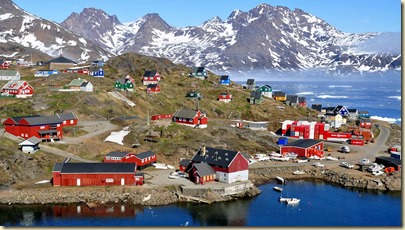
Fun Bonus Fact: Scientists have estimated that the ice sheet that covers Greenland is between 400,000-800,000 years old! It covers approximately 80% of the island, and is about 3 kilometers thick in places… so the ancient settlers to the island probably didn’t see much difference in appearance or terrain from what we see today.

By: The Scribe on September, 2013
 Two thousand meters up in the Norwegian mountains, humans and animals of the Iron Age trekked across dangerous paths in an effort to take a shortcut to get to their destination. Instead of taking the long journey around, they went directly over the mountains—and it must have been an effective path, because it was used all the way through the medieval period as well.
But times are a’changing, and the ice is a’melting.
Norwegian climate experts predict that the ice in the high mountains of Norway will be gone by the end of the century, which means that any historical or archaeological finds trapped in the ice will be uncovered as the ice melts.
Why would there be items trapped in ice? Imagine that travelers used this route for hundreds of years, maybe thousands. How often do you drop things when you’re out and about? How much worse would it be if you had your things strapped to the back of a horse or donkey?
Archaeologists have found 1,000-year-old horse manure on the route, as well as horse shoes and a perfectly preserved 1,700-year-old woollen tunic that was almost completely intact. And now they can add an actual horse to the list!
The horse remains were only bones by the time the team made the find, but it confirms the route and the necessity of taking horses across the difficult mountain paths.
The paths were also used for hunting reindeer, who would move up to the cooler mountain areas during the heat of summer, and it’s likely that hunters used horses to move reindeer carcasses from the mountains down to the villages below.
Sadly, this poor horse was obviously unable to complete its appointed task.
By: The Scribe on April, 2012
 Picture, if you will, a ship full of fierce, angry Vikings. They’ve spent countless days at sea, and they’re ready for some serious pillaging. They drop anchor, heave their axes, and burst upon the land with a wave of destruction that gains them a fearsome reputation for generations to come…
…and as the men sweep through villages and plunder women and livestock, another invader quietly slips down the ropes of the docked ship, or hides in sacks and crates until reaching the shore, where they creep off into dark corners or small holes, infiltrating the land in a way only they know how.
Ah, yes. Rodents. Mice, in particular. Perhaps the cleverest of invaders, or we might say in this case, colonizers. The mice didn’t just arrive with the Vikings to eat food and take over land, but rather, they looked around, thought the place seemed like a decent enough neighborhood to raise kids, and stuck around.
Between the late 8th and mid-10th centuries AD, Viking invaders took over land and settled their own people in many regions, including France, Scotland, England, Ireland, Iceland, Greenland, and Newfoundland. While house mice are known to have lived alongside humans from as early as 8,000 B.C. in the Ancient Near East, they evidently did more than that—they traveled and moved with humans at the same time.
To learn this, scientists compared the DNA of modern mice with that of mouse remains found on archaeological sites at these Viking-settled locations. It turns out that the mice hitched a ride on Viking ships from Norway or the northern British Isles (which were settled early by Vikings). DNA samples of ancient Viking house mice were found at nine sites in Iceland and several in Greenland, though surprisingly none seem to have made it over to Newfoundland.
It’s thought that the mice hid in hay bales and other crates of food supplies.
 The study’s leader, Dr. Eleanor Jones (University of York and Uppsala University), says that "human settlement history over the last 1,000 years is reflected in the genetic sequence of mouse mitochondrial DNA. We can match the pattern of human populations to that of the house mice." In other words? House mice did just as much raping and plundering of the land as the Vikings did, “mirroring” their invasions!
However, the Viking mice in Greenland were eventually ousted by a Danish mouse species (brought by other human colonisers), and are now extinct.
As for the strange lack of Viking house mice in Newfoundland? Cornell University’s Professor Jeremy Searle postulates that the “absence of traces of ancestral DNA in modern mice can be just as important. We found no evidence of house mice from the Viking period in Newfoundland. If mice did arrive in Newfoundland, then like the Vikings, their presence was fleeting and we found no genetic evidence of it."
Makes you think twice about setting down that mouse trap, hmm?
By: The Scribe on December, 2010
If you have ever been to Greenland, you know that it does not live up to its name. Instead of being a beautiful, green island Greenland is icy and cold. There have been many theories about how the island, along with nearby Iceland came to be named what they were. The secret lies with the Vikings who settled in Iceland and in many different areas of Northern Europe.
The Vikings were a race of Scandinavians who settled in many areas of Northern Europe. Although they are commonly portrayed as bloodthirsty warriors who pillaged, raided and raped their way through much of Europe they also had a thriving culture. While it is true that many of them were violent and blood thirsty there were also Viking traders and explorers as well. 
They were able to explore much of Northern Europe using their famous long ships. The design of these ships was very different than many of the sailing vessels we are familiar with today. A Viking ship did not have a large keel like other sailing vessels did. This meant that it could sail in shallow rivers as well as at sea. Viking raiders were able to use their ships to penetrate inland and then attack outwards from there. In areas such as Ireland, this tactic proved to be exceptionally successful.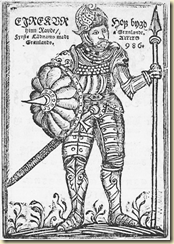
One Viking in particular, Erik the Red was very good at raiding and pillaging. Although history is somewhat sketchy, it is believed that he discovered Greenland after being sent away from Iceland in exile. This was rumored to have been his punishment for committing murder. He was able to settle in Greenland and survive there for several years. Finally, his exile was ended and he found that he wanted to settle the island more fully. For that, he needed to convince others to come with him. Erik the Red is believed to have lived from circa 950 to 1003CE.
Of course, when you tell someone that they will be travelling with you to a place that is barren, cold and inhospitable you may have trouble convincing even a Viking to come with you. So instead, Erik (according to popular legend) called the island Greenland and instead painted the island as being a wonderful place to settle.
There are other theories as to how Greenland got its name. One theory is that the “green” in Greenland is actually a translation error. The word “grunt” actually means ground and it could be that Greenland was meant to be named Gruntland (or ground land).
The island has never been heavily populated. Much of it is covered by a sheet of ice. The only area that is not covered in ice is only clear because the air is so dry that ice cannot form. Many Native cultures have used the island as a hunting ground and several nations have used the island as a strategic launching point or a base during various conflicts and wars.
The island is currently owned by Denmark despite previous attempts by the United States to purchase the island.


