Tigranes the Great: Whom Emperors Feared – Part 1/3 (ca. 95-55 BC)
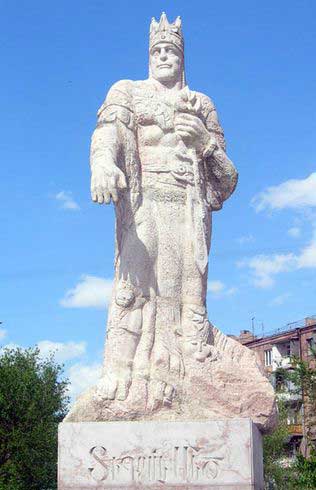
Born in 140 BC, Tigranes the Great was an intelligent man whose military exploits, for a short while, earned him the position of the most feared man in the Roman Empire. As king of Armenia, he was a representative of the Artaxiad Royal House and was married to Cleopatra of Pontus – he was forty-seven and she was only sixteen at the time of the marriage.
For the majority of his life, Tigranes was a hostage at the court of King Mithridates II of Parthia – when he was 40 years old, Tigranes was able to purchase his freedom by giving away an area of land called the “Seventy Valleys” to the Parthians, and only then did they allow him to do so because his father had died, leaving the throne open to his succession.
When Tigranes took power, the foundation of the empire in Armenia had already been well laid by his father. However, the Armenian mountains created natural borders between different sections of the country, which had caused the feudalistic Nakharars to exert a little more power over their regions and provinces than was appropriate. Naturally, Tigranes saw that this could cause significant problems in the future, and he decided that he’d much rather consolidate his power in Armenia before heading out and conquering more land – leaving the door open for regional leaders to revolt really wasn’t an option.
After taking care of the organizational matters in his own empire, he quickly forged an alliance with Mithridates VI of Pontus by marrying his daughter. The two leaders were able to forge their way into Asia Minor and began to expand their empires together – but it wasn’t long before the Romans noticed what was happening. In 90 BC, the Roman Republic sent legions after Tigranes and Mithridates, but Tigranes thought better of fighting the Romans at this point, and although he supported the Pontic alliance, he refused to get directly involved.
With Tigranes forging new ground in the East and his ally gaining ground in Roman-controlled Europe, the Romans realized that more needed to be done. In 88 BC, Mithridates ordered the massacre of 80,000 Romans in Asia – and as the two kings slowly made their way around Cappadocia, the Roman senate appointed Lucius Cornelius Sulla to command an army against the Pontics and Armenians.
As the power of the Roman Empire advanced on Mithridates, it looked as though the dynamic duo’s partnership would soon come to an end…
Want to read more?


Tomorrow: Part 2!


