Archive for the ‘Ancient Greece’ Category
By: The Scribe on March, 2011
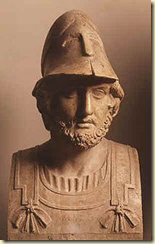 Greece and Persia were never known for getting along well. In fact, Persia had an almost permanent hatred for Greece and tried to invade several times. The first Persian invasion of Greece took place in 492 BCE. The Greeks were able to defeat them although it took them two years to do so. The final battle of this invasion was the Battle of Marathon. Persia hated Athens and Eretria because they had helped support the cities of Ionia when they revolted against Persia.
One man who fought at the Battle of Marathon was the Athenian general and politician Themistocles. He lived from 524 BCE to 459 BCE. One of his main goals was to increase the naval power of Athens and began his campaign to do so after being elected to the position of archon in 493 BCE. It is believed that he acted as one of 10 Athenian generals during the Battle of Marathon.
After the Greeks defeated the Persians, there was a temptation on behalf of the Athenians to divert money away from the navy into other areas that needed funding. Themistocles didn’t agree with this plan. He wanted the Athenian navy to remain strong and managed to convince the Athenians that the people of Aegina were an ongoing danger to Athens. This wasn’t actually the case but because of this, the Athenians were willing to build a new fleet made up of 100 triremes which made them a powerful naval force that was very difficult to defeat.
Themistocles used subterfuge in order to give Athenians the advantage during the second Persian invasion, which took place from 480 BCE to 479 BCE. This time, instead of Darius trying to punish Athens and Eretria, the second invasion was an attempt by Darius’ son, King Xerxes I, to completely conquer Greece altogether. It was believed that Themistocles was sending messages to Xerxes. He claimed that some of Xerxes’ allies, the Ionians, were actually much less loyal than they actually were. He also sent messages to the Persians which stated that the allied Greek navy was in a much worse condition than it actually was.
Not only did Themistocles manage to cause problems within the Persian army, he was also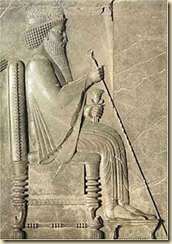 able to find out important information that gave the Greek soldiers the advantage at the battle of Salamis. This gave the Greeks the upper hand and made it possible for them to eventually defeat the Persians at the Battle of Plataea that ended the second invasion.
After the second Persian invasion, Themistocles’ career began to go downhill. He continued to be an important political figure in Athens but in the process, he earned the hostility of Sparta, a sister state of Athens. He ended up alienating the people of Athens and was ultimately ostracized in either 471 BCE or 472 BCE. After that happened, he travelled to the Argos where he lived in exile. Ultimately, he ended up in the service of the Persians under King Artaxerxes I. He ended up becoming a governor of Magnesia, an ancient Greek city that was located in Anatolia. He ultimately died in 459 BCE of natural causes.

By: The Scribe on January, 2008

Apparently, the ancient Greeks were concerned more concerned about cleanliness and bacteria that they’re given credit for! In ancient Greek mythology, the goddess Hygieia was the daughter of the god Asclepius – the god of medicine and healing – and was associated with preventing sickness and the preservation of good health. Essentially, she was the goddess of cleanliness, health, sanitation… and the moon, oddly enough.
It’s thought that Hygieia might have had her own cult as early as the 7th century BC, but it is more likely that during this period, the goddess Athena was associated with this title – in Plutarch’s writings, he mentions a bronze statue of ‘Athena Hygieia’. However, the early years of the cult were strictly local, and it was only after the ‘Cult of Hygieia’ was recognized by the Oracle of Delphi that the goddess’ worship began to spread.
It probably also helped that there were several critically devastating plagues in Athens in 429 and 427 BC, which was when the cult began to rise in prominence. Another plague at Rome in 293 BC also helped to secure her position there – the people were desperate for help in the face of such a dire situation, so naturally they turned to a goddess who was supposed to be in charge of health.
The largest temples and centers of worship for Hygieia were at Epidaurus, Corinth, Pergamon and Cos – and in these temples were statues of Hygieia to which suppliants would bring offerings. The Greek traveler and geographer Pausanias noted something very interesting about these statues – he noticed that in one Asclepion he visited, the statues of Hygieia were covered in women’s hair and piece of Babylonian clothes! According to inscriptions, the same types of offerings were also made on the Cycladic island of Paros.
Hygieia was a popular subject for artists from the 4th century until late in the Roman period. A Sicyonian artist named Ariphon, during the 4th century, even composed a hymn in celebration of the goddess, and a number of renowned ancient sculptors were responsible for creating statues in her image – including Scopas, Timotheus, and Bryaxis.

In terms of representation, she was often depicted as a young woman feeding a very large snake, which happened to be wrapped around her body. In a number of cases, the snake would be shown drinking out of a jar that she carried in her other hand – which is the origin for one of today’s modern symbols of pharmacy, the Bowl of Hygieia.
Want to read more?


Tomorrow: More Ancient Standard
By: The Scribe on December, 2007
We apologize for the lack of posts recently, I lost my best quill and had to search the markets for a replacement. Thank you for your patience – The Scribe
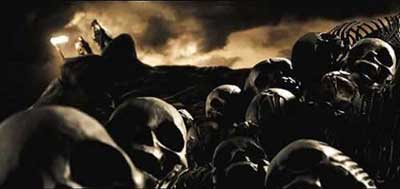
So… it turns out that the Classicists were wrong. Or at least, their sources were wrong. The belief that ancient Spartans ‘purged’ their population of weakness was a bit of an exaggeration, to say the least – apparently Spartans didn’t throw their babies off cliffs after all.
Archaeological digs in the area of ancient Sparta turned up plenty of human remains from a spot called ‘the pit’ – also called an ‘apothetes’ – that belonged to teenagers and adults ranging between the ages of 18 and 35, which would have been the prime fighting age range for men in ancient times.
The bones at the bottom of the pit were distinctly lacking in one feature – the inclusion of bones from newborn babies. It seems that even though the ancient Spartans didn’t throw their sickly or deformed babies off of cliffs, other ancient Greek writers made the decision to start the myth in order to demonstrate the intensity of Sparta’s military focus.
Instead, the bones in the pit came from approximately 46 different men who lived during the 6th and 5th centuries BC – confirming a different rumor that Spartans tended to throw criminals, prisoners, or traitors into the pit. It is known that during a war between Sparta and Messene – a city-state near Sparta – the Spartans defeated Messene’s hero Aristomenes and 50 of his warriors, and threw all of them into the pit.

As brutal as the Spartans may have been to their enemies, the discovery sets the record straight about how they treated the more sickly members of their own society – likely just as well as anyone else, probably setting them in service positions if they were too weak to serve in the military. Although for a Spartan that would have been shameful enough, but at least they were allowed to live. The unfounded rumor about baby-chucking was first begun by the historian Plutarch in the 1st century AD.
Want to read more?


Tomorrow: More Ancient Standard!
By: The Scribe on November, 2007

Often considered synonymous with ‘adventurer’ or someone who has exceptional sailing skills, the truth of the matter is: the Argonauts were not real people.
The Argonauts were a group of heroes from Greek mythology who, before the familiar story of the Trojan War apparently took place, accompanied the hero Jason on his quest for the Golden Fleece in the kingdom of Colchis. These men were known as Argonauts simply because they sailed on a ship called the Argo, which was named for its builder, Argus. Literally, “Argonauts” translates as “argo sailors.”
During the period when the tale of Jason and the Argonauts was supposed to take place, a prehistoric tribe of people is known to have lived in the area, and thus when historians attempt to pinpoint exactly who the Argonauts would have been – if they were real – they will sometimes refer to the heroes as ‘Minyans’. The Minyans were real, the Argonauts weren’t – which tends to be where the confusion sets in.
The Argonauts consisted of approximately 50 men, and the team was supposedly assembled after an oracle was received by King Pelias. What many people don’t realize, however, is that the heroes who made up the group of Argonauts are not faceless characters – a relatively comprehensive list exists of all the men who were a part of Jason’s Argonauts, and among them? An extremely familiar individual: Hercules.
Hercules actually played quite a central role in the tale of the Argonauts, and it was his idea to appoint Jason to be their leader in the first place. However, Hercules did not complete the quest for the Golden Fleece with the rest of the Argonauts – after his companion Hylas was abducted by nymphs while the Argonauts were on land, Hercules was distraught and began searching for Hylas, unable to concentrate on anything else. Eventually, the Argonauts were forced to set sail without him, leaving Hercules behind to continue the search for his companion.
After the quest for the Golden Fleece, the remaining Argonauts either went back to their lives or onward to other journeys in future myths. Some familiar names from mythology who are typically counted among the Argonauts are: Admetus, Atalanta (though this is disputed, as she was female), Castor and Pollux, Laertes (the father of Odysseus from Trojan War fame), Philoctetes (who later fought in the Trojan War), Nestor (an old, wise leader during the Trojan War), and the famous figure who descended to the Underworld to find his dead wife – Orpheus.
Want to read more?


Tomorrow: More Ancient Standard
Previous page | Next page
 Greece and Persia were never known for getting along well. In fact, Persia had an almost permanent hatred for Greece and tried to invade several times. The first Persian invasion of Greece took place in 492 BCE. The Greeks were able to defeat them although it took them two years to do so. The final battle of this invasion was the Battle of Marathon. Persia hated Athens and Eretria because they had helped support the cities of Ionia when they revolted against Persia.
 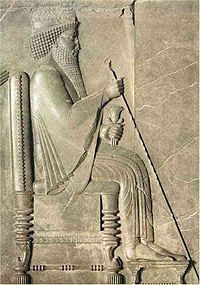 able to find out important information that gave the Greek soldiers the advantage at the battle of Salamis. This gave the Greeks the upper hand and made it possible for them to eventually defeat the Persians at the Battle of Plataea that ended the second invasion.