By: The Scribe on Wednesday, April 3, 2013
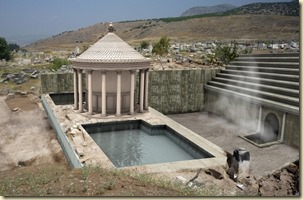 Sorry, Buffy, but it looks like your small town problems were nothing compared to the real Hellmouth discovered by Italian archaeologists in southwestern Turkey!
Whether the Slayers of ancient times knew about it or not (Editor’s Note: Yes, we know Buffy is fictional. No, we don’t particularly care.), the ruins from Turkey are known as Pluto’s Gate or “Plutonium” in Latin, and during its time it appears that a cave among the ruins was known in Greco-Roman tradition & mythology as a portal to the underworld.
The cave ruins are located in an ancient Phrygian city called Hierapolis, and the ancient geographer Strabo described the site as being “full of a vapor so misty and dense that one can scarcely see the ground. Any animal that passes inside meets instant death.”
Writing sometime between 7-18 AD, Strabo says he conducted an experiment at this site during ancient times: “I threw in sparrows and they immediately breathed their last and fell.”
And now we know exactly where that hellmouth is!
The location was announced at an Italian archaeology conference in March 2013, with the find made by a team from the University of Salento. Lead archaeologist Francesco D’Andria says the team “found the Plutonium by reconstructing the route of a thermal spring.” During the excavation, they observed the death of several birds who died as they tried to get close to the opening’s warmth… and were immediately killed by the lethal carbon dioxide fumes.
 Once excavated, the team found Ionic columns with a dedication inscription to two well-known underworld deities, Pluto and Kore—or perhaps better known by their Greek names, Hades and Persephone. The team also found temple remains, steps, and a pool that matched the ancient source material descriptions.
D’Andria mentioned that small birds were given to pilgrims at the cave opening so that they could test the deadliness at its mouth, providing a sort of ancient tourist attraction… and of course, there were priests at the location too. In this case, they did a lot of bull sacrificing to Pluto. While hallucinated, of course (would you expect anything less?)—the priests would drag the animals into the cave, wait for them to die, and then drag them out.
It’s thought that the groundwater pool at Hierapolis gave off fumes that caused a hallucinogenic effect similar to that at Delphi, which was another incentive for pilgrims to visit—they could see visions of their futures and receive prophecies by sleeping between the cave mouth and the water.
The site was a popular destination until sometime in the 4th-century AD, and infrequently afterward until its destruction in the 6th-century… was a Slayer responsible for closing this particular hellmouth, too? That’s for you to decide…
By: The Scribe on Monday, April 1, 2013
Okay, so it wasn’t the kind of pollution you might see over the skies of a major city, but in ancient Rome, spiritual pollution was even more important—possibly important enough to sacrifice lives over!

One of the obscure ancient rituals from Rome was an observance called the Argei, which happened twice a year and which was so obscure that, well… by the time Augustus came to power, most of the people who observed Argei didn’t even know what they were doing!
The Argei rituals were held in mid-March and mid-May. There were 27 shrines associated with the ritual—called the Shrines of the Argei, or sacra Argeorum—and during the March observance, participants visited all 27 shrines and are thought to have deposited puppet-like figures inside of them. These figures, or effigies, were thought to absorb pollution during the following months, and were then removed during the May observance.
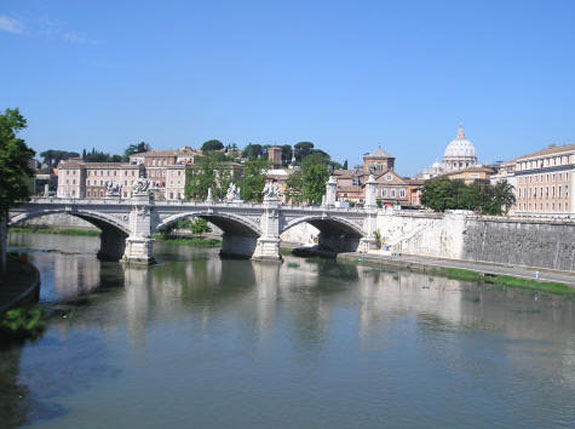
And then thrown off a bridge into the Tiber River.
But the effigies weren’t always little figures made out of reed, straw, and rush and formed like humans… no, in fact it’s thought that one man for each of the families living near the banks of the Tiber were required to offer one man for sacrifice. However, this tradition was likely done so early that the original inhabitants of the area were Greek.
That said, Ovid wrote that the practice of human sacrifice during the Argei was put to an end by the hero Hercules and never actually practiced by the Romans themselves, so… take from that what you will.
Another writer, Dionysus of Halicarnassus, explained that the victims for these early human sacrifices were men over sixty—in other words, on death’s doorstep anyway—and that they volunteered for the ritual rather than were forced or chosen by outside parties.
There are many varied and differing opinions on what the Argei really were—another theory is that the effigies were representative of a very early mass sacrifice of humans, given in exchange for the river’s blessing to build a bridge across it—and even the early writers don’t agree on what it was!
Why would people celebrate something so obscure that they didn’t even know the origins of it anymore?
It’s not that strange, when you think about it… after all, how many modern holidays do you know the real origins of?
By: The Scribe on Wednesday, March 27, 2013
The problem of species extinction isn’t a modern-day invention—the story of how the dodo became extinct is probably one of the earliest non-dinosaur examples that everyone knows about, but dinosaurs and dodos aside, extinction has been an issue for… well, as long as humans have been around to mess things up.

A recent report has found that the first humans to settle the Pacific Islands weren’t just exploring and discovering… they were also destroying, and ended up leaving “a wave of extinct bird species in their wake.”
Humans are known for their destructive tendencies on existing species, but usually it’s the land mammal populations that suffer—creatures who are large enough to provide meat and resources. Historians and biologists are well aware that numerous large species in Australia were hunted to extinction about 40,000 years ago, and the first North Americans are guilty of the same between 10,000-20,000 years ago.
But when humans trekked their way to the Pacific Islands between 3500 and 700 years ago, they discovered something incredible! A number of bird species had actually evolved to be flightless, fearless, and more than a little rotund. The ecosystems of islands like Hawaii and Fiji had no real predators for these birds, so they just didn’t bother to fly anymore… why would they need to?

Sadly, humans thought this meant open season on the bird species, and hunted many of these species to extinction—and the other species? Well, because humans started burning away trees and natural plant life for the sake of agriculture, the other birds lost their habitats and died out that way.
The fossil record shows the extinction of these species, but until recently that record was rather incomplete. Some rough estimates on the numbers of total bird extinction have ranged from 800 to 2000 species. A study done at the University of Canberra has now pegged a more accurate number to be at least 983 species, and up to 1300.
What does that mean overall? It means that humans arriving in the Pacific Islands were responsible for theextinction of almost 10% of the world’s bird species.
If there’s any good news in this, it means archaeologists now know more or less what they’re looking for in terms of the remains of extinct species—so while these bird species are gone forever, the future may reveal their ancient remains and tell us about who they were and what species they were ancestors to.
By: The Scribe on Monday, March 25, 2013
 Surely if they’re hired Molly Maid, they would have found this a lot sooner…
An archivist cleaning out a basement cupboard at a castle in southwestern England—Sudeley Castle, to be precise—discovered, or rediscovered, a depiction of Apollo Cunomaglos. This version of Apollo was a local Roman deity, and the sculpture is one of only seven known depictions of the god.
The sculpture is thought to be dated between A.D. 150-300, and it shows the god wearing a jaunty conical cap, tunic, and cloak, with a bow and arrow set on his person.
Originally, the statue was found in the 19th-century by the owners of Sudeley Castle, but apparently they did their own spring cleaning and shoved the dusty old thing in a cupboard somewhere… and, like most people who put important things someplace “so I’ll know where it is when I need it”, its location was promptly forgotten and it remained lost for decades.
According to Reverend archaeologist Dr. Martin Henig, author of a book on Roman sculpture that denotes this particular statue as ‘lost’, the “authentication of the subject as Apollo Cunomaglos with his bow and arrows is of major significance in furthering our understanding of Roman religion in Western Britian.”
The statue is currently on display at a Roman-themed exhibition at the castle. Now, that’s all well and good, but just make sure someone doesn’t put it in a cupboard once the exhibit is over so they can “find it later” for study…!
Previous page | Next page
 Sorry, Buffy, but it looks like your small town problems were nothing compared to the real Hellmouth discovered by Italian archaeologists in southwestern Turkey!
 Once excavated, the team found Ionic columns with a dedication inscription to two well-known underworld deities, Pluto and Kore—or perhaps better known by their Greek names, Hades and Persephone. The team also found temple remains, steps, and a pool that matched the ancient source material descriptions.