By: The Scribe on Tuesday, July 5, 2011
Archaeologists now believe that the discovery of the Mayan city of Holtun (which means Head of Stone) in Guatemala may provide them with a wealth of information about the daily lives of the ancient Maya. The site was discovered in the 1990’s and is located in northern Guatemala. The name “Head of Stone” comes from the massive stone masks located at the site.
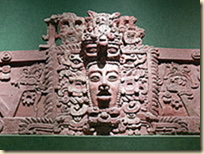 Archaeologists first discovered the site after looters unearthed large, sculpted stone masks that were located on the side of one of the principal structures. Unfortunately, looters managed to destroy the major architecture at the site. The site was later surveyed by the IADAEH’s Department of Prehispanic and Colonial Monuments and investigations were continued at the site in 2010.
The site is made up of approximately 115 structures. They had previously been concealed by the thick jungle that had grown over them. The structures are grouped into six architectural groups. Some of the structures at the site include basal platforms, patios, mounds, pyramids, courtyards, causeways and several other structures. They are still largely obscured by the jungle vegetation that had grown over them. The site is also home to a number of stone houses or buildings that may have been used as burial chambers by Mayan kings. It is this use of stone homes as burial chambers that may have made it more difficult for researchers to find the royal remains.
Scientists have been able to determine that there would have been important religious ceremonies held at the city even though it was not as large or culturally advanced as other cities such as Tikal. Archaeologists have stated that if Tikal was the equivalent of a New York or a Los Angeles that it would have roughly compared to an Atlanta or a Denver.
Now scientists have been able to use different mapping techniques imaging technology in order to further excavate and explore the site. They have used three dimensional mapping in order to erase centuries of jungle growth as well as ground penetrating radar that has shown them a wealth of new information about what life would have been like when the site was being lived in.
It is believed that the site was in use between 600 BCE and 900 CE (the Late to Middle 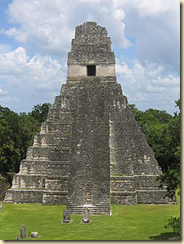 Preclassic period). At this time, it was estimated that approximately two thousand permanent residents would have made their home in the city. It was believed that at this time the Mayan peoples did not view their kings as being the center of the universe. Because of this view, it may have made more sense for kings to have been buried in their homes rather than in pyramids as they were in later Mayan civilizations.
It is also believed that the site would have accommodated a number of visitors who would have come to the site at times of great importance. Some of these events would have included the crowning of a king or the naming of a royal heir. At this time the site would have had to accommodate several thousand additional visitors.
By: The Scribe on Monday, July 4, 2011
A carving of a mammoth on a mammoth bone has recently been authenticated and scientists are now saying it is the oldest example of art found in the Americas. The piece was found near Vero Beach in Florida in either 2006 or 2007. Although it was discovered years ago it has taken until know for scientist to be able to authenticate it and figure out how old the piece actually was.
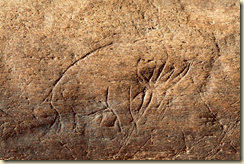 It has been discovered that the carving is actually 13,000 years old. Originally, scientists believed that the piece was a fake. They began to compare the piece to other bones that were found at the site and studied them using electron microscopy. It was found that the carving did not have any coloring differences between carved grooves and other bones that were found on the site.
This is exciting for scientists as it means that the marks and grooves that were made on the bone aged at the same rate as other bones and debris found at the same site. If the marks had been made more recently it would mean that they were a different color than the other bone surfaces would have been. As there were no differences, it is now believed that the carvings were made approximately 13,000 years ago.
Even the bone itself supports these findings. Scientists believe that the bone fragment belonged to one of three mammals, all of which died out as the last ice age ended. This was between 12,000 and 10,000 years ago. Scientists have been able to figure out that the bone belonged to a mammoth, a giant sloth or a mastodon. The last mammoth was believed to have died out approximately 4,000 years ago but the species was on the decline as much as 10,000 years ago.
It was believed that a combination of climate change and predation by humans was responsible for the mammoths to become extinct. Scientists studied factors such as ocean currents and rainfall and were able to determine that the climate that the mammoths preferred (which was cold and dry) actually began to change approximately 42,000 years ago. The mammoths would have had issues with the warmer, wetter climate that began to set in.
Mammoths needed a large supply of coarse tundra vegetation in order to survive. Their 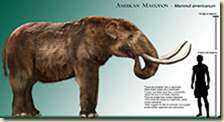 teeth had actually evolved in order to consume this type of vegetation. When that type of plant matter began to die off it became difficult for the mammoths to eat the food that they had evolved to eat. It also did not help that humans began to hunt the mammoth as much as 40,000 years ago.
The artwork on the bone is exciting as it is a sign of what early Western art looked like. There are many differences between the mammoth incising and cave drawings and art that have been found in Europe. It is believed that they may have had a memory of what the artwork looked like in Europe but took the art in their own direction.
By: The Scribe on Friday, July 1, 2011
Today, the name wenis is applied to the skin on the back of a person’s elbow. Youngsters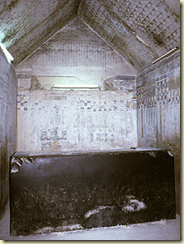 and the young of heart get a kick out of talking about their wenis, how it looks or how it feels. What they don’t realize is that “Wenis” is actually the name of a historical Pharaoh who was the last ruler of the Fifth Dynasty. In some inscriptions his name is also recorded as Unas. The exact dates of his rule are not known although archaeologists have managed to date his reign as being somewhere between 2375 BCE and 2345 BCE.
Like many other pharaohs, he had several wives. The two women, named Khenut and Nebet were actually buried together in a double mastaba tomb near the tomb that belonged to Wenis. It is believed that because the Fifth Dynasty ended with Wenis it was likely that he did not have any sons that survived long enough to take the throne after the death of Wenis.
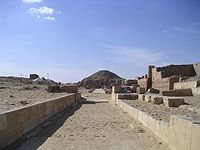
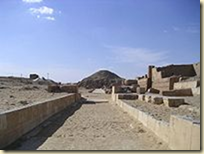
Like some other pharaohs, Wenis built a pyramid. It was located at Saqqara and was positioned near the step pyramid which had been built by Djoser in the 27th century BCE. Archaeologists have been able to obtain some information about what life was like when Wenis ruled by the reliefs that are located inside Wenis’ pyramid. There are also numerous inscriptions that line the inside of the pyramid as well.
These inscriptions were religious in nature. Wenis was the first pharaoh to use funerary texts in his pyramid. The inscriptions are actually among some of the oldest religious texts that have been found to date. The inscriptions were a series of spells which were also referred to as “utterances”. Their purpose was to help protect the remains of the pharaohs and would help to reanimate his body after his death.
 They also talked about the ways that the Pharaoh would be able to travel to the heavens after his death. Some of the methods of transportation included ramps, ladders and flight. Other inscriptions were methods that could be used to call on the Egyptian Gods as well. A total of 228 spells were located on the walls of Wenis’ pyramid. Each tomb contained a variety of different utterances. A total of 759 spells have been found. Some of the tombs overlapped with the utterances that were inscribed on the walls but there is no one tomb that contains all of the spells.
One of the most interesting utterances was found on the walls of Wenis’ tomb. It is known as the “cannibal hymn”. In this inscription, Wenis is described as hunting the gods and consuming parts of their bodies.
Wenis had also started construction on a funerary temple that was not completed until after his death. The temple had a pink granite gateway which was also inscribed with the names of Teti, the ruler who came after Wenis and whose reign signified the start of the sixth dynasty. There was also a causeway that was decorated with a bas relief. This piece of artwork showed the transportation of a palm column via a boat that sailed down the Nile.
By: The Scribe on Thursday, June 30, 2011
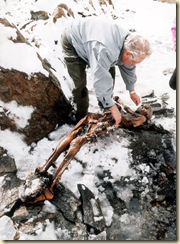 In 1991, a 5,000 year old mummy was found in the Italian Alps. Christened “Ӧtzi”, the body had been naturally preserved because it had been covered in ice shortly after the man died. In the beginning, scientists were able to learn a lot about life in the Copper Age. They were able to learn about the clothing that he wore and the tools that he used.
When his lungs were examined, it was found that they were blackened. Scientists surmised that this was because he had breathed the smoke from campfires. His skin was preserved well enough that the scientists studying the body were able to locate and document tattoos. In this case, they were found on his lumbar spine, behind his right knee and around his ankles. It was believed that they may have been related to acupuncture treatments that were intended to relieve or reduce pain. The earliest confirmed accounts of acupuncture and acupressure in China were from 2000 years later than the time when the iceman walked the earth.
A lot of information was found regarding the iceman’s health. It is known that he suffered from a parasite known as whipworm and that he had been sick approximately three times in the six months that preceded his death. He also suffered from a number of cavities that had deteriorated his teeth prior to his death.
One of the most interesting pieces of information that scientists were able to learn from the Iceman’s body was what his last meal or meals were. Scientists were able to analyze the contents of his lower intestine and had found that he had eaten a meal that consisted of grains and possibly the meat of red deer and goats. They had been unable to use an endoscope to view the contents of his stomach and were unable to tell what his last meal would have been.
Now scientists have been able to study Ӧtzi’s stomach contents. Scanning the body with computer assisted tomography (CAT scanning) showed that the stomach had shifted into the space that would normally be occupied by the lower part of his lungs. Scientists are unsure of exactly why the stomach shifted but were able to locate it and get a sample of its contents.
It is now known that the stomach contained traces of meat and grains. The volume of the stomach contents was fairly substantial which told scientists that Ӧtzi had eaten a large meal approximately two hours before his death. They were able to separate out some larger pieces of meat and grain from the other stomach contents. Scientists are unsure of whether the meat was cooked. There was evidence of animal hairs and fly parts which suggested that the meat may not have been thoroughly cleaned before it was eaten.
Scientists are unsure of why Ӧtzi was killed. They do suspect that his death may not have been from natural causes. An arrowhead had been found lodged in his left shoulder. It was believed that he may have been killed as a ritual sacrifice. The shaft of the arrowhead had been snapped off and evidence of defensive wounds and a blow to the head were also detected.
Previous page | Next page
 Archaeologists first discovered the site after looters unearthed large, sculpted stone masks that were located on the side of one of the principal structures. Unfortunately, looters managed to destroy the major architecture at the site. The site was later surveyed by the IADAEH’s Department of Prehispanic and Colonial Monuments and investigations were continued at the site in 2010.
 Preclassic period). At this time, it was estimated that approximately two thousand permanent residents would have made their home in the city. It was believed that at this time the Mayan peoples did not view their kings as being the center of the universe. Because of this view, it may have made more sense for kings to have been buried in their homes rather than in pyramids as they were in later Mayan civilizations.