Gives New Meaning to the Term “Garden Salad”… (ca. 1000 AD)
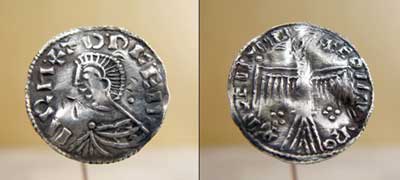
Once upon a time, a local Swedish gardener was minding his own business, tending his vegetable patch on the island of Gotland, when all of a sudden… he realized it wasn’t a rutabaga he pulled out of the ground, but a hoard of Viking treasure! Indeed, he had found a treasure trove of silver coins from Europe, Central Asia, and the Middle East, all dating to around 970-1030 AD.
The garden trove yielded 69 coins, and the cache as a whole has been identified as a Viking “safety-deposit”, which was not unusual – Vikings and Anglo-Saxons would bury their stash of loot somewhere in the ground, with every intention of returning for the money in the future when it was needed.
In addition to coins from Eastern Europe and beyond, there were several extremely rare Viking coins in the cache, which were likely paid to the owner as protection or plunder money, also known as ‘danegeld’. Danegeld was paid to Viking groups by regional rulers, in order to bribe them out of attacking their cities or towns – which was an easy way for the Vikings to make some extra cash for little work! The rare coins were minted for a regional Swedish king named Olof Skotkonung, who was actually the first king to mint coins in Sweden. He had probably learned the trade from England.
Many other coins in the horde were copies of English coins made by Ethelred II, who was the British monarch between 978 and 1016. He was often referred to as “Ethelred the Unready”, since he lacked reliable counsel and greatly preferred the option of paying massive amounts of “tribute” cash to the Vikings, rather than face them in armed conflict.
As for the Asian coins found in the treasure trove, they would have come from the Vikings’ transactions while moving along their extensive trade route – often, Viking ships would travel all the way along the Russian rivers into the Middle East! And since Gotland in Swedenwas situated right in the middle of the Viking routes – between eastern and western Europe – it was a natural stopping point for Vikings to stash their cash before continuing onward in their travels and trade.
In total, the area of Gotland has actually yielded between 700-800 Viking treasure hoards, with the majority of the coins originating from the Middle East. Many of the coins in this and other caches also show evidence of ‘pecking’, which results from someone poking at the surface of a coin with a knife, in order to determine whether or not it the coin is real silver or a lead counterfeit.
Want to read more?


Tomorrow: Soggy Rice in Stone Age China

 The
The