Archive for the ‘Ancient Asia’ Category
By: The Scribe on March, 2011
Visitors to the Helan Mountains in Yinchuan, China may have noticed strange, pyramid-shaped structures rising from the earth. These are some of the only remnants of the Tangut Empire that was exterminated by the Mongols in 1227 CE.
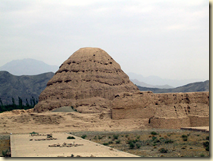 Although there are over 200 tombs of varying sizes, only nine of them belonged to members of the Imperial family. The tomb complexes were originally covered with glazed green tiles but in many cases, the tiles were pulled off and the tombs were cracked open. This was part of the campaign to exterminate the Tangut Empire that was carried out by Genghis Khan’s descendents.
The Tanguts were a fairly advanced people. The empire was founded in 982 CE, under the rulership of Li Deming. In 1038, Li Yuanhao (also known as Emperor Jingzong) commanded that a Tangut system of writing needed to be created and, after this was accomplished, then ordered that Chinese classics should be translated into that writing system. It took fifty years for the Chinese Buddhist canon to be translated into Tangut. Over time, the Empire developed an organized and efficient military and also became quite advanced in art, literature, architecture and music.
The Tanguts also had a strict legal system especially where religion was concerned. It was believed that the Tanguts were Buddhist, although there may have been some people who followed Confucianism as well. A person who wanted to teach was required to be screened by state officials and receive approval from local authorities before he was able to teach in the Tangut Empire. Charlatans and fortune-tellers in particular were persecuted by the authorities.
Women in the Tangut Empire were also allowed a role in the state’s religious practices. This was unusual in China at the time. They were permitted to be Buddhist nuns, but only if they were a virgin or had been widowed.
The Tangut people had been attacked by the Mongols six times between 1202 CE and 1226 CE. They were able to hold them back, but it wasn’t easy. This happened in spite of the fact that the Tanguts submitted to Genghis Khan in 1207 and that the leader, Xiangzong, gave his daughter to Genghis in marriage.
The Tanguts and the Mongols were allies for a time. Then, in 1216 CE, the Mongols approached the Tanguts and asked for their aid in a campaign that they were mounting against some Islamic countries. They refused. This was a disastrous decision that ultimately led to the downfall of the Tangut Empire as a whole.
Genghis died in 1227 CE. According to some historical records, one of his last commands was that the Mongols destroy the Tanguts and wipe their empire from the face of the earth. The Mongols overran the capital of the Tangut Empire, slaughtered the residents and destroyed not only the tombs of the rulers but their literature, art and other records of their achievements. Tens of thousands of Tangut civilians were killed by the Mongols and the military was absorbed into the Mongol army.
Although the Tanguts were destroyed as a civilization, some did escape and form small communities in the Anhui and Henan provinces of China. However, as a whole, their empire had been totally destroyed and, over time the Tanguts faded into history.

By: The Scribe on February, 2011
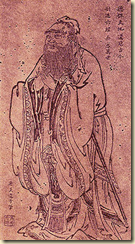 During the Warring States Period, life in Ancient China was somewhat chaotic. You had many different warlords trying annex land onto their own kingdom and life in general was very chaotic. The people of China followed the tenets of Confucianism, which first appeared around 500 BCE. . Under Confucianism, you paid your parents and ancestors respect, were expected to live a humane and decent life, and be good to the people around you. Confucius was a social philosopher who lived from 551 BCE to 479 BCE. He basically taught people that they were good at heart. If they made mistakes it was simply because the system of social laws had let them down.
But all of that changed during the Warring States Period. Suddenly, it was important for one strong ruler to be followed by the common people. Three individuals, Shang Yang, Han Feizi and Li Si wanted to make sure that the people followed a philosophy that would strengthen the government that was in power and cause people to follow the laws much more closely. The school of Legalism began to develop. It taught that people were, at their most basic level, evil instead of good. Under Legalism, one of the worst crimes that a person could commit was to be disloyal to their rulers. In order to curb the urge to do wrong, a rigid system of punishments were put into place. If someone were to exhibit behavior that was evil or selfish, they would be punished.
Under Legalism, it was the state or country that had to come first instead of individual wants or needs. The country was divided up into a number of administrative provinces, and the system of writing was standardized throughout the country. Family units were divided up into groups of ten. It was thought that many of these activities would make it easier to control the Chinese population and prevent someone from sowing dissent in the country.
Under Legalism, many important books were burned. It was believed that people did not need to read, and that the only guidance they needed was the series of laws that governed the country. Not all of the books were burned, however. Those that had been written on the topics of farming, weaving and divination were spared as they were believed to have some merit. Many scholars were also burned alive if they refused to give up their libraries.
There were some people who prospered under the Legalist system. Under older systems, it was difficult for someone to advance in social rank. Under the Legalist system, it was possible for someone to advance if they performed well at their job. Soldiers who fought well in battle could gain higher ranks, and it was also possible for someone to advance politically under the Legalist system. One example of a commoner who was able to advance under Legalism was Lu Buwei (291 to 235 BCE). He began life as a merchant but, under the Legalist system, was able to advance politically and become the Chancellor of China.
Legalism declined but there are some elements that are still used by the Chinese government today.
By: The Scribe on February, 2011
Although modern China is a unified place that is governed by one legal system, it was not always this way. Ancient China was divided into a collection of seven states which, from 475 BCE to 221 BCE, were constantly at war. In fact, the conflict was so constant that the period was actually known as the Era of Warring States or the Warring States Period. Although there was a single sovereign, he was simply a figurehead who did not have any real power.
 One of the states was the Qin state, which was located in the western part of the country. It was able to trace its origins to a man named Zhuanxu, one of five monarchs who ruled ancient China from 2514 BCE to 2436 BCE. Each of the seven states was ruled by a warlord who tried to expand their territory by annexing the land around them, carving it out from the neighboring states. These men were ruthless and used infantry and cavalry forces in a long serious of bloody conflicts.
Among these warlords was the leader of the Qin state, Qin Shi Huangdi. Born in 259 BCE, he became the ruler of the Qin state in 246 BCE. While all of the warlords were ruthless, Qin Shi Huangdi was particularly brutal. Although he took the throne at the young age of 13, he was able to thwart a series of coups and assassination attempts.
Qin Shi Huangdi was able to annex all of the seven states and bring them under his control by 221 BCE. While he ruled, Qin Shi Huangdi was able to standardize the system of units and measures used in the country. He also standardized Chinese currency as well as the length of cart axles. This made it easier to transport goods. He also worked at standardizing the Chinese script as well.
During his lifetime, Qin Shi Huangdi was constantly at war with nomadic tribes located in the north and northwest of the country. In order to keep them from invading the country, he ordered the Great Wall of China to be constructed. He used his fellow countrymen to build the wall. Many people were worked to death in order to create the wall. Today, the Great Wall of China can be seen from space.
Under Qin Shi Huangdi’s rule, many existing books were burned. He saved books dealing with topics such as astrology, medicine and divination. However, owning a copy of any outlawed texts was a serious crime. Qin Shi Huang had many scholars buried alive simply for owning copies of books he had burned. Qin Shi Huangdi was also known for brutally punishing anyone who broke the law. They were buried alive or enslaved in order to build the Great Wall or his tomb.
It is this tomb that has given Qin Shi Huangdi some of the fame that he still enjoys today. The tomb was started in 215 BCE and, according to some sources, as many as 720,000 unpaid laborers worked on its construction. Part of the tomb has been discovered and excavated. Inside, archaeologists found more than 8,000 terracotta figurines in the shape of soldiers, chariots, horses and cavalry horses. Qin Shi Huangdi died in 210 BCE at the age of 49.
By: The Scribe on January, 2011
In the 1300’s, there was one ruler who’s name sent fear throughout Central Asia. He invaded a number of nearby countries in order to expand his territory and in doing so, destroyed entire cities. Timur the Lame, better known as Tamerlane, was born in 1336 CE in the city of Kesh. This was located near the oasis of Samarkand in an area known as Transoxiania. He was a direct descendent of Ghenghis Khan and was driven by the need to rebuild the Mongol Empire that Ghengis had constructed.
 He was born to a chieftan of the Barlas tribe. His father owned land and was settled, a very different lifestyle than that lived by his Mongol ancestors. By the year 1360 CE, Tamerlane was beginning to show his skill as a military leader. He commanded the local Turkic tribesmen who lived in the area. He was involved in fighting against several other tribes and rose to importance in the area.
Tamerlane was a brilliant military commander in many ways. He ensured that his troops were provisioned properly for upcoming campaigns and was known to lay in supplies up to two years before his armies went on the move. He was also known for acts of stunning brutality and atrocities the likes of which have not been seen today. His campaigns were successful in part because he used propaganda in order to spread fear among his enemies. They were often very successful and a wave of panic spread before Tamerlane’s armies.
Tamerlane captured the city of Herat in 1383 and went on to take much of Persia as well. He ruled fairly according to many reports but when confronted by any kind of revolt or resistance was known to slaughter entire cities to a man. In the city of Isfahan, Tamerlane built pyramids made from thousands of skulls. He did this in response to a revolt in which several of his tax collectors were killed.
When Tamerlane began his invasion of India, he became truly brutal. He took the city of Delhi in 1398 and when he did, put 100,000 people to death. His troops, while well fed and supplied, were not paid and instead were encouraged to loot the cities that they captured. Loot included precious metals and stones as well as women and horses. Totals suggest that he may have killed as many as fifteen to twenty million people during the course of his military career.
At the same time that Tamerlane was a vicious and brutal military commander, he also was a strong patron of the arts. He had architects build structures in Samarkand that still stand to this day. Artisans from conquered lands were brought to Samarkand and allowed to work in relative freedom. He was also known for communicating with western rulers and there are still samples of the letters they wrote to each other available today. Tamerlane was popular with western rulers as he was seen as an ally against the armies of the Ottoman Empire that were invading Eastern Europe.
Tamerlane’s reputation lives on even after his death in 1405. He has been viewed as both a monster and a patron of the arts and has been immortalized in a number of books and poems.
Previous page | Next page
 Although there are over 200 tombs of varying sizes, only nine of them belonged to members of the Imperial family. The tomb complexes were originally covered with glazed green tiles but in many cases, the tiles were pulled off and the tombs were cracked open. This was part of the campaign to exterminate the Tangut Empire that was carried out by Genghis Khan’s descendents.


