Archive for the ‘Ancient Europe’ Category
By: The Scribe on July, 2007

It was around 20,000 years ago – give or take several thousand years, of course – that the species of people known as Neanderthals breathed their last. Although they had co-existed for thousands of years with what are referred to as “modern humans”, scientists have been perplexed for decades as to why humans survived and Neanderthals died out. Everything from genocide to technology to social organization has been suggested, however more recent evidence seems to point to a much simpler explanation: they were just too cold… and a little too stubborn.
It seems that Neanderthals’ inability to adapt to climate change led to a breakdown of subsistence patterns and technological advances, which meant that they refused to alter their hunting patterns when the large game animals they were used to hunting eventually fled south. The colder temperatures saw migrations of bison, red deer, and other large animals, and the surrounding vegetation slowly began to disappear. The previously lush environment of Europe soon became a sparse steppe with patches of desert, incapable of supporting more plant life and thus no longer providing hunters with the forest vegetation they had previously relied on to sneak up on their prey.
Without camouflage, stalking wild game became much trickier – and while modern humans adapted their technology to make use of a wider range of resources, Neanderthals simply did not manage to develop the skills needed to survive in a half-steppe, half-desert environment. Even though Neanderthals typically didn’t live past their 30s, as revealed through skeletal evidence, the new hunting environment was much more harsh and treacherous.
As the success rates for hunts dropped, so did the food supply – and in return, the mortality rates quickly increased. As people ate less, they became more susceptible to illness and reproduction dropped significantly; as the Neanderthals slowly starved to death, fewer babies were born and the population numbers began to dwindle.
Realistically, Neanderthals possessed the same level of cold resistance as modern humans, so it wasn’t the temperature that directly led to the species’ demise. Both Neanderthals and modern humans had mastered fire and made similar tools, cared for their sick, and had elaborate ritual practices and a developed appreciation for art. Instead, the Neanderthals’ demise resulted from an inability to change and adapt as the climate forced them to – whether this was a deliberate attempt to cling to tradition or a physical incapability remains unknown.
Want to read more?


Tomorrow: Mayan Looseleaf

By: The Scribe on July, 2007
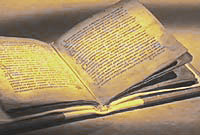 The so-called ‘Four Ancient Books of Wales’ were translated and compiled together by William Forbes Skene in 1868, and although by modern standards the compilation is flawed and translation likely rife with errors, Skene’s work is a comprehensive volume of four of the most important surviving texts of medieval literature. The four books were written in Middle Welsh during the 13th to 15th centuries, and contain both poetry and prose.
Some of the writings within the texts appear to be contemporary, however many portions of the documents seem to be centered around traditions that date as far back as the 6th and 7th centuries. Perhaps most important of all, the books also contain the earliest native Bardic Welsh references to the legendary King Arthur. Although the documents were likely written down into document form from traditional Bardic oral poems and stories, probably at the expense of wealthy and noble patrons, the subject matter seems to take on an esoteric quality – ranging from drunken brawls and battles, to words of wisdom, to almost mystic insights into human nature.
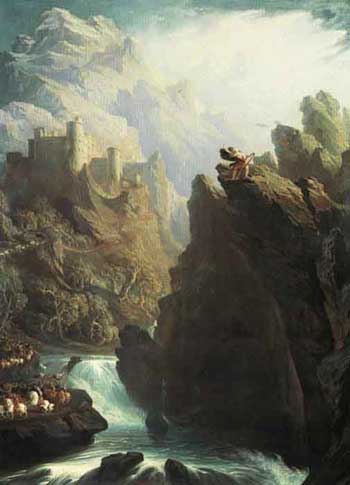
- The Black Book of Carmarthen: This manuscript is one of the earliest surviving works written completely in Welsh, and was composed around 1250 AD. The poetry in this book has some religious themes, though the most intriguing portions are the poems that can be associated with the legends of Arthur and Merlin – one poem discusses the Battle of Llongborth and Arthur’s involvement in it, though the actual location of this historical battle has long been lost.
- The Book of Taliesin: The most famous of the four Welsh manuscripts, this book is officially dated from the early 14th century – however, most of the contents are thought to be much older. With some of the oldest Welsh poems in this volume, many of the writings have actually been attributed to the poet Taliesin who lived at the end of the 6th century. This book contains some of the most famous Arthurian tales, such as the poem wherein Arthur and his knights sail the sea to win treasures, including a magical cauldron.
- The Book of Aneirin: This manuscript dates from the 13th century, though most of its Old and Middle Welsh poetry is attributed to Aneirin, a late 6th century Brythonic poet. The most famous piece from this book is a poem called Y Gododdin, commemorating the warriors who fell at the Battle of Catraeth in 600 AD.
- The Red Book of Hergest: This Welsh manuscript was probably composed somewhere between 1385-1410 AD, and was so named due to its red leather binding and association with the Hergest Court in the Welsh Marshes until the early 17th century. The book contains prose, including the extremely important collection of Welsh tales known as the Mabinogion.
Notably, J.R.R. Tolkien borrowed the title of the Red Book of Hergest for the imagined legendary source of his tales, entitled the Red Book of Westmarch.
Want to read more?

Tomorrow: A Roman shopping list!
By: The Scribe on July, 2007
 Although he may have enjoyed his newfound public recognition as a highly skilled military commander, the barons in Richard I’s various lands continued to revolt against him. In 1181-1182, there was a severe revolt over the county of Angouleme – according to historical documents, Richard had been accused of vicious cruelties against his own subjects:
“he carried off by force the wives, daughters, and female relatives of his freemen, and made them his concubines; and after he had extinguished the ardor of his lust on them, he handed them over to his soldiers for whoring.” source
Richard continually refused to pay the required homage to his father, and in 1183 – fed up with Richard’s insolence – Henry II and his other sons invaded Aquitaine to try and subdue Richard. As his own barons joined the king against him, Richard was somehow still able to hold off the invading armies, executing anyone they happened to take prisoner in the ensuing fray. However, it was in that same year that the young Henry died, leaving Richard the now-eldest son and therefore the rightful heir to the throne.
Yet, Richard continued to fight his father, and made as many outside allies as he could, including King Philip II of France. Working together, the two men were able to defeat Henry II’s army at the site of Ballans, and Henry was forced to name Richard his heir – with the supposed consent of Henry’s youngest son, John. Only two days later, Henry II died, and Richard I became the legitimate king of England.
In a strange and unprecedented move, Richard I barred all Jews and women from his coronation ceremony – even those Jewish leaders who had arrived with gifts for their new king. According to historical texts, Richard’s courtiers had the Jewish leaders stripped, flogged, and thrown out of his court. Shortly thereafter, rumors began to circulate that Richard had ordered all Jews to be killed, which caused the people of London to begin a massacre: Jews were robbed, beaten to death, burned alive, and many Jewish homes were burnt to the ground, and the inhabitants baptized by force.
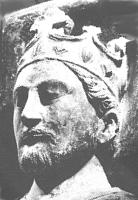 Although it is uncertain whether Richard ever actually ordered the mass killings of Jews, the Medieval historian Roger of Howeden claimed that the massacres and rioting were started by prejudiced and bigoted citizens who were subsequently punished with the most severity by Richard himself. In addition, Richard apparently realized that the rioting could destabilize his rule – and since he had planned to leave on crusade shortly after his coronation, he ordered the execution of those individuals who were associated with the most severe murders and Jewish persecutions. To further placate the people, Richard issued a royal decree that all Jews should be left alone, though it was very loosely enforced: as early as the following March, the violence continued, including a second massacre of Jews at York.
Before going on crusade, Richard reportedly swore an oath renouncing his past violence and cruelty. This oath allowed him to become ‘worthy’ to take up the cross – whether it was sincere or not is another matter entirely.
(By no means is this the end of Richard’s story, however the rest of his lengthy tale shall perhaps be told another day…)
Want to read more?

Tomorrow: Death by Brazen Bull
By: The Scribe on July, 2007
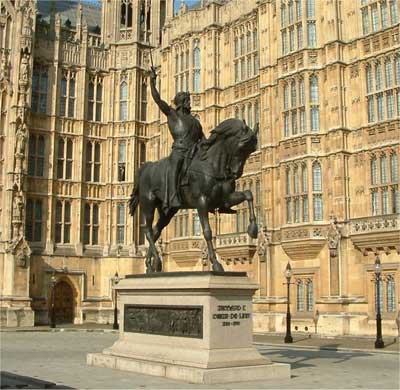
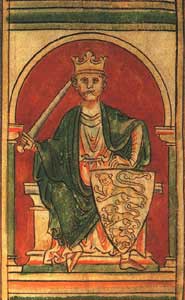 Richard I, commonly known as Richard the Lionheart and often associated in popular media with the legends of Robin Hood, was King of England from July 6th, 1189 to April 6th, 1199. The majority of his time in power was actually spent away from the kingdom, and he took part in a number of campaigns while on his way to participate in the Third Crusade.
As the third son of King Henry II of England, Richard was never expected to become king, though popular historical rumors often present him as the favorite son of Eleanor of Aquitaine, his mother. After his parents separated – likely due to Henry’s notorious liaisons – Richard remained with his mother, and received a very high level of education. He composed poetry, was gifted in terms of military and political abilities, and worked hard to keep his own territory under control… however, he and his brothers had a penchant for challenging his father’s authority.
In the spring of 1173, this rebellious streak resulted in Richard and his two brothers, Henry and Geoffrey, leading a revolt against their father. They had planned to dethrone Henry II, leaving the young Henry on the throne, but the King was able to crush the revolt and subsequently invade the lands belonging to Richard’s mother. By the end of the year, Henry II had captured and imprisoned his estranged wife. At only seventeen years old, Richard was the last of his brothers to hold out against his father – but because he refused to fight him in a face-to-face duel, Richard was forced to beg for a pardon and swear a new oath of allegiance.
Not long after, suspicions arose concerning Princess Alys, the woman betrothed to Richard. Henry II had made the arrangements for the engagement, and yet he kept the woman at his court for years, before the church demanded Henry II proceed with his son’s marriage. Unfortunately, by this time, rumors had circulated that Henry had made his son’s fiancée his own mistress, and that she had possibly borne Henry’s child – and somehow, Henry skirted the issue of his son’s marriage and kept Alys with him until his death, forcing Richard to later break the engagement and send Alys back to France on the grounds of having given birth to his own father’s child.
In the meantime, Richard seemed to take out his frustration over failing to overthrow his father on the territory of Gascony, and the increasing cruelty of his reign led to a severe and major revolt in 1179. The nobles of Aquitaine hoped to dethrone Richard, going so far as attempting to recruit his brothers against him, and stationed themselves inside a supposedly impregnable fortress. Naturally, Richard took the only logical option, and destroyed and sacked all the surrounding lands and towns – thereby isolating the revolting nobles from reinforcements or supplies.
With no way out and with an increasing sense of fear and hysteria, the nobles made a very poor choice: they left the safety of their castle and actually attempted to attack Richard outside of the fortress walls. Two days later, Richard had taken the fortress, subdued the rebels, and forced the remaining nobles to declare their loyalty to him. From that point on, Richard’s reputation as an extremely skilled military man commanded only grew.
And yet, he was still unsatisfied. Richard wanted the throne…
Want to read more?


Tomorrow: Richard challenges King Henry II and burns some Jews! (not cool!)
Previous page | Next page
