Archive for the ‘Ancient Europe’ Category
By: The Scribe on November, 2012
Okay, so maybe they weren’t technically naturopaths (in any sense of the word, really)… but a cave in northern Spain that some time ago yielded evidence that historians interpreted as suggesting some Neanderthals were brain-eating cannibals now shows evidence that, well, these early people used herbal remedies and ate all their greens.
 A new study done on the skeletal remains from the cave site of El Sidron in Asturias showed chemical and food traces left on the teeth of five individuals. Microscopic plant starch granules were found in tartar samples from the 50,000 year old teeth, and the cracks in the granules apparently indicated that the plants were roasted before consumption (and possibly that the Neanderthals really needed to floss after eating).
According to the dental investigation, starch and carbohydrates in the tooth tartar reveal that Neanderthals ate a considerable amount and wide variety of plants. The researchers were also surprised to find very few traces of meat-associated proteins.
And if it wasn’t enough to learn that our ancient ancestors would probably shop at Whole Foods instead of heading to a butcher shop, a team led by archaeologist Karen Hardy of Catalan Institution for Research and Advanced Studies in Barcelona found that these folks were also giving themselves doses of medicinal plants.
Things like yarrow and camomile were a part of their regular diet (the Neanderthals, not the research team), both plants with little nutritional value but well known for their natural medicinal properties.
“We know that Neanderthals would find these plants bitter, so it is likely these plants must have been selected for reasons other than taste. It fits in well with the behavioural pattern of self-medication by today’s primates, and indeed many other animals,” Hardy said. “Camomile is very well known as a herbal treatment for nerves and stress, and for digestive disorders, while yarrow is used to treat colds and fevers and works as an antiseptic.”
The findings add to a growing picture of Neanderthals as plant-loving hippies—er, people—and it’s unlikely that the Spanish population studied was an anomaly, according to researchers. Even more interesting, is that these findings question the established thought of Neanderthals as inflexible in their dietary preferences, a reason often cited for modern humans’ ability to dominate the competitive landscape for food resources.

By: The Scribe on February, 2012
What’s one thing all humans throughout the centuries have in common?
Well, besides that.
 How about the desire to save money? Or, to put it another way, to “get more stuff” for less cash?
In the 14th & 15th centuries, Medieval armies were looking for a way to supply weapons to their growing armies, but they needed a way to do it cheaply without compromising effectiveness in battle. The result? A new weapon commonly known as the halberd.
A halberd, also called a halbert or Swiss voulge, is a variety of “pole weapon” that requires two hands to wield. The blade of the weapon is mounted on a 5-6 foot shaft, with an additional long, pointed blade protruding from the top. The two-sided blade is axe-like on the front, and over time the design was refined in on order to better fend off approaching cavalry in battle.
On the opposite side of the axe-blade, a sharp hook was added that could be used to snare men on horseback and pull them to the ground. The top part of the weapon shaft was also reinforced with metal, to prevent the halberd from being easily sliced apart by swords.
As a result, the halberd became the weapon of choice for Swiss armies in the 14th & 15th centuries, and was quickly imitated by German armies as the weapon’s effectiveness became apparent. It was only when gunpowder warfare became more prominent in European armies—adding more musketeers and arquebuskiers to the front lines—that the halberd found use as a defensive weapon during reloads.
 Though the halberd fell into disuse over time, low-ranking European infantrymen carried halberds from the 16th to 18th centuries—and while these Medieval weapons are of course not used in modern warfare, they can be seen in one place specifically… they’re still used as ceremonial weapons by the Vatican’s Swiss Guard!
One more interesting halberd fact? They were a highly effective means of execution…
By: The Scribe on February, 2012
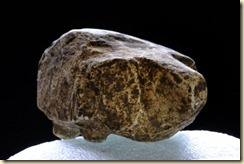 They just don’t make kids’ toys like they used to. Nowadays, head into any dollar store, and you can pick up an assortment of “Made in China” toys that’ll last for about 5 minutes at the hands of any active toddler. Want a toy that actually lasts? Turns out your kids were born in the wrong millennium!
In 2008, archaeologists working at the site of Stonehenge in Britain uncovered a child burial containing a variety of items, such as a pottery vessel (which may have contained food provisions for the child in the afterlife), and most remarkably, a carved chalk toy shaped like an animal.
The grave was tentatively dated between 800 B.C. and 20 B.C., and is considered a very important discovery in British pre-history. The discovery of any kind of representational artwork (human or animal) from this period is so rare that Joshua Pollard, the dig’s co-leader from the University of Bristol, commented it’s “almost to the extent where you get the impression there’s a bit of a taboo on making images of animals or people.”
There are two theories on what the toy represents, with one camp claiming it’s a hedgehog, and the other making their case for a pig. Mike Pitts, editor of British Archaeology magazine, expressed that “it’s without doubt a pig”, considering how common wild and domestic pigs were during the period in this region. “And once we get into historical times,” he said, “We know the pig is quite important in Celtic mythology, though not—to my knowledge—hedgehogs.”
 He also noted that once the Iron Age got underway in Britain, it wasn’t uncommon to come across figurines. However, it is more or less agreed that this little hedgehog/pig may be the earliest known toy in British history. It was likely made originally as a toy for the infant, or was crafted in memory of the child being stillborn or dying in infancy.
As for those who try to suggest that the child’s death was a result of human ritual sacrifice, Pollard reminds the curious that during this time in history, infant mortality was very high, “so there would have been a lot of natural death.” This seems to be substantiated by a second infant burial found nearby which, although it didn’t contain a toy, held the skeleton of a sheep or goat with stones piled over its head (indicating the animal had been ritually sacrificed).
Regardless of whether this ancient toy was played with or not, there’s no denying that current toy manufacturers could learn a thing or two from prehistoric toymakers about durability!
By: The Scribe on February, 2012
Ah, guinea pigs. It’s thought that the Spanish Conquistadors brought the furry little rodents across the sea with them sometime during the 1500s, where they—according to previous common knowledge—frequently appeared on the plates of European aristocrats.
 However, a recent analysis of guinea pig bones found in 2007 at a home that was once part of the Spanish Empire suggests that these creatures may have actually been more companero than cena.
Analysis of the skeleton of the guinea pig, combined with chemical research on its bones and a look at Flemish paintings from this period which depict the animal, has led researchers to conclude that guinea pigs must have been domesticated at this time in Europe, and not necessarily only raised for food.
While it is still common today to raise guinea pigs for food in South America, and the pigs undoubtedly provided some occasional measure of sustenance for Europeans, there’s much more to suggest that they were cared for by both middle-class and upper-class Europeans as pets.
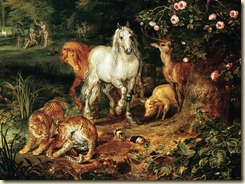 The skeleton of the guinea pig found in 2007 had no evidence of being processed as food, so researchers are quite confident that the creature was a part of the family—and therefore given its own little burial in the backyard.
Guinea pigs would have been considered “exotic” animals, due to their origins across the ocean. It’s actually rare to find guinea pig bones in the archaeological record, which is why their purpose in Europe during the 16th & 17th centuries has remained somewhat vague until this time.
It’s also worth noting that, because guinea pigs are rodents (which tend to have remarkable reproductive capabilities), it’s entirely possible that the whole situation of guinea pigs in Europe may have started with just two creatures being brought over as curiosities… and their presence, needless to say, “expanded” from there.
Previous page | Next page
 A new study done on the skeletal remains from the cave site of El Sidron in Asturias showed chemical and food traces left on the teeth of five individuals. Microscopic plant starch granules were found in tartar samples from the 50,000 year old teeth, and the cracks in the granules apparently indicated that the plants were roasted before consumption (and possibly that the Neanderthals really needed to floss after eating).


