Archive for the ‘Ancient Europe’ Category
By: The Scribe on July, 2011
Archeologists excavating a site in the Ural mountains have discovered a tool kit that may have belonged to Neanderthals. What is exciting to scientists is the fact that these tools were much newer than scientists expected them to be. This suggests that Neanderthals may have been alive and active for a much longer period of time than was previously known.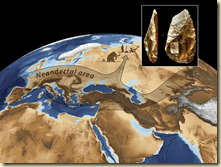
Before the discovery of the Russian tool kit, it was thought that the remaining Neanderthals were located on the Iberian Peninsula where Spain, Portugal and Gibraltar are now located. However, evidence now exists that suggests that may not have been the case. It is not surprising that the tools were still found on the outskirts of their former range as these were the areas that had Neanderthals living with the least amount of interference by Homo sapiens.
Evidence at the Ural mountain site included hundreds of stone tools, butchered mammoth bones and sand grains. They all show evidence that the site was in use approximately 33,000 years ago. The items were dated using luminescence and radiocarbon techniques. Luminescence dating is a technique that shows how long ago an item was exposed to sunlight. Scientists had believed that Neanderthals were no longer in existence 33,000 years ago.
Unlike other sites, there were no human remains found at the site, which was located at Byzovaya. This makes it difficult to prove that the site was inhabited by Neanderthals. However, the style of the tools is distinctly Neanderthal. In the past, the only sites that had these items were those that were inhabited by Neanderthals.
What has also surprised archaeologists is the fact that the site is located much further north than the range that was previously determined for Neanderthals. The site is located at the same latitude as Iceland. The weather there is brutally cold and it would have been necessary for Neanderthals to learn how to survive and flourish in an extreme climate.
Scientists have found that some humanoids exhibited Neanderthal traits as much as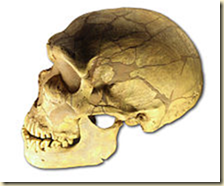 600,000 years ago. Neanderthals were believed to be comparable to that of modern humans although their bone structure was much more robust than that of Homo sapiens. Neanderthals were also much stronger than modern humans and they had brains that were similar in size, if not larger, than the brain capacity of modern humans.
Previously, it was believed that Neanderthals were strict carnivores although recent evidence of cooked plant matter in the teeth of a Neanderthal skull has caused scientists to reevaluate this view. Neanderthal bones were first discovered in Engis, Belgium in 1829 CE and in Gibraltar in 1848. It is believed that they were alive and active for approximately 100,000 years. Their remains have not been found in Africa.
There have been several theories as to why the Neanderthals became extinct. One theory simply states that modern humans moved into their habitat approximately 80,000 years ago. There may have been violent conflict between Neanderthals and modern humans that eventually led to the Neanderthals being displaced. Another theory states that they interbred with modern humans and simply ceased to exist as a separate species. A final theory states that there may have been a volcanic super-eruption approximately 40,000 years ago that may have led to the demise of Neanderthals.

By: The Scribe on June, 2011
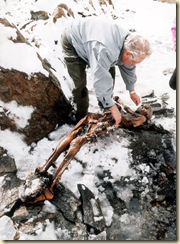 In 1991, a 5,000 year old mummy was found in the Italian Alps. Christened “Ӧtzi”, the body had been naturally preserved because it had been covered in ice shortly after the man died. In the beginning, scientists were able to learn a lot about life in the Copper Age. They were able to learn about the clothing that he wore and the tools that he used.
When his lungs were examined, it was found that they were blackened. Scientists surmised that this was because he had breathed the smoke from campfires. His skin was preserved well enough that the scientists studying the body were able to locate and document tattoos. In this case, they were found on his lumbar spine, behind his right knee and around his ankles. It was believed that they may have been related to acupuncture treatments that were intended to relieve or reduce pain. The earliest confirmed accounts of acupuncture and acupressure in China were from 2000 years later than the time when the iceman walked the earth.
A lot of information was found regarding the iceman’s health. It is known that he suffered from a parasite known as whipworm and that he had been sick approximately three times in the six months that preceded his death. He also suffered from a number of cavities that had deteriorated his teeth prior to his death.
One of the most interesting pieces of information that scientists were able to learn from the Iceman’s body was what his last meal or meals were. Scientists were able to analyze the contents of his lower intestine and had found that he had eaten a meal that consisted of grains and possibly the meat of red deer and goats. They had been unable to use an endoscope to view the contents of his stomach and were unable to tell what his last meal would have been.
Now scientists have been able to study Ӧtzi’s stomach contents. Scanning the body with computer assisted tomography (CAT scanning) showed that the stomach had shifted into the space that would normally be occupied by the lower part of his lungs. Scientists are unsure of exactly why the stomach shifted but were able to locate it and get a sample of its contents.
It is now known that the stomach contained traces of meat and grains. The volume of the stomach contents was fairly substantial which told scientists that Ӧtzi had eaten a large meal approximately two hours before his death. They were able to separate out some larger pieces of meat and grain from the other stomach contents. Scientists are unsure of whether the meat was cooked. There was evidence of animal hairs and fly parts which suggested that the meat may not have been thoroughly cleaned before it was eaten.
Scientists are unsure of why Ӧtzi was killed. They do suspect that his death may not have been from natural causes. An arrowhead had been found lodged in his left shoulder. It was believed that he may have been killed as a ritual sacrifice. The shaft of the arrowhead had been snapped off and evidence of defensive wounds and a blow to the head were also detected.
By: The Scribe on June, 2011
 Visitors to Scotland may have noticed monumental stone slabs decorated with intricate patterns and markings. These stones, known as stelae were erected during the 6th to 9th centuries CE. The stones were put up by a group of people known as the Picts. They settled in eastern and northern Scotland during a period of time between the Late Iron Age and the Early Mediaeval periods.
The Picts had their own unique language which is no longer spoken today. Scientists and anthropologists believe that the language may have been related to the Brythonic languages which were spoken by Britons who were living in the southern areas of the British Isles. The Picts were mentioned in the Roman conquest of Britain but disappeared from any historical accounts around the 10th century. It was believed that at that time, the Picts merged with the Gaels and that their distinct culture ceased to exist.
Scientists have been unable to determine the reason why the Picts may have decorated the large stone slabs. The markings on the stones are not well understood. It is thought that some may have been personal memorials while others may have been decorated with clan markings, or symbols that showed what a person’s lineage may have been. While some acted as personal memorials they are rare.
It is believed that between thirty and sixty separate symbols were used on Pictish stones.  Some were quite intricate and complicated. Some stones are decorated with images that represented animals such as salmon, wolves, stags, eagles and adders. Some Pictish stones were decorated with a creature known as the Pictish Beast. The Pictish Beast is a mythological animal that resembles a seahorse. Scientists are not sure what the beast is supposed to represent. Some stones are decorated with images of common, everyday objects that were used by high status individuals.
There are three different classes of Pictish stones. The first, class 1, are made of rough, unworked stone. These tend to be the earliest stones and date from between the 6th and 8th centuries. These stones do not have a cross on them but do have other symbols carved into the surface of the stone.
Class 2 stones are somewhat more complex. They often have crosses or other Christian  motifs on them. They tend to be more rectangular and may be decorated on both sides. They tend to date from the 8th and 9th centuries. This is the beginning of the period when the Picts were becoming Christianized.
The last category of stones dates from the 8th and 9th centuries. Unlike the other stones the latest versions are not marked with symbols that are uniquely Pictish. They often have crosses on them and have many different uses and forms.
Individuals who want to see the Pictish standing stones will usually have to go to a museum or other facility in order to see them. The majority have been moved from their original locations although a few still stand at the sites where they were originally placed.
By: The Scribe on May, 2011
The hills around the Spanish town of Mañaria are home to more than just stone quarries. Paleolithic-era drawings have now been found in the cave of Askondo, a site that is well known to residents living in the area. The cave had been partially destroyed by the activities at a local stone quarry and archaeologists wanted to see whether there were any worthwhile artifacts left in the caves.
 When researchers entered the cave, they were searching for items such as bones, tools and other artifacts as well as stones that may have been used by early residents of the cave. What they found was far more valuable. Even though the cave had been examined many times over the years, the cave art that decorated the walls had never been spotted. Researchers did not even notice the drawings until they were on their way out of the cave.
It was then that the images of handprints and horses were spotted. The drawings have been dated and are believed to have been created approximately 25,000 years ago. The drawings included a red horse with a profile that resembled a duck bill. This was a feature that is fairly common to other European cave art examples.
Other caves in northern Spain have been decorated with Paleolithic cave art. The most famous is likely Altamira. In 1879, scientists discovered that the 270 meter long cave was full of artifacts that ranged in age from 18,500 years ago to 16,500 years ago. The cave was also home to drawings that had been created using ochre, hematite and charcoal. Further variations in color were developed by diluting these three main colors and the end result was a three dimensional image.
Animals tend to be used a lot in Paleolithic cave art. Often, these were animals that were hunted and consumed although not all were. Some of the most common animals that are found in cave art from this era include horses, bison and red deer (also known as hinds). Scientists have theorized that the differences in which animals were most common tended to be more of a regional or artistic difference.
The Basque culture has several legends about the Askondo cave. One legend is that the  cave is the home to a mythological beast known as a lamia. This was a half woman-half duck that attacked a young boy and dragged him into the cave. According to legend, he was not seen from again. Other legends state that the cave was used as a meeting place for witches.
Scientists are examining the Askondo cave more extensively now that the cave paintings have been discovered. They plan to excavate the area in order to tell whether there were signs of people living in the cave at the time that the art was completed. Another plan is to restore the paintings that have sustained the most damage or which have faded more extensively than others. The researchers who are examining the cave say that they are excited due to the fact that it is possible to enter the cave using the original entrance, something which is not possible with many of the other caves where this type of artwork has been discovered.
Previous page | Next page

 600,000 years ago. Neanderthals were believed to be comparable to that of modern humans although their bone structure was much more robust than that of Homo sapiens. Neanderthals were also much stronger than modern humans and they had brains that were similar in size, if not larger, than the brain capacity of modern humans.


