Archive for the ‘Ancient Europe’ Category
By: The Scribe on May, 2011
In 2011, there is only one month where the thirteenth day falls on a Friday. This is good news for many individuals who feel that Friday the 13th is an unlucky day when accidents and unfortunate incidents are much more likely to happen. While the phobia of Friday the 13th as a day has only been documented since the late nineteenth century, the reasons why this day may be unlucky actually go back hundreds of years.
Friday’s status as an unlucky day was mentioned in The Canterbury Tales. These were a collection of stories that were written near the end of the fourteenth century. Their author, Geoffrey Chaucer, wrote the work as a collection of poems and stories. They describe the journey of a group of pilgrims as they travel from Southwark to Canterbury. It was believed that beginning a project or starting a journey on a Friday was unwise. It is unknown why this is although one tradition states that Jesus was crucified on a Friday.
For the Knights Templar, Friday the 13th was truly unlucky. The order was both monastic and militant in nature. They were formed to protect the pilgrims who were traveling from Europe to Jerusalem. The Crusades were in full swing during this time and the road that pilgrims would travel was, at times, quite perilous. If the Templars had only stuck to physical protection, they likely would not have had any problems. Unfortunately, the order felt that protecting the money belonging to the pilgrims was also important.
The banking system that the order created helped make the Knights Templar wealthy. They used this money in order to fund the purchase of various holdings throughout Europe. The holdings included wineries, homes, mills and castles. The Templars also lent money to a number of individuals including King Philip IV of France. He had been involved in a war with England that had cost him most of his money. Once that was gone, he had then gone deeply into debt by borrowing from the Templars. Instead of paying the money back, Philip had different ideas.
He accused the Templars of many different crimes. Among the charges were that the order spat on the cross, that the order engaged in homosexual acts, and that they practiced heresy. The charges were backed by Pope Clement V and other Vatican officials. The King sent secret orders to the King’s Men and other Bailiffs. They were to be opened at the same time and acted on immediately.
 On Friday October 13th, 1307 the orders were opened and put into action. Every Knight Templar in France was arrested. Their properties were seized in the name of the king and the knights themselves were tortured until they confessed to the charges that had been brought against them. Their leader, the Templar Grand Master Jacques De Molay was ordered to publicly admit his guilt. Instead of doing so, he publicly recanted his confessions and apologized for the weakness that he had shown.
This enraged King Philip and he had De Molay burned at the stake. While he burned, De Molay cursed both the king and the pope, saying they would die before the year ended. This ultimately came true, which has only added to the evil reputation that this day possesses.

By: The Scribe on May, 2011
Each year, thousands of religious pilgrims make a journey to Station Island, a small island located near County Donegal in Ireland. On the island is a chapel that had been built over a cave or pit in the ground. They spend three days there, fasting and praying at several sites around the island. In the past, pilgrims would journey to the island as a way to atone for sins or evil deeds that they may have committed but according to religious history, the site was established for a slightly different reason.
According to religious lore, the site (which is known as Saint Patrick’s Purgatory) was shown to Saint Patrick in the fifth century. Christ allegedly revealed the site to Saint Patrick and informed him that it was a literal entrance to hell. It was believed that the site was a cave or pit although some individuals believe that it may actually have been the remnants of a much older structure such as a sweat lodge. According to religious history, the site was referred to as Purgatory by God when the site was being revealed to the saint. It was believed that by showing individuals that Purgatory was real that it would be easier to make the people of Ireland find faith and be converted to the Christian faith.
Saint Patrick lived from 387 CE to 493 CE and was a Briton of Roman descent. He had originally lived in Scotland but was captured by raiders and taken to Ireland when he was approximately sixteen years of age. He lived there as a slave for six years after which he was able to escape and return to Scotland. He was ordained as a bishop after entering the Church and, as a result, was sent to serve in northwest Ireland.
Early Christian converts were full of doubt and, after a while, Saint Patrick began to become discouraged by their constant demands for proof of God. Patrick prayed for God to send him the proof that the people were demanding and, after that, the site on Station Island was revealed to him.
The site originally consisted of a cave but after 1632 pilgrims could no longer access it directly. The site had a narrow entrance which led into a small cave that was divided into two niches. Both were extremely small and only had enough room to kneel and pray in.
 While it was widely viewed as an entrance to Hell, some historians and archaeologists have taken a different view of the site. Originally, a “purgatorium” was not somewhere that punishment took place. Instead, it had a more positive reputation. Individuals would often journey to a purgatorium in order to be cleansed and then healed either physically or spiritually.
Regardless of what the original use for the cave was, it is now a place that is visited by people of all faiths and is now used as a place of prayer, meditation and contemplation. They journey to the island by boat and spend three days with very little food. The pilgrimage involves moving around the island barefoot while a number of prayers and liturgies are recited. This ritual has been taking place for more than 1500 years and shows no sign of slowing down today.
By: The Scribe on May, 2011
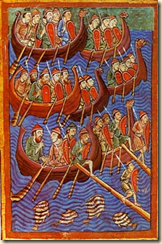
The Vikings were not popular people. When you have the habit of raiding people, burning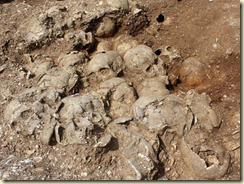 their homes and killing them indiscriminately, your arrival is not usually met with joy and anticipation. A 2009 discovery in southern Britain shows just how some locals chose to treat the Vikings when they appeared on British shores.
Archaeologists have discovered a pit near the town of Weymouth. The remains of 51 skeletons were found in the pit. They had all been decapitated before being placed in the pit and the heads had been stacked to the side. Although the remains had been discovered in 2009, it took several years to determine that they were, in fact, Vikings and not the remains of the ancient Anglo-Saxons who had lived in the area at the time.
Living in ancient Britain had its challenges. The weather in some areas was somewhat inhospitable. Living near rivers was thought to be a good idea up until the Vikings began moving away from the coast in order to attack more inland settlements. They were able to sail up many of the rivers and were quite willing to walk to others in order to raid them for food and other valuables. Often the sheer numbers of Vikings made them an unbeatable force. It became common knowledge that living anywhere within 20 miles (32 km) of the English coast meant that you were susceptible to Viking raids and attacks.
The remains that were found in the Weymouth pit seem to have met a painful and thoroughly unpleasant end. Many of the skeletons have marks on them that showed they were struck repeatedly with axes and other weapons. Several of the skeletons show defensive wounds and one had several fingers on one hand sliced through. The skeletons also bear marks that showed their heads were hacked off rather than removed cleanly.
 There were many signs that the individuals in the pit were not well-liked. The first is that they had their heads piled to one side. This may have been a form of display that celebrated a victory over the Viking invaders. Another sign was that they were buried on a hilltop. The pit was located near the main road to Weymouth. Victims of the Vikings were usually left where they fell and were often located in villages or on the beaches where the Vikings landed.
The victims were also buried naked which was unusual. This made it difficult for scientists to determine whether the victims were Vikings or were Anglo- Saxons. Archaeologists often use items such as clothes, weapons and other items in order to tell where a victim may have been from. The lack of any clues made it difficult to tell whether the bodies were Vikings or not.
Recently, scientists were able to test the teeth from the skulls found in the pit. This gave them a large amount of information about the individuals buried there. Tests showed that the skulls belonged to individuals who lived in climates that were much cooler than those in ancient Britain. They also showed clues about the diet that sustained the men in the pit which was also different than that of the Anglo-Saxons living in Britain at the time.
By: The Scribe on May, 2011
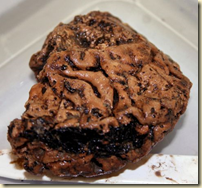 In 2008, archaeologists found a 2,500-year-old brain in York, England. This was a highly unusual find due to the fact that body parts such as brains and other organs will decompose rapidly after death. Unless a deliberate attempt to preserve them is made, internal organs will be completely lost even when other parts of the body such as bones and hair are left behind.
It was believed that the former owner of the brain, a man from the Iron Age, had been the victim of ritual decapitation. Bone fractures and marks on the skull indicate that the body was hanged and then decapitated. It was believed that the cut marks show that after hanging, a knife or other sharpened implement was used to sever the head from the body. While the body was ritually decapitated, it is unknown why the man was hanged in the first place.
The head was thrown into a clay pit. This is what ultimately led to the preservation of the brain. The man’s body, however, has never been located. The thick, wet clay that filled the pit helped to stave off decomposition. The brain did not escape totally unscathed however. It showed signs of dehydration and the loss of water meant that the brain was much smaller than it would have been in real life.
There were several factors that lead to the brain’s preservation. The first is that the clay was very low in oxygen. Oxygen feeds the microbes that dissolve dead tissue and so a low supply of oxygen meant that the work of the microbes was slowed down significantly. The second factor that led to the brain’s preservation was the fact that the temperature in the clay pit was quite cool. When temperatures are fairly low it means that the enzymes which also would have broken down soft tissue could not work as quickly as they would under warmer, more favorable conditions.
Scientists also believe that the brain’s preserved state could have been aided by the fact that the head had been removed from the body. Many of the bacteria that break down a human body actually come from within that body itself. All humans carry bacteria in their gut and these continue to work even after death. This means that a human body tends to decompose from the inside out. Because these bacteria were not present, the body did not break down and the brain may have been decomposed as a result.
Other ancient brains have been discovered but for the most part they are extremely rare 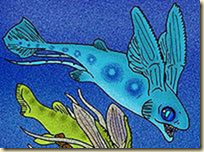 and any ancient brains tended to be fossilized. One prime example is a fossilized brain found in an iniopterygian, which was an ancient ancestor of the modern-day ratfish. The brain that was discovered was about the size of a pea.
Because they still do not understand how the human brain was so well preserved they are continuing to experiment in an attempt to recreate the process. A number of pigs’ heads have been buried around the site which predated the Roman presence in Britain.
Previous page | Next page

 On Friday October 13th, 1307 the orders were opened and put into action. Every Knight Templar in France was arrested. Their properties were seized in the name of the king and the knights themselves were tortured until they confessed to the charges that had been brought against them. Their leader, the Templar Grand Master Jacques De Molay was ordered to publicly admit his guilt. Instead of doing so, he publicly recanted his confessions and apologized for the weakness that he had shown.


