Archive for the ‘Ancient Europe’ Category
By: The Scribe on April, 2011
One of the most popular places to see in London is the Tower of London. The building has stood since its construction in 1078 CE by order of William the Conqueror. William was both King of England from 1066 CE to 1087 CE and Duke of Normandy from 1035 CE to 1087 CE. As well as having two noble titles, he also had several names. In England, he was known as William I. In Normandy, he was known as William II. Privately, people called him William the Bastard. It was a reflection both of the fact that he was illegitimate by birth, and also that he was not particularly well loved.
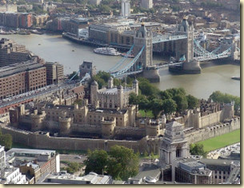 In its early days, the tower was actually used as a royal residence and was called The White Tower instead. The English really did not like the fact that the Normans had conquered England and saw the Tower of London as a symbol of that oppression. It was a beautiful residence and was actually a complex of several buildings inside a wall and moat rather than a single tower. Later rulers such as Richard the Lionheart, Edward I and Henry III expanded on the complex.
Although most people think of the beheadings that were held there, the tower was actually used on joyous occasions as well. Monarchs would stay overnight at the tower and then travel from the tower to Westminster Abbey where they were crowned. During the Tudor period, it was used as a royal residence less and less and as a prison on an increasingly regular basis.
The tower gained attention due to some of the prisoners that were kept there. It was usually a place for prisoners who were royalty or who were politically important. Sir Thomas Moore was one of the most famous prisoners. He was sent to the tower after publicly disagreeing with King Henry VIII over his marriage to Anne Boleyn. Anne Boleyn herself was kept at the tower prior to her beheading in 1536. Executions were held on the Tower Green and a total of 112 prisoners were executed there during the tower’s use as a prison.
Some of the most famous residents of the tower are not even human. A group of common ravens have lived at the tower for hundreds of years. The ravens living at the tower are connected to a popular legend. It is said that if the ravens leave the tower that the tower will fall. If that happens, it is said that the monarchy will come to an end. The ravens that live at the tower are fed well and tended by the tower guards. Their wings are now clipped so that they cannot fly away. They strut around the grounds and are a popular site with the tourists who visit the tower.
Tower guards take place in a ceremony called the Ceremony of the Keys. This has taken place every night since the 14th century. The ceremony starts with the locking of the tower gate with keys that are held by the Chief Warder of the tower. They are then carried to a building known as the Queen’s House and the last post is played on a trumpet.

By: The Scribe on April, 2011
In the 1300’s, Asia and Europe were in the grip of one of the most terrifying illnesses ever: the Black Death. The Black Death (or the bubonic plague as it is often known today) swept through towns and villages and killed millions of people in a relatively short period of time. It started in Asia and China in about 1346 CE but had spread to Europe less than one year later. Sicily was the first city in Europe to report infection. The first reported cases were reported in October of 1347 CE.
 For someone infected with the plague, the suffering was horrible. It usually began with a headache. The infected person was usually exhausted and unable to move around much. Often, their back would hurt and they vomited. Their arms and legs would ache. Then, they would develop red spots and swellings on their body. The swellings, called buboses, would turn black and split open and the victim would begin to experience internal bleeding. The plague was easy to spread and entire families would become infected in a very short period of time.
Other forms of the plague accompanied the bubonic plague. Some people suffered from the pneumonic plague which was spread via coughing or sneezing. They had different symptoms but the outcome was the same: almost inevitable death.
By today’s standards, a disease (especially an incredibly contagious one like the plague) can spread internationally in only a few hours. Now, one infected person can simply hop on a plane and hop from country to country bringing illness and even death with them in a relatively short time. This was simply not the case back in the 1300’s. That being said, although it was incredibly easy to contract the plague, the speed at which it spread was terrifying. After all, in the 1300’s, travel took an exceedingly long time.
In the 1300s, trade was conducted between Asia and Europe along what is known as the Silk Road. This was a combination of roads and sea routes that made it easy to transport goods such as silk and spices from producers in Asia to the eager markets in Europe. Accompanying the goods along their journey were rats. Rats have fleas and it was these fleas that helped spread the plague from victim to victim.
In 1347, the siege of Caffa took place. This was a trading post manned by Genoese merchants by Turkish soldiers. The Turks were suffering from the plague and took advantage of a unique and devastating weapon. Using siege machines, they flung bodies of individuals who had succumbed to the plague over the walls. This broke the siege. The Genoese fled, but took the plague with them back to Europe.
There, the effect was devastating. People were falling ill and dying at an alarming rate. Their bodies and the bodies of those who were not yet dead were flung into open pits instead of being buried properly. Houses were boarded up and burned with individuals still inside. Everywhere, people prayed to God to save them. Slowly, Europe and Asia recover even though it claimed a third to a half of Europe’s population before it was through.
By: The Scribe on April, 2011
April 1st is known in many countries as April Fool’s Day. What many people do not realize is that this day has had a long history and was actually mentioned for the first time in 1392 CE, as part of Chaucer’s Canterbury Tales. The Canterbury Tales was a collection of stories written by Geoffrey Chaucer, an English poet who lived during the Middle Ages. Because of the popularity of The Canterbury Tales, Chaucer is widely known as the father of English literature. 
April Fool’s Day was first mentioned in The Nun’s Priest’s Tale. It was 626 lines long and features talking animals including Chauntecleer the Rooster. Chauntecleer went on to become a popular character in many other tales that were written later. In the story, Chauntecleer was tricked by a fox. The tale is set Syn March bigan thritty days and two. Many people believe this meant the date April 1st (32 days after the month of March began) although many scholars believe that it actually was supposed to mean 32 days after March finished, which would have been May 2nd instead of April 1st.
Regardless of which date Chaucer intended, April 1st became a day for celebration and the playing of harmless pranks. It was first referred to as Poisson D’Avril by a French poet in 1509. The term poisson d’Avril actually meant April fish, and was meant to refer to a person who had been duped by an April fools prank. They were often marked by a tag shaped like a fish which was placed on the backs of people who had been fooled.
In the Middle Ages, the New Year was actually celebrated near the vernal equinox by many cultures. This meant that it would be celebrated any time between the 20th of March and the 5th of April. Then, the Julian calendar was adopted in many areas. According to this calendar, April 1st was set as New Year’s Day. Because of this, April Fool’s Day became a holiday and a day for celebration. This continued until 1582 when the Gregorian calendar was introduced and New Year’s Day was set as January 1st instead of April 1st. It took some time for the word to spread and individuals who celebrated their New Year’s Day on January 1st also referred to the individuals who continued to follow the Julian calendar as “April Fools”.
 Documented historical pranks included the sending of servants on foolish errands (documented by Flemish poet Eduard de Dene in 1539), and a prank that drew several individuals to the Tower of London to see the lions washed in 1698.
People still celebrate the day differently in various parts of the world. In some countries, the pranks can only be played on others until noon. If a prank is played on someone after the stroke of twelve, it is the prankster who then becomes the fool. In other countries, the day is celebrated all day long and pranks can continue no matter what time of day it happens to be.
By: The Scribe on March, 2011
Anyone who has studied French history or watched the movie The Messenger is likely  familiar with the story of Joan of Arc, Maid of Orleans. Joan lived from 1412 CE to 1431 CE and was noted for leading the French army to victory in several battles of the Hundred Years’ War. Whether or not you believe she had divine guidance the fact is that she did have a strong belief in God, and her actions did change the history of France forever. She was sold to the English and ultimately burned to death at the stake. Hundreds of years later, she was beatified and then canonized and has since become one of France’s patron saints.
While she may have lived a pious life, some of her companions certainly did not. One of the most notorious was Gilles de Rais who lived from 1404 CE to 1440 CE. While he is known as one of Joan of Arc’s companions, his actions during the war are vastly overshadowed by his actions as a serial killer who slaughtered many children during the years between 1432 CE and 1440 CE.
Gilles’ military career was a distinguished one. He was known for his recklessness and bravery on the field of battle and was present when Joan of Arc ended the Siege of Orleans, one of the turning points of the Hundred Years’ War and her first military victory. Some of his rewards for valor in battle and military actions included being made a Marshal of France and the awarding of letters patent that allowed Gilles to add the fleur-de-lys to his coat of arms.
After Gilles retired from military duty and public life, he began to change his lifestyle. He constructed a chapel where he officiated. He also staged a theatrical spectacle that ended up almost bankrupting him. He was even forced to sell off his family properties in order to bring in the money needed to support his lifestyle. He also began to have a deeper interest in the occult. According to records at his trial, Gilles met a man named Francesco Prelati who convinced Gilles that regaining his fortune would be possible if he were to sacrifice children.
Gilles de Rais not only killed children he performed unnatural acts on them before their death and would often dismember them once they were dead. Many of the unpleasant details that came out at his trial were furnished by Etienne Corrillaut, a body servant of Gilles de Rais. While it was known that he had killed many children, the exact number is not known. Many people feel that the numbers are much higher than the 80 to 200 children he is commonly believed to have killed. Many peasants who lived around his castle claimed that their children had begged for food at the castle and then were never seen again.
Gilles de Rais’ crimes would likely have taken much longer to come to light if he had not kidnapped a priest in 1440. The following investigation turned up evidence of his heinous crimes and massive amounts of testimony was unearthed. Henriet (another of Gilles’ body servants) and Corrillaut testified about his crimes and Gilles also confessed. All three of the men were hung and then burned although Gilles’ body was removed from the flames and later buried at a monastery in Nantes.
Previous page | Next page
 In its early days, the tower was actually used as a royal residence and was called The White Tower instead. The English really did not like the fact that the Normans had conquered England and saw the Tower of London as a symbol of that oppression. It was a beautiful residence and was actually a complex of several buildings inside a wall and moat rather than a single tower. Later rulers such as Richard the Lionheart, Edward I and Henry III expanded on the complex.


