Archive for the ‘Ancient Europe’ Category
By: The Scribe on March, 2011
If you lived in Rome in the fourteen and fifteen hundreds, there was one family that really ruled the city- the Borgia family. Three of the most infamous members would have to be Lucrezia Borgia (1480 CE to 1519 CE), her father Rodrigo (, who was elected Pope Alexander VI and her brother, Cesare who was appointed a Cardinal of the church in 1493, and acted as captain-general of its forces in the early sixteenth century. Although these are perhaps the three best known of the Borgia family, many family members held important positions in Renaissance Rome and helped shape not only the city but much of Europe as well.
The Borgias were patrons of the arts and, in many ways helped to promote Renaissance music and art, allowing it to flourish much more than it would have been able to otherwise. It was not uncommon to see many great artists, thinkers and philosophers such as Leonardo da Vinci visiting the court of the Borgias.
 Rodrigo, in particular, also supported the university and improved the city of Rome while he was in power. Rodrigo also divided the New World up between Spain and Portugal through the use of a Papal Bull or proclamation. This helped to bring peace between the two nations, something which had been difficult before Rodrigo had become involved. Rodrigo was known for being an excellent statesman and diplomat, which was interesting because in other ways, he tended to be very short tempered and quick to avenge any perceived slight or political challenge to his position or his family.
There are many controversies that surround the Borgia family. Rodrigo was known for a lifestyle that included many different excesses including women. In fact, not only did he have several mistresses, he brought them with him to the Papal court and openly acknowledged the children that they bore him. He was known for attending public orgies such as the Banquet of Chestnuts along with his daughter Lucrezia and his son Cesare. There were many rumors that stated he was involved in an incestuous relationship with his daughter Lucrezia. It was also rumored that he had paid the cardinals to elect him as Pope.
Lucrezia was married three times. All three marriages were arranged by her family as a way of strengthening their political position. She became known as much for her habit of poisoning people as she was for her political skills. Many people now believe that she was manipulated by her family rather than being cruel in her own right.
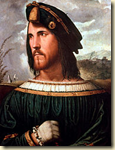 Her brother Cesare was known for being truly reprehensible. He had originally been appointed a cardinal in the church but after his older brother Giovanni’s murder in 1497 CE, he took over as commander-general of the church. While in command of the church’s army, he waged war in order to carve out a state in northern Italy that he could rule in his own right. During this time he committed many different atrocities including murder, theft and other crimes.

By: The Scribe on February, 2011
You may be wondering what monkeys, coffee and a crypt of Italian monkeys could possibly have in common. The answer is the Capuchin monks. This order of Catholic friars has been in existence since the year 1520 CE. An offshoot of the Franciscan order, the Capuchin monks have had a long and interesting history. 
The order came into being thanks to Matteo da Bascio, an Italian Friar. He felt that the Franciscan order was not holding true to the vision of St. Francis, the saint from whom the order had taken their name. The order believed in extreme poverty and members of the Capuchin order dedicated themselves to leading simple, austere lives. Although it was understood that items such as food, clothing and shelter were necessary to maintain life, it was believed that these items should be obtained through begging and that the order should not own any belongings. This rule held true for both the friars themselves and the congregation that they ministered to.
The Capuchins believed in extensive prayer. In fact, members of the order were required to pray privately for two hours each day in addition to the regular prayers that were said as a group. Fasting and discipline were also performed regularly.
It wouldn’t seem as though a simple and quiet order would upset the Church but certain members of the order did. As a result, they were forbidden the right to preach and were suspected of heresy. At one point, the order was forced to seek sanctuary from members of another order, the Camaldolese monks. They showed their gratitude and adopted parts of that order’s uniform. The Capuchins are known for wearing hoods and growing beards. Capuchin monkeys look like they are wearing the hood and beard of the order and have been named for it. Because of the way it looks, the beverage cappuccino was also named for the monks.
The most famous Capuchin church would have to be Santa Maria della Concezione which was commissioned in 1626 CE. It is located in Palermo, Italy. While the church is beautiful, what lies underneath actually attracts the most attention from tourists and locals. Underneath the church is a system of catacombs that have been converted into a massive ossuary or crypt.
These catacombs have the ability to naturally preserve the bodies of the deceased. The friars originally began burying members of their order there but the catacombs were later used to bury regular people as well. Many of the bodies are dressed in their burial clothes and positioned in chairs or other furniture. It was not uncommon for families to visit the bodies of their deceased relatives so that they could pray together on special occasions.
 There are over 8000 mummies of men, women and children placed in the catacombs. Although friars were no longer entombed there after 1871 but regular citizens and famous people were entombed there as recently as the 1920’s.
The most recent threat to the catacombs came in the 1940’s. Allied bombs actually struck the monastery and many of the mummies were damaged or destroyed as a result.
By: The Scribe on December, 2010
When the Romans invaded Britain, they were confronted by warriors who had painted their bodies blue. The name they were given, “Picts”, actually means painted ones. It was believed that they used dye extracted from the woad plant to dye their skin and to tattoo it. Reports state that the woad was mixed with stale human urine in order to get it to stain the skin more visibly and to stay on the skin longer. But what was woad, and was it really used to dye the skin of ancient warriors?
 Woad is a flowering plant that was found in many parts of Europe and Asia. Once it was found to have use as a dye it was cultivated in many other areas and can now be found throughout most if not all of Europe. When woad plants are processed, they produce indigo, a natural dye that colors fabric blue. While it is the same chemical as that produced by “true indigo” plants, the color is different than those produced by “true indigo”. The color was so superior that woad-dyed fabric became part of sumptuary laws and was reserved for royalty.
To extract the dye from woad, the leaves were stripped from the plant. This was normally done in July and August. The leaves were torn into pieces and steeped in water that was hot but not boiling. The water was cooled and the leaves strained out. The mixture needed to have something added to it in order to raise the pH. This needed to be done when the liquid was at the right temperature or it could destroy the blue pigment. The mixture needed to have air added to it and then it needed to sit in order to let the dye settle out. It could then be added to fabric in order to dye it or it could be dried in order to store it.
Woad is also used in other cultures for reasons that have nothing to do with dying fabric. For example, it can also be used to make tea that can treat a wide range of medical conditions including sore throats, influenza, measles and several other diseases. It is also used as a preventative for other medical conditions such as epidemic meningitis, certain types of hepatitis and some types of cancer. The tea is made from the roots, not the leaves.
But was it used to dye skin? Many individuals who take part in medieval recreations do use woad to dye their skin. It is capable of tinting the skin and takes some time to fade. It is caustic, however, and if it is put on incorrectly or used to tattoo the skin, it can burn it. The skin would have a very difficult time healing properly if woad was used to color or tattoo the skin. It also tends to flake off of the skin when it is applied incorrectly.
Woad is still being grown for a variety of reasons. Many cultures still use it to dye fabric although they do not do it as frequently as they did in the past. Woad is also being used in the production of printer ink. Despite its popularity, some countries have declared it to be a noxious weed and are actively attempting to eradicate it.
By: The Scribe on November, 2010
Rome had two approaches to the individuals who challenged them. One (in the case of Alexander the Great) was to rewrite the history just enough that the Empire was known for crushing even the most brilliant of enemies. The other was to try and sweep the name of the people who challenged them under the rug. This is what they tried to do with the name and the memory of one  remarkable woman.
Boudicca (also known as Boadicea) was a Briton who was able to fight the Romans effectively enough that she was able to sack their cities, kill a large number of their legions and cause the island to be lost to them. Romans were never known for their love of defeat and found it particularly upsetting that this loss had taken place because of a woman. But who was she, when did she live, and how did she manage to pull off the military victories that she did?
Her name meant “victorious” and she certainly lived up to her name. She was of royal descent and has always been described as a tall, fierce looking woman with tawny hair. She was married to an individual known as Prasutagus, who ruled a tribe known as the Iceni. Prasutagus had long operated as an ally of Rome and al may have continued to go well if Prasutagus had not died. When he died, Rome simply annexed the tribe. This was the practice at the time. Often, tribal leaders were allowed to rule their tribes up to and until the point at which they died. Even if the tribe was left to wives or children, Rome would simply come in and claim that tribe’s land and wealth.
Unlike many individuals, Boudicca did not agree with the transfer of leadership back to Rome. She certainly did not agree with the enslavement of the tribe’s nobles. She protested and, as a result, she was flogged and her daughters were raped. Because of this, the Iceni and other tribes such as the Trinovantes revolted. During this revolt, the city of Camulodunum (where Colchester stands today) was destroyed. The IX Hispana legion was also routed. This did not sit well with the Roman Governor, Gaius Suetonius Paulinus.
Boudicca was able to successfully attack three different Roman cities during her campaign. After Camulodunum she then attacked Londinium. This city was somewhat easier to take since Suetonius actually abandoned the city. He burned it, and the next target, Verulamium to the ground before abandoning them. These victories, along with the loss of between seventy and eighty thousand soldiers, almost caused Rome to recall all of the troops that were stationed on the island.
Unfortunately, things did not end well for Boudicca. According to two Roman historians (Tacitus and Cassius Dio), Boudicca and her forces were defeated at the Battle of Watling Street. After the battle, Boudicca died. There are conflicting stories about whether she was killed, committed suicide or became ill. Rome continued to be a presence in Britain for many years to come.
Previous page | Next page
 Rodrigo, in particular, also supported the university and improved the city of Rome while he was in power. Rodrigo also divided the New World up between Spain and Portugal through the use of a Papal Bull or proclamation. This helped to bring peace between the two nations, something which had been difficult before Rodrigo had become involved. Rodrigo was known for being an excellent statesman and diplomat, which was interesting because in other ways, he tended to be very short tempered and quick to avenge any perceived slight or political challenge to his position or his family.
 and his son Cesare. There were many rumors that stated he was involved in an incestuous relationship with his daughter Lucrezia. It was also rumored that he had paid the cardinals to elect him as Pope.
 Her brother Cesare was known for being truly reprehensible. He had originally been appointed a cardinal in the church but after his older brother Giovanni’s murder in 1497 CE, he took over as commander-general of the church. While in command of the church’s army, he waged war in order to carve out a state in northern Italy that he could rule in his own right. During this time he committed many different atrocities including murder, theft and other crimes.


