By: The Scribe on Wednesday, May 29, 2013
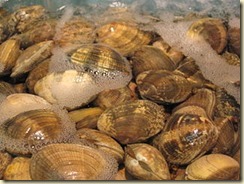 Now, that’s a gardening exhibit you won’t see every day… clam gardens?!
But that’s what researchers are calling the ancient food storage system found on Russell Island’s beach in British Columbia. The clam gardens were discovered six years ago, and University of Victoria students are still helping to sift gravel, sand, and shells to figure out the origins and purpose of the gardens.
The clam gardens aren’t gardens in the traditional sense of the word—ie. where you’d find an abundance of plant life—but rather they’re locations where clams are able to grow naturally, abundantly, and where the environment in those locations can be manipulated to increase clam production. Sort of like feeding compost to a backyard garden to help it grow.
It’s thought that the clam gardens are at least 1,000 years old, but possibly older. The gardens look like small fields constructed on the beach at low tide (a necessity!), with rock walls surrounding the locations. The walls would have helped provide a barrier to stop seaweed and predators from getting inside the garden and damaging or disturbing the growing clams.
And just like a backyard gardener does when taking care of his or her plants, whoever tended the clam garden would have needed to till the sand (so to speak) to keep the oxygen flowing.
Who built the clam gardens is another question entirely. A thousand years ago, an aboriginal community lived on the island, so it’s possible that the clams were used for both food and trade—but that said, clam gardens are a new(ish) discovery for Canadian archaeologists, with the first one discovered only as recently as 1995.
Inevitably, there’s still much to be learned about these ancient clam gardens, and it’s possible that there are many more out there still to be discovered.
By: The Scribe on Monday, May 27, 2013
 Three thousand years ago, the Phoenicians created intricately carved ivory sculptures, featuring various figures and symbols that have helped add to our knowledge of these ancient sea-faring people.
The Phoenicians were Semitic traders, and perhaps best known for inventing an alphabet that was later adopted by the Greeks… and eventually, by us! The Phoenicians were also known for their control of purple-dye pigment across the Mediterranean during 1500-300 B.C… and evidently their eye for color extended beyond brightly hued robes.
Despite being displayed in museums around the world for centuries, a number of Phoenician carvings examined by researchers in France and Germany have shown traces of metal that are invisible to the naked eye. These 8th-century B.C. sculptures have metal traces that were often used in colored pigment in antiquity—including the Egyptians’ copper-based blue, and iron-based hematite.
These metals aren’t naturally found in ivory or in the soil surrounding the once-buried ivory carvings, and have helped to confirm what some scholars have long suspected: the Phoenicians painted their carvings with bright, gaudy colors.
 And the sculptures that weren’t brightly colored? Those were gilded.
“Knowledge of an object’s original appearance can help us understand why it was so visually powerful to ancient viewers,” says Benjamin Porter, an archaeologists at the University of California (Berkeley). Looking at the Phoenician carvings this way may help to further the examination of ancient sculptures from other cultures.
Who knows—we may soon learn that the ancient world was far more colorful than we’ve previously believed!
By: The Scribe on Friday, May 24, 2013
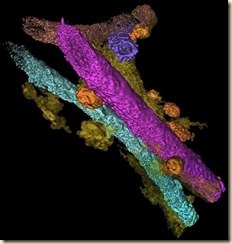 You know how some people like to sniff babies, but sometimes they sniff them at just the wrong time and get a whiff of a recent… ahem… “deposit,” instead of that newborn scent?
Well, early Earth had a newborn smell of its own… and it definitely wasn’t a sweet baby scent. Rather, advanced imagining techniques from scientists have brought us some interesting news about early Earth’s, uh… stench.
How much do you enjoy the smell of rotten eggs?
Because if you’d happened to have lived 1.9 billion years ago, you would have loved it. You’d have had no choice!
Scientists studied fossils taken from rocks around Lake Superior, Canada, and discovered bacteria that used to eat the outer shells of a larger type of bacterium called Gunflintia. In order to digest the hard shell, the happily dining bacteria needed to use oxygen atoms from salt found in seawater—perhaps better known by the term “sulphates.”
This process created gaseous carbon dioxide and released it into the atmosphere, along with the byproduct of—you guessed it—hydrogen sulfide. And that delicious byproduct is what creates the commonly known “rotten egg smell,” which anyone who lives near a water treatment plant in the modern age is highly familiar with.
Now, apparently this didn’t mean that the whole world stunk, but anyone with a delicate sense of smell would have certainly noticed the distinctive aroma.
 Another interesting fact about the discovery is that it revealed the earliest known fossil record of “one kind of creature eating another creature,” says Martin Brasier, a paleobiologist at London’s Oxford University. "This is the group that was producing the oxygen we now breathe."
By: The Scribe on Monday, May 20, 2013
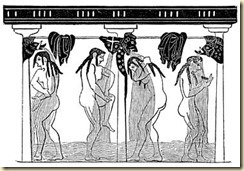 These days, we take our morning showers for granted… hot water, soap, and suds galore… but what did folks do in the days before modern plumbing? And who came up with the idea of pouring water on our heads instead of just sitting in it?
We’re smarter than we give ourselves credit for, sometimes—ancient man’s original showers weren’t indoors, but then again, they didn’t have to pay for plumbing, either. Ever heard of a little thing called a waterfall? Ah, yes. The original shower.
But as we developed a taste for a roof over our heads and the comforts of convenience, ancient societies used jugs of water poured over the head after washing—though this was done more to rinse after a bath, rather than the sole method of cleaning.
While the elite classes of Egyptians and Mesopotamians in ancient times had “shower rooms”, these weren’t showers the way we think of them—more like servants pouring water over their heads. So, effortless in the way a modern shower is… unless you’re the servant.
 The first version of a “modern” shower appears in the historical records with the ancient Greeks! In addition to “showering” from streams of water that poured from spouts on the sides of public fountains, the Greeks were known for having large, communal shower rooms—precursors to the popular Roman baths of the later era. The ancient Greeks had the ability to build extensive aqueduct and sewage systems that allowed water to be pumped through lead pipes and drained afterward.
Some of these rooms were found in archaeological excavations at Pergamon, and evidence shows that both elite and common people were able to access these facilities. Still, bathing and showering wasn’t considered an everyday occurrence until the Romans built their baths across the Mediterranean (and even into England!).
 Sadly, after the decline of the Greeks and the fall of the Roman empire, these advanced water supply and sewage systems fell out of use—and nothing as complex would appear in society again until, believe it or not, the 19th century!
Previous page | Next page
 Now, that’s a gardening exhibit you won’t see every day… clam gardens?!


