By: The Scribe on Monday, April 2, 2007
 If there is any doubt as to the accuracy of the old adage “man’s best friend”, one simply need consider the fact that ancient dog burials have been documented on every major landmass in the world, with the exception of Antarctica.
In fact, the earliest documented case of domestication occurs in a grave from Germany, dating to around 12,000 BC – and not only did the grave contain a dog, but also two human skeletons, suggesting that even at this early date, domesticated dogs had become an integral part of everyday human life and companionship.
The earliest evidence for domesticated dogs in North America dates to about 8,000 BC. In Illinois, four dog burials were excavated at the Koster site: each dog was lain on its side in a shallow grave, and the graves themselves were located in an area of the village where residents buried the remains of adults and children.
The >Bluegrass site in Warrick County, Indiana, contained quite a number of dog burials from the Middle Archaic period (ca. 6,000-3,500 BC). These dogs were small and light, similar in build to a mid-range terrier.
Although there are innumerable examples of dog burials from across the globe, it is interesting to note that most dogs are buried near or with human remains, and the majority of the time seem to have been buried with great care – placed carefully on their side or in a curling position, as if they were simply asleep, a testimony to the close companionship shared between man and dog during life.
Want to read more?


Tomorrow: The mysteries of Viking navigation
By: The Scribe on Sunday, April 1, 2007
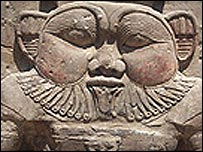 In 2005, a team of researchers from Georgetown University Hospital put together a study of dwarfism in ancient Egyptian society, based on tomb and skeletal evidence.
Published in the American Journal of Medical Genetics, this study revealed that the ancient Egyptians not only worshipped dwarf gods, but many dwarfs also held prominent positions in households and royal palaces.
The study found that in at least 50 tombs, there were artistic depictions of dwarfs that followed similar themes, indicating that dwarfs were well-integrated members of Egyptian society. They often held the same social positions as those of average height, such as personal attendants, entertainment overseers, or prominent merchants. Some tomb depictions even showed dwarfs in elite positions, acting as attendants to high court officials – indeed; several extremely rich dwarf burials have been identified in the royal cemetery near the pyramids at Giza.
This respect for dwarfism may have arisen from the inclusion of two dwarf gods in the Egyptian pantheon: Bes (protector of childbirth and children), and Ptah (god of reincarnation). Statues and vase paintings of these gods – and other dwarfs – were prevalent in the Old Kingdom.
According to Dr. Chahira Kozma, a member of the Georgetown study, “wisdom writings and moral teachings in ancient Egypt commanded respect for dwarfs and other individuals with disabilities.” Clearly, dwarfism was not viewed by the ancient Egyptians as a physical handicap, and indeed may have enabled these individuals to achieve even greater success within their communities.
Want to read more?

Tomorrow: Origins of man’s best friend!
By: The Scribe on Saturday, March 31, 2007

Located 250 metres north of Lima, Peru, the magical and religious centre of Chavin de Huantar was built in two phases: the Old Temple (ca. 900-500 BC) and the New Temple (ca. 500-200 BC).
Constructed 3,185 metres above sea level, Chavin de Huantar was built of stone blocks, with odd pyramid-shaped structures that have resulted in debate over whether the complex was meant to be used as a temple or a fortress.
The inside of Chavin de Huantar features a labyrinthine network of passageways, lit by carved ‘skylight’ openings overhead. One of the rooms also contained a five-meter high stone carving called the ‘Lanzon’, depicting contorted images of sacred deities and monsters.
Contemporary to the Olmecs in Mexico, the Chavin culture achieved an extremely high level of technology and skill in agriculture, art, architecture, and social organization – thereby allowing them to dominate a large portion of north and central Peru.
One of the most interesting aspects of the Chavin is the amount of religious artifacts that have been uncovered: a number of small mortars, bone tubes, and spoons were found at the temple, which may have been used to grind vilca, a hallucinogenic snuff. In addition, there are several examples of artwork that show figures with mucus streaming from their nostrils – a known side effect of hallucinogenic use – and holding ‘San Pedro’, a variety of hallucinogenic cactus!
Want to read more?


Tomorrow: Midget worship in ancient Egypt!?
By: The Scribe on Friday, March 30, 2007

In late 2006, archaeologists digging at the Mut Temple in Luxor discovered a column dating to the reign of Hatshepsut, upon which was carved an inscription describing an ancient Egyptian New Year’s festival called the “Festival of Drunkenness”.
Celebrated in honor of the goddess Sekhmet, the whole point of the festival was: get completely and totally smashing drunk, have a lot of sex, pass out… and then – hopefully – wake up the next morning to the sounds of blaring music. Some of the inscriptions make reference to “traveling through the marshes” which, according to site excavator Betsy Bryan, was an ancient Egyptian euphemism for having sex. This connection was also reinforced by ancient graffiti in the temple depicting men and women in various ‘positions’.
The inscription also included reference to several regulations for the festival, the most notable being a call for select individuals to make sure they remained sober – like ancient designated drivers, Bryan explained – to ensure everyone was participating safely and to prevent revelers from unintentionally causing harm.
After a night of drink, dance, and sex, musicians would walk around the festival grounds and play drums to wake up the participants. It was at this point – somewhat still inebriated and groggy – that the Egyptians believed they could communicate with the divine, and would ask the gods for their blessing and favor on the local community in the coming year.
Want to read more?


Tomorrow: Ancestors of the Inca
Previous page | Next page
