By: The Scribe on Monday, August 1, 2011
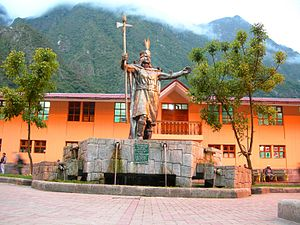
The one hundredth anniversary of the rediscovery of Machu Picchu has occurred and the site has become one of the most popular tourist destinations. Archaeologists originally believed that the site was a palace or estate for the Inca emperor Pachacuti who lived from 1438 CE to 1472 CE. Now, archaeologists are beginning to think that the site may have been created for different uses.
 Machu Picchu is located 2,430 meters or 7,970 feet above sea level. It sits on a mountain ridge and looks down on the Urubamba Valley. Construction on the site began around 1400 CE and was later abandoned approximately 100 years later when the Spanish Conquest began.
One theory is that the site was built in an area that was sacred to the Inca people. The Inca considered the Urubamba River to be sacred. Machu Picchu is built on a mountain which is circled almost completely by the Urubamba River. The site is also positioned so that the rising and setting of the sun is in alignment with mountains that are religiously significant. This is something that is unique to Machu Picchu.
The site also may have acted as a temple that was dedicated to an order known as the Virgins of the Sun. These women lived at Machu Picchu and were responsible for maintaining sacred fires, the weaving of sacred and royal clothing and even the preparation of ritual food. They were supervised by women known as Mama Cuna and governed by a high priestess known as the Coya Pasca.
A third theory was that the site acted as a royal retreat for the Incan Emperor. It was believed that the site was used so that the royal court could hunt, entertain guests and generally relax. It is unknown how long the court would have stayed at Machu Picchu. The theory was developed in the 1980’s and was based on a document written in the 16th century. It referred to a royal estate that was named Picchu and which was constructed in an area close to where Machu Picchu is actually located.
Another theory states that Machu Picchu may have been built as a way of recreating a mythic landscape that was important to the Inca people. The theory is that Machu Picchu acted as a kind of Mecca for the Incan people and that the journey to the site was actually a recreation of the harrowing journey that their ancestors took. The pilgrimage is believed to have begun at Lake Titicaca which lies on the border between Peru and Bolivia. The path that they followed went underground for a distance before it emerged in an area close to Cusco.
A final theory states that the site was actually an Inca city known as Vilcabamba la Vieja. This was the site where Inca rulers maintained their independence and fought against the Spanish conquistadors that were invading the Inca Empire in the 16th century. This theory was disproved when archaeologists identified the refuge in Espiritu Pampa which was a jungle site located approximately 80 miles west of Cusco.
By: The Scribe on Wednesday, July 27, 2011
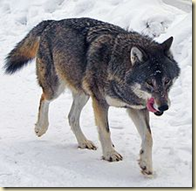 Scientists have begun to think that the relationship between dogs and humans may actually go back much further than they originally believed. Early humans domesticated dogs because they needed help herding animals as well as hunting them. They also provided an excellent alarm system and could be used as a food source in a pinch. Dogs enjoyed staying with humans because of the shelter and food that early man provided. Early dogs were still very much pack animals and enjoyed the companionship that early humans also provided.
In the past, scientists believed that humans and dogs paired up approximately 10,000 to 20,000 years ago. They used clues found in archaeological records in order to make this estimation. This was the time just before the practice of agriculture became a part of the lives of early humans. In the beginning, dogs were tamed wolves that were then interbred for specific characteristics. Some of the earliest dog fossils show this transition from wolf to dog. Examples of bones which show this change include those found at Chauvet Cave in France and Mezhirich in the Ukraine.
Now there is some proof that wolf bones that were found with human bones may have been dogs in their earliest stages. Because they were not bred for specific characteristics until much later it is possible that the wolf bones could have been those of domesticated dogs as the DNA would not have changed overly much in early days. Scientists now believe that dogs may have been domesticated in some form as far back as 100,000 years ago.
Scientists have been able to pinpoint what some of the earliest dog breeds are as well. The genetic structure of these dogs shows the least amount of change from wolf genes although some of the breeds are surprising. Fourteen ancient dog breeds have been identified. They are: the Basenji, the Shar Pei, the Shiba Inu, the Chow Chow, the Akita Inu, the Siberian Husky, the Alaskan Malamute, the Afghan Hound and the Saluki. The Saluki, in particular, is one of the oldest breeds. There are images of dogs which resemble salukis in Egyptian tombs dating as far back as 2134 BCE. They also appear on Sumerian carvings which hdate from between 7000 and 6000 BCE. Salukis are also connected to the Bible and to ancient China as well.
Scientists have also been able to determine that some dog breeds that were previously believed to be very old are actually more modern. These included the Pharaoh Hound, the Norwegian Elkhound and the Ibizan Hound. It is thought that these breeds were created in an attempt to recreate much older breeds that existed at one time.
It is believed that early dogs travelled to North America via the land bridge and likely  accompanied early humans as domesticated creatures. Some of these became wild dogs that have traits that are remarkably similar to dingos and other ancient canines. These traits include a medium build, a face that is vaguely foxlike, ears that are large and upright and a tail that is crooked.
By: The Scribe on Monday, July 25, 2011
I f you know your Roman history, you know that Caligula wasn’t exactly the most well loved emperor. Oh sure, in the beginning he was moderate and won the love of the Roman people by building aqueducts and other structures in the city. The crowds called him their baby and their star due to the fact that he was the son of Germanicus.
In the beginning, he won the support of the powerful Praetorian Guard. He gave them bonuses and if there is one thing that professional soldiers like, its extra money. If you were the Emperor, the Praetorian Guard was definitely one group of people you wanted to have on your side. In their earliest days they simply acted as bodyguards for the Emperor. Later, however, the Praetorians decided to get political. They worked with the senate in order to remove Caligula and other emperors from power and were key political players during the Year of the Four Emperors.
Caligula then started to get a swelled head. After all, he was the Emperor, wasn’t he? The people loved him and he was able to make any of his detractors vanish. Many of them were accused of various crimes and were fined in order to get his hands on their estates. He also decided to raise money by auctioning off the lives of the gladiators who fought in the Coliseum. Suddenly, Centurions were told that they had to hand over the spoils that they had acquired during plundering and while on military campaigns. This did not sit well with the Praetorian Guard or the rest of the Roman population.
In the middle of all of this was Cassius Chaerea. He was known for his bravery and skill in battle. He had seen some hard action and was part of the military that managed to subdue a mutiny that popped up on the German frontier following the death of Augustus. Did Caligula honor this soldier for his deeds? No. Instead, he decided to mock Cassius Chaerea’s voice and to call him offensive names. That mockery, combined with Caligula’s increasingly unstable behavior helped Chaerea decide to kill Caligula.
Now, he wasn’t the only one to have planned this. There were quite a few plots that centered on ending Caligula’s life. Over time, the plots slowly melded into one larger plot that involved not only Chaerea but members of the senate, the Equestrians and other members of the Praetorian Guard.
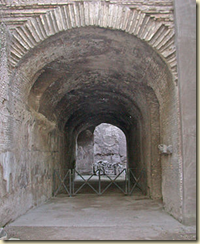 On the 24th of January, 41 CE, Caligula was in a cryptoporticus or underground corridor beneath the palaces on the Palatine Hill. Caligula was speaking with a troupe of young male actors when a group of individuals approached him. That group included Cassius Chaerea. The men surrounded Caligula and began to stab him. It is generally believed that Chaerea struck first. The position in the cryptoporticus made it impossible for Caligula’s loyal bodyguards to reach him in time. Caligula was dead.
After killing the Emperor, the men moved on. They searched out Caligula’s wife, Caesonia and a daughter named Julia Drusilla. Both were killed. They would have killed Caligula’s uncle, Claudius but he had already been spirited away to a Praetorian camp. Claudius later became Emperor of Rome.
By: The Scribe on Wednesday, July 13, 2011
A theory has been put forth that humans lack body hair in an attempt to reduce the number of parasites that affect us. There are many parasites such as ticks, fleas and lice that actually prefer to make their home in coats of deep fur. Humans lack body hair which makes us unique among primates and in a category shared only by a few semi-aquatic species of animals such as hippopotamuses, dolphins and whales.
 The study was developed by a behavioral ecologist and an evolutionary biologist. It basically states that because ancient humans were able to use fire, wear fire and construct shelters they no longer needed the thick coats of fur that early humanoids may have had. The hair on humans still exists in many areas but it has become so fine that it no longer works for heat regulation and no longer can support colonies of annoying parasites.
There are differences in body hair between men and women and the authors of the study say this supports their theory as well. It was believed that hairlessness became a desirable trait in mates and this may have been one reason why women have less body hair than men. A desirable mate was one which was less susceptible to parasitic infestation and being hairless advertised that an individual did indeed possess this desirable trait. It also explained why head and facial hair continued to be so thick. Humans use facial and head hair (or a lack of it) as a way of determining physical attractiveness in a mate. By retaining head and facial hair, this method of determining sexual attractiveness would not have been lost.
In the past, scientists thought that we abandoned our fur coat as a way of surviving in hot environments such as the African savanna. Scientists have accepted this theory even though other primates who lived in the same environment did not lose their hair coats like humans did.
It was also believed that the change in our fur coat came when we left the trees and 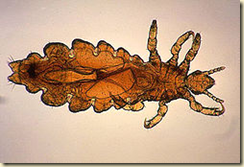 began to dwell on the ground. A third theory stated that we lost our hair coat when we became semi-aquatic approximately 8 million years ago. At that time, humanoids began to swim and to immerse themselves in water. It was not surprising that we would adopt the same kind of thin hair coat that other aquatic mammals had.
Humans were still plagued by parasites even after they became hairless. A number of parasites such as body lice continued to affect early humanoids. They tended to live in the clothing and bedding that humans used on a regular basis. It was much easier to change clothing or bedding than it would have been for humans to get rid of parasites living in a thick coat of hair or fur.
While this theory seems to explain many of the reasons why humans would have lost their body hair it has not totally been proven as fact. Scientists would need to compare the amounts of body hair that populations have against the number of parasites that plague that population. That way they may be able to tell whether humans lost their hair to keep parasites at bay.
Previous page | Next page
 Machu Picchu is located 2,430 meters or 7,970 feet above sea level. It sits on a mountain ridge and looks down on the Urubamba Valley. Construction on the site began around 1400 CE and was later abandoned approximately 100 years later when the Spanish Conquest began.