By: The Scribe on Wednesday, March 9, 2011
Visitors to the Helan Mountains in Yinchuan, China may have noticed strange, pyramid-shaped structures rising from the earth. These are some of the only remnants of the Tangut Empire that was exterminated by the Mongols in 1227 CE.
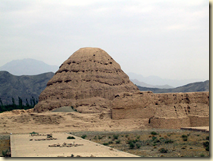 Although there are over 200 tombs of varying sizes, only nine of them belonged to members of the Imperial family. The tomb complexes were originally covered with glazed green tiles but in many cases, the tiles were pulled off and the tombs were cracked open. This was part of the campaign to exterminate the Tangut Empire that was carried out by Genghis Khan’s descendents.
The Tanguts were a fairly advanced people. The empire was founded in 982 CE, under the rulership of Li Deming. In 1038, Li Yuanhao (also known as Emperor Jingzong) commanded that a Tangut system of writing needed to be created and, after this was accomplished, then ordered that Chinese classics should be translated into that writing system. It took fifty years for the Chinese Buddhist canon to be translated into Tangut. Over time, the Empire developed an organized and efficient military and also became quite advanced in art, literature, architecture and music.
The Tanguts also had a strict legal system especially where religion was concerned. It was believed that the Tanguts were Buddhist, although there may have been some people who followed Confucianism as well. A person who wanted to teach was required to be screened by state officials and receive approval from local authorities before he was able to teach in the Tangut Empire. Charlatans and fortune-tellers in particular were persecuted by the authorities.
Women in the Tangut Empire were also allowed a role in the state’s religious practices. This was unusual in China at the time. They were permitted to be Buddhist nuns, but only if they were a virgin or had been widowed.
The Tangut people had been attacked by the Mongols six times between 1202 CE and 1226 CE. They were able to hold them back, but it wasn’t easy. This happened in spite of the fact that the Tanguts submitted to Genghis Khan in 1207 and that the leader, Xiangzong, gave his daughter to Genghis in marriage.
The Tanguts and the Mongols were allies for a time. Then, in 1216 CE, the Mongols approached the Tanguts and asked for their aid in a campaign that they were mounting against some Islamic countries. They refused. This was a disastrous decision that ultimately led to the downfall of the Tangut Empire as a whole.
Genghis died in 1227 CE. According to some historical records, one of his last commands was that the Mongols destroy the Tanguts and wipe their empire from the face of the earth. The Mongols overran the capital of the Tangut Empire, slaughtered the residents and destroyed not only the tombs of the rulers but their literature, art and other records of their achievements. Tens of thousands of Tangut civilians were killed by the Mongols and the military was absorbed into the Mongol army.
Although the Tanguts were destroyed as a civilization, some did escape and form small communities in the Anhui and Henan provinces of China. However, as a whole, their empire had been totally destroyed and, over time the Tanguts faded into history.
By: The Scribe on Monday, March 7, 2011
If you lived in Rome in the fourteen and fifteen hundreds, there was one family that really ruled the city- the Borgia family. Three of the most infamous members would have to be Lucrezia Borgia (1480 CE to 1519 CE), her father Rodrigo (, who was elected Pope Alexander VI and her brother, Cesare who was appointed a Cardinal of the church in 1493, and acted as captain-general of its forces in the early sixteenth century. Although these are perhaps the three best known of the Borgia family, many family members held important positions in Renaissance Rome and helped shape not only the city but much of Europe as well.
The Borgias were patrons of the arts and, in many ways helped to promote Renaissance music and art, allowing it to flourish much more than it would have been able to otherwise. It was not uncommon to see many great artists, thinkers and philosophers such as Leonardo da Vinci visiting the court of the Borgias.
 Rodrigo, in particular, also supported the university and improved the city of Rome while he was in power. Rodrigo also divided the New World up between Spain and Portugal through the use of a Papal Bull or proclamation. This helped to bring peace between the two nations, something which had been difficult before Rodrigo had become involved. Rodrigo was known for being an excellent statesman and diplomat, which was interesting because in other ways, he tended to be very short tempered and quick to avenge any perceived slight or political challenge to his position or his family.
There are many controversies that surround the Borgia family. Rodrigo was known for a lifestyle that included many different excesses including women. In fact, not only did he have several mistresses, he brought them with him to the Papal court and openly acknowledged the children that they bore him. He was known for attending public orgies such as the Banquet of Chestnuts along with his daughter Lucrezia and his son Cesare. There were many rumors that stated he was involved in an incestuous relationship with his daughter Lucrezia. It was also rumored that he had paid the cardinals to elect him as Pope.
Lucrezia was married three times. All three marriages were arranged by her family as a way of strengthening their political position. She became known as much for her habit of poisoning people as she was for her political skills. Many people now believe that she was manipulated by her family rather than being cruel in her own right.
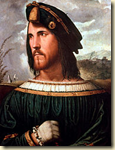 Her brother Cesare was known for being truly reprehensible. He had originally been appointed a cardinal in the church but after his older brother Giovanni’s murder in 1497 CE, he took over as commander-general of the church. While in command of the church’s army, he waged war in order to carve out a state in northern Italy that he could rule in his own right. During this time he committed many different atrocities including murder, theft and other crimes.
By: The Scribe on Friday, March 4, 2011
People who have watched the movie The Mummy have heard of Imhotep. In the movie, he was an ancient, undead monster who was condemned to a living death for loving the wife of the Pharaoh. Many people may not realize that there was a real Imhotep who lived between 2655 and 2600 BCE. They also may not be aware that he is responsible for some of the pyramids that we know and love. While he was not the architect behind the Great Pyramid, Imhotep was the first one to take the mastaba structure that was the common shape for tombs and turn it into a soaring structure that endures to this day.
But building pyramids is not Imhotep’s only claim to fame. He was also credited for inventing many things, including an improved form of the papyrus scrolls that were used for all types of writing. He was also believed to have been one of the earliest and best known Egyptian physicians as well. Although two other physicians, Hesy-Ra and Merit-Ptah also lived at the time, it is Imhotep’s writings on medicine that have attracted the most attention. The Edwin Smith Papyrus, believed to have been written by Imhotep, is full of his observations on anatomy as well as descriptions of various ailments and cures. The cures depicted on the papyrus are lacking in many of the incantations and strange ingredients that were common to Egyptian medicine at the time. The papyrus is notably lacking in the magical thinking that was so common at the time.
Although Imhotep seemed to have been able to separate out magical thinking from scientific observation, much of his life was steeped in religion and superstition. He became the patron saint of Egyptian scribes who were known to pour him a libation before they began any work. He was also depicted on a portion of a pharaoh’s statue. This had never been done before.
 Although much of his work was done in the name of the Pharaoh Djoser, it was believed that Imhotep lived on after Djoser’s death. It was believed that he then went on to work for the Pharaoh Sekhemkhet. Unfortunately, Sekhemkhet’s reign was so short (only six or seven years) that he did not survive to see the completion of his pyramid. Although Imhotep was responsible for building some of the largest and most visible tombs in Ancient Egypt, his own resting place has never been found. It is believed to be located somewhere near Saqqara, an area that served as a necropolis for Memphis.
After his death, his reputation continued to grow. He was awarded divine status after his death and was worshipped by a cult that was based in Memphis. He was linked to several gods and goddesses including Nut (the sky deity), Hathor (who eventually became the wife of Ra), and Ma’at, who stood for truth, cosmic order and justice. He eventually became the god of medicine and healing although this did not happen until about two thousand years after his death.
By: The Scribe on Wednesday, March 2, 2011
Many people are familiar with the story of Hannibal the Great. He was a Carthaginian who was famous for crossing the Alps with elephants and soldiers in tow. To make such a massive trek really requires dedication. For Hannibal, his desire to overthrow Rome was so strong that he was not about to let a little thing like a mountain range stand in his way- but why? Part of his hatred lay in where he was from, and part came from who his father was.
Hannibal was from Carthage, a city-state that was located outside of where Tunis, Tunisia now stands. Over time, Carthage took control of some of the most economically powerful colonies in the area. The city-state became quite powerful as a result. Rome didn’t really enjoy having any rivals for power in the area and, in 509 BCE, signed a treaty with Carthage that divided both the political influence and the commercial activity in the area. Despite this division of power, Carthage managed to become the center of commerce in the Western Mediterranean region.
Rome let this stand until 24 BCE, when the First Punic War broke out. Although it was not strictly between Carthage and Rome, they were some of the major players in the conflict. Enter Hamilcar Barca, a general who led Carthaginian troops in later portions of the war. Hamilcar Barca was Hannibal’s father. By the time he got involved, the war had already been going on for some time. Hamilcar was a fairly brutal man. He punished any of the mercenaries that had rebelled by murdering, drowning or sending them away.
Hamilcar trained Hannibal to be his successor and instilled in him a deep suspicion of, and hatred for, Rome. Hannibal saw himself as taking up his father’s fight against Rome. There were many stories that came out of Carthage about how Hannibal had been groomed to take up the fight. Some state that he swore to the God Baal that he would continue to fight against Rome. It was said that the Carthaginians were willing to sacrifice their own nobly born sons in order to keep Rome from taking the city.
The Second Punic War began in 218 BCE, and involved Hannibal’s long, overland trek through the Alps with his troops and elephants. Although it is commonly known as a fight between Carthage and Rome, other parties were involved as well. Carthage, Syracuse, Macedon and other peoples who were located in the western Mediterranean were all involved in the conflict.
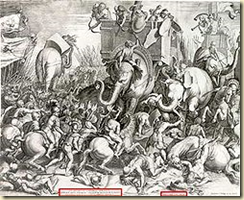 Hannibal managed to seize and hold control over a large portion of Italy for years but, in the end, Hannibal was defeated. The Battle of Zama took place in 202 BCE between forces led by Hannibal and Scipio. The elephants that Hannibal had brought so far turned out to be of little use in the battle. In the end, Hannibal’s troops were encircled and annihilated by the Roman troops. This forced Carthage to sue for peace and ultimately led to the destruction of Carthage itself.
Previous page | Next page
 Although there are over 200 tombs of varying sizes, only nine of them belonged to members of the Imperial family. The tomb complexes were originally covered with glazed green tiles but in many cases, the tiles were pulled off and the tombs were cracked open. This was part of the campaign to exterminate the Tangut Empire that was carried out by Genghis Khan’s descendents.


