By: The Scribe on Wednesday, October 24, 2007
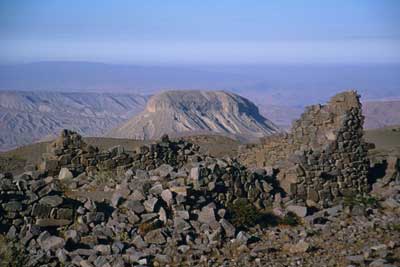
About a thousand years ago, the Wari people living at the town of Cerro Baul in southern Peru evacuated their city… but before they left, they had a few tasks to fulfill:
1) Get completely plastered on spicy corn beer.
2) Set the brewery, temple, and palace on fire.
Naturally, this was simply the course of action taken to fulfill a ‘ceremonial destruction’ of where they used to live – since both the Wari nation and the neighboring Tiwanaku state were in decline, the Wari people of Cerro Baul probably figured that they had better plans for helping their people survive than to simply continue living up on their flat-topped mountain.
The Wari people and their Tiwanaku neighbors were both agriculturally-based societies, and the Wari had lived since 600 AD on top of a 2,000-foot-high mesa – which might seem somewhat counterproductive, since any traded goods would have needed to be hauled up and down the side of the mountain, a rather dangerous task no matter how you look at it.
However, the most likely explanation was that the Wari wanted to show off their prowess to the Tiwanaku – establishing themselves with a bit of ‘king of the castle’ bravado, since the nearest Tiwanaku city was only 5 miles away and would have been able to see the Wari’s town rather clearly from their vantage point. Mind you, there is no evidence for the two groups ever fighting each other – it seems that the Tiwanaku were more focused on their religious devotion – and both seem to have worshipped the same gods… can you say ‘sibling rivalry’?
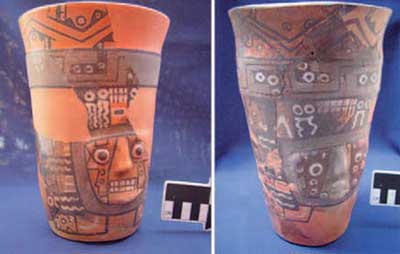
Another thing both the Wari and the Tiwanaku shared was a deep appreciation for something called ‘chicha’, which was a fermented alcoholic drink made from corn – it was quite similar to modern day beer, and it was consumed in excessive quantities during their necessary drinking rituals.
Michael Moseley, an anthropologist at the University of Florida, had this to say about the Wari and Tiwanaku’s love for beer: “You couldn’t have a ceremony without intoxication; people would drink until they fell down, then get up and start drinking again.” Considering this perspective, perhaps the sudden decline of both cultures around 1000 AD isn’t so inexplicable after all…! Though, of course, it actually seems that a long-term drought was to blame.
Thus, if the drought caused severe problems for these agricultural societies, the Wari probably saw their inconvenient settlement location as less important than it had originally seemed to be – and so, the Wari people brewed up one last batch of beer and promptly set fire to the entire city. Archaeological evidence shows that the roofs of buildings were deliberately burnt and many drinking cups were ‘ritually smashed’.
Since chicha takes a week to brew, the people had time to get themselves organized for the event – evidence shows that there were not only 28 local tribe leaders assembled in the courtyard at the time of the drinking party, but the presence of many, many animal bones shows that the people had quite the feast before heading out to burn the town.
So, after eating too much, and getting far too drunk, the local men went out into their former hometown and set everything in the palace, temple, and brewery that could possibly be combustible on fire – then they threw their beer mugs into the flames, and walked away to start new lives elsewhere… presumably, they had actually taken that part into consideration.
Want to read more?


Tomorrow: Racism in ancient Rome (or the lack thereof)
By: The Scribe on Tuesday, October 23, 2007
 A study done at Newcastle University in the UK revealed something about the Romans that was previously unheard of: it appears that the Romans had no qualms about Africans holding various positions within Roman society, regardless of whether that position was the Emperor of Rome or a domestic slave. Judging by the evidence… it appears that Romans were colorblind when it came to people with differently colored skin.
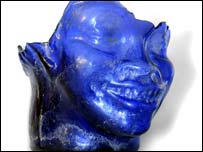
The University holds a rather substantial collection of what has been termed ‘Romano-African’ artifacts, and these objects point quite blatantly at the presence of Africans on Rome’s military frontier, especially along Hadrian’s Wall. One of the objects was a blue, mould-blown glass vessel that was shaped like the head of an African man – and while there are have only been three of these found thus far, the fact that it was made from a mould suggests that these kinds of vessel may have been popular items.
According to historical documents, out of all the people who helped to build Hadrian’s Wall, there were actually very few “Romans” involved – there were plenty of Spanish, Gallic, and Germans working on the project, while a number of auxiliary units that were stationed on garrison duty actually came from North Africa.
Aside from the privileges of thorough military training, well-known Africans in the Roman Empire included a man named Victor, who was a freed slave from Morocco, and even the Emperor Septimius Severus, who came to Rome from Lepcis Magna in Libya! Evidently, color and country of origin were moot points when it came to social participation in the Roman Empire.
Skin color aside, what the Romans were well known for was their deep-seated prejudices against a whole host of other kinds of people, such as those they called ‘barbarians’ – ie. anyone outside of the Roman Empire’s control – and… they weren’t particularly fond of men who wore earrings. But prejudices based on color? The Romans were far beyond that.
Want to read more?


Tomorrow: More Ancient Standard
By: The Scribe on Monday, October 22, 2007
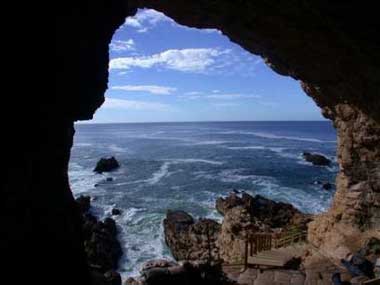
Inside of a cave in South Africa, archaeologists discovered a half-meter of ancient trash that revealed a surprising amount of information about the people who lived at the cave site about 164,000 years ago. The tens of thousands of years worth of garbage included things like brown mussel shells, animal bones, and other remains of marine invertebrates.
During ancient times, the cave on Pinnacle Point would have been only a few kilometers from the ocean’s shore, which means that whoever lived in the cave had very easy access to the water’s resources – and it’s not too far-fetched to consider that these people probably had open fires on the beach where they ate their meals in good weather.
One odd thing that was found in the garbage was a whale barnacle. However, it probably isn’t that unlikely that – while these people wouldn’t have been sailing out to the sea to hunt whales – if a whale had washed up onshore at a some point, they probably would have eaten the whale and used its parts for resources.
Another thing that was found in the cave was a collection of ochre pieces. Ochre is a soft stone that can be scraped in order to create powders with strong, colorful pigments. The presence of bright ochre in ancient cultures is often associated with things like ritual and symbolism – namely, body painting! Most of the ochre found at the cave was red, so it’s entirely possible that the people living here liked to give each other red temporary tattoos, although the meaning of such decorations is impossible to determine.
Finally, the South African cave also yielded some tiny, sharp blades, often referred to as ‘bladelets’. At less than 10mm wide, they were probably attached to the end of a long stick, in order to create spear points – or they could have been lined up along a piece of wood or rope to create a deadly, barbed weapon.

Want to read more?


Tomorrow: a Peruvian drinking ritual & brewery burning
By: The Scribe on Sunday, October 21, 2007

The fort of Tjaru, also called Tharo, was an ancient Egyptian fortress along the major road from Egypt to Canaan. Known as ‘the way of Horus’, the road was extremely important for both travel and trade – and in times of war, whoever controlled the road essentially controlled the territory. Previously known only through descriptions and images, archaeologists have finally uncovered the fort itself – and it turns out that this fort was one of the largest fortresses to have existed during the Pharonic era in ancient Egypt.
The walls of the fort were made with mud brick and were 13 meters thick! Twenty-four watchtowers were built above the parapets on the walls, and a deep moat was dug around the entire perimeter of the city – and this was only one fortress in a chain of 11 that spanned all the way from the Suez to the current Egyptian-Palestinian border.
Inside the fortress, workers discovered graves containing horses and soldiers buried together, attesting to the severity of the battles in this area during the Egyptian struggle against invaders known as the Hyksos. In the 17th century BC, the Hyksos had invaded Egypt and eventually took control of the country, ruling the entire Nile during a time known as the “Second Intermediate Period”. They managed to hold the country for approximately 100 years before the Egyptians took back control of their land – and in order to secure themselves against future Hyksos invasions, giant fortresses were built along the river.
Although clear evidence of this specific fortress had not been found until now, a depiction of Tjaru could be seen on the walls of Karnak Temple in Luxor – depicting everything from the moat around the fortress to the large, wooden beams that spanned areas of its construction. Tjaru was also mentioned under the name ‘Silu’ in one of the Amarna letters, which were a series of correspondences between the Egyptian rulers and their representatives – ie. diplomats – residing in Canaan during the 15th century BC.
Want to read more?


Tomorrow: More Ancient Standard
Previous page | Next page
