Archive for the ‘Ancient Asia’ Category
By: The Scribe on January, 2008

Twelve years passed without excavations at Zhoukoudian. Finally, in 1949, the political situation was stable enough for the work to continue, and work seasons were held in 1951, 1958-60, and again from 1978-80. A surprising number of additional fossils were found during these excavations:
1959: Almost full mandible belonging to an older female.
1966: Frontal and occipital skull fossils, allowing for a complete skullcap reconstruction. The skull fossils found here belonged to the same individual whose bones had been excavated in 1934-36.
Between the years of 1921 and 1966, the Peking Man fossils that were excavated brought the findings to a total of 6 almost full crania/skullcaps; 19 large skull fragments; many small skull fragments; 15 partial or incomplete mandibles; 157 isolated teeth; 3 humerous bone pieces; 1 clavicular; 1 lunate; and 1 tibia.
 Studies on these fossil fragments then made several conclusions about this ancient man. Peking Man walked upright, like modern humans, and had a similar skeletal morphology – males were between five and six feet tall (about 5’11”), with the women just under five feet (about 4’73”). However, despite all the study done on the physical aspects of the people and examinations of cranial capacity… there is little that can be actually learned about Peking Man from fragments of bone. Instead, it’s the material remains that really makes a difference.
Fortunately, plenty of mammal fossils, ash piles, and other artifacts were found at the dig locations! Around 118 animal fossils were recovered, and reportedly about 100,000 other items were collected from the site – nothing was left behind, just in case it might provide some clue about Peking Man’s background.
The recovered stone tools from Zhoukoudian were made with various types of rock, which seems to suggest an aesthetic appreciation for different textures and densities – everything from vein quartz, to flint, to sandstone, to quartz crystals were used, alone with boulders and cobble to assist in tool creation. The tools were also made using different methods as time progressed!
Peking Man’s tool-making proficiency is often divided into three stages: in the early period, the artifacts were mostly middle to large, and typically made of quartz and sandstone. The flaking technique here is known as ‘block on block’ or ‘anvil technique’ – the large core rock is actually struck against a large, stationary rock (an “anvil”) to remove flakes of stone In the middle stage of tool industry, this manufacturing style was abandoned and a ‘bipolar technique’ was used, a modification of the first method. In this case, the core is placed on the anvil as support, and then struck with another object to function as a ‘hammer’, compressing the stone at both ends and causing the rock to shatter into hopefully usable pieces.
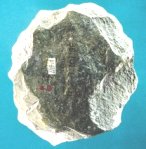 Unfortunately, both methods give very little control over the stone and the pieces that fly off it, creating rather dangerous and extremely sharp rock projectiles! Naturally, Peking Man wanted to find something better, and so the late stage of tool making was far more advanced. Tools became much smaller, were higher quality, and semi-translucent quartz was used for most of the objects. The technique used was called ‘direct percussion’: the core is held in one hand, and stuck with a hard hammer stone to remove the flakes, giving the flintknapper very close control of the object and the size of flakes that are removed.
But even more interesting? Peking Man had fire…
Want to read more?

Tomorrow: Part 3 of course!

By: The Scribe on January, 2008

The origins of Tae Kwon Do lie in the area of Asia known presently as Korea, during the Koguryo Dynasty which ruled between 37 BC and 668 AD. The martial art was developed out of an amalgamation of unarmed combat styles that were being practiced by three rival kingdoms at the time: Koguryo, Baekje, and Silla.
The earliest evidence for Tao Kwon Do is found in wall paintings on warriors’ tombs that date back to around 3 AD. These wall paintings show men engaged in battle with each other, in a type of fighting often referred to as ‘Subakki’. Although different from the kind of Tae Kwon Do practiced today, its origins were found in this ancient fighting style.
Since Koguryo was being threatened by rival kingdoms, a special corps of warriors was formed for its protection. These men were known as the ‘Sonbae’ – meaning “man who never recoils from a fight” – and are thought to have practiced another fighting style called ‘Taekkyon’ , which was a direct predecessor of Tae Kwon Do.
Eventually, the Sonbae’s Taekkyon fighting made its way to the Silla Kingdom, where its own version of the Sonbae – the Hwarang, or “Flower Knights” – took the new style and adapted it for their own use. It was around this time that the “five student commitments” were developed for students of Taekkyon, and which are still taken by Tae Kwon Do students today.

Meanwhile, the third rival kingdom of Baekje – a tribe which had actually split from the Koguryo kingdom years before – was developing their own special warrior corps, called the ‘Soo Sa’. They were employed to defend the kingdom, and learned a fighting style called SooByeokTa, which also built upon Taekkyon fighting and would become a Tae Kwon Do predecessor.
Eventually, the kingdom of Koguryo was able to rise up and conquer its two rivals, which unified Korea under one dynasty. The Koryo Dynasty ruled the area between 918 and 1392 AD, and all men who were a part of the military received martial arts training as part of their regimen. Specific rules and standards of evaluation were thus developed as Taekkyon techniques became standardized, thereby developing what has become known as the first ‘official’ form of Tae Kwon Do.
Since that time, Tae Kwon Do has continued to mature and develop as a martial art, however this is an important part of the art itself – after all, its origins lie in the amalgamation of three fighting styles, centuries ago.
Want to read more?


Tomorrow: Caesar censors
By: The Scribe on January, 2008

First discovered in 1921 during excavations at the site of Zhoukoudian near Beijing, the fossils of Homo erectus pekinensis have since been the source of controversy, speculation, and rather extensive research into human ancestry. Known more colloquially as ‘Peking Man’, the fossils have been dated to about 250,000-400,000 years ago, placing them in the Pleistocene.
The story of the fossils’ discovery begins in 1921, which was when the first surveys of the region were conducted. Locals told the men organizing the dig – the famous Swedish archaeologists Johan Gunnar Andersson and Otto Zdansky, a well known Austrian palaeontologist – that there were fossils on a hill opposite from where they were working, and figuring that locals probably knew the area better than they did, the men began a survey of the area and found two human-like teeth.
The teeth weren’t formally announced to the scientific community until a few years later, in 1926 – but the news was still potent enough to astonish the world, since up until that time, absolutely no ancient human fossils had been found in China, let alone the entire Asian world! As for which teeth they were, one was an upper molar, while the second was an unerupted lower premolar.
A Canadian anthropologist then had the opportunity to study the fossils, noting that it appeared to belong to an entirely new species of Hominidae! It was around this time that academics dubbed the molars as belonging to a “Peking Man”, though its official name is either Sinanthropus pekinensis, or more commonly, Homo erectus pekinensis. It was decided that further excavations were needed of the area, and in 1927, a second excavation was begun at Zhoukoudian.
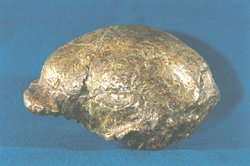
The results were far greater than anyone had expected. In 1928, two lower jars were unearthed, allowing for the establishment of a specific research laboratory just for these fossils. Over the next seven years, archaeologists would find more than 40 fossil specimens, including 6 almost fully intact skullcaps.
While previous “human” fossils had caused considerable argumentation and unrest in the scientific community, it seemed that the Peking Man was indisputably human. Results from examination of the fossils deduced that Homo erectus was quite different from apes in terms of physical characteristics and cranial capacity, and that the skullcaps of Peking Man indicated by their physical form that they belonged to a creature capable of creativity, cultural development, the creation of fire, and systemized hunting.
What was more, scientists argued that Peking Man stood in a position to occupy the intermediate stage of human evolution. Since then, scientists and historians have since admitted that this statement was perhaps too bold and premature, but they still consider Peking Man to occupy an important phase of human history.
In 1937, the Japanese moved into Beijing and occupied the area, forcing excavations to end. They were stored in a safe location until 1941, when they were packed up to be sent to the USA for safekeeping until the war had ended. However, as the fossils were en route to the port city of Qinghuangdao, the crate containing all the pieces mysteriously vanished…
Want to read more?
Tomorrow: Part 2!
By: The Scribe on November, 2007

At the site of Phum Snay in northwestern Cambodia, archaeologists uncovered a group of 35 skeletons, believed to date between the first and fifth centuries AD. The unusual aspect of the burial, however, was that five of the skeletons were females – and all of them were buried together with bronze or steel swords and helmet-like objects.
In an era and location where women were supposed to have played a more ‘traditional’ role in society – these were villages of fishermen and rice-farmers, where women tended the household and were responsible for mending clothes, caring for children, and food preparation – finding battle objects with female bodies was quite surprising.
The burials seem to suggest that this area of Cambodia was a place where female warriors played an active role in the society – and the find-spots of the skeletons in prominent locations within the tomb also indicates that these women were held in high regard, at least to some degree.
Of course, before any theories can be made absolute, it is probably best to wait until more investigation is done on the women’s bones – if the skeletons show signs of cut marks and other battle-related damages or injuries, then it is likely that the theory of Cambodia’s version of ‘Amazon’ warriors may actually ring true.
Want to read more?


Tomorrow: Mummy Lion
Previous page | Next page
