Archive for the ‘Ancient Asia’ Category
By: The Scribe on October, 2007
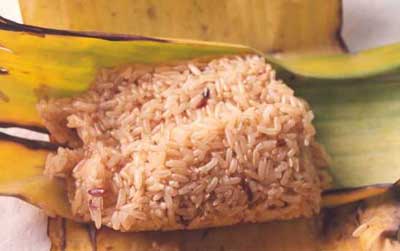
Once thought to be merely an ancient legend, it turns out that several thousand years ago, the Chinese were using sticky rice to cement their walls. Indeed, this glutinous ‘rice porridge’ was the best kind of mortar additive available, surviving until today in the remnants of plaster on ancient Chinese bricks.
It was during a round of maintenance work on the ancient wall of Xi’an that workers found that the plaster on many bricks was extremely difficult to remove – and since the task was much more difficult than it should have been, the substance was tested. Infrared analysis then revealed that the mortar had a molecule structure nearly identical to that of glutinous or “sticky” rice.
In fact, the use of rice as mortar may be the real reason that many ancient Chinese structures are still standing! The wall of Xi’an was built in the early years of the Ming Dynasty that spanned from 1368-1644 AD, and still remains standing at approximately 12 meters high.
While the claim that construction workers used sticky rice to build the Great Wall of China had previously been discounted as a myth, it turns out that there may have been truth to the legend after all.
Think about it: workers wouldn’t have to stop for lunch, they could just snack while they were working…!
Want to read more?

Tomorrow: More Ancient Standard!

By: The Scribe on October, 2007
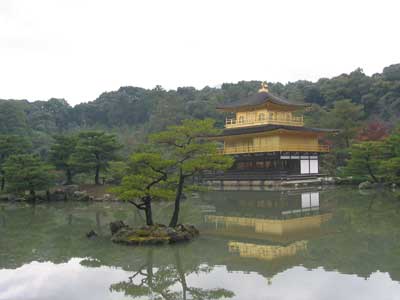
During the pre-Meiji era in ancient Japan, the term “Kugyo” was used to refer to a group of the most powerful men of influence in the court of the Emperor. The group typically contained only three or four men at one time, and each came from a background of extensive experience that had brought them to this ‘pinnacle’ of his entire life’s work. They were also hereditary courtiers, and each held one of four specific offices.
The Sadaijin was the “Minister of the Left”, and as the Senior Minister of the State, he oversaw all the branches of the state and had the Udaijin as deputy. Within the State Department – or, Daijo-kan – his position was second in power and influence to the Great Minister of the Realm. For centuries, the position was most commonly held by a member of the Fujiwara family, in order to justify the influence the family held in Japan.
The Udaijin was “Minister of the Right”, and he helped the Sadaijin to oversee all the branches of the Daijo-kan.
The Naidaijin was the “Inner Minister” or “Minister of the Center”, with the rank and role of this position varying over time. He was essentially responsible for internal affairs and making sure they were kept in order.
The Dainagon position was created in order to assist the Sadaijin and the Udaijin with their affairs, although by the 17th century, the position had been modified to give primary assistance to the Nadaiji. This was done in order to ensure that there was another person ready to replace the main court officials, should something happen to one of them.
Although the Kugyo had a large amount of power and responsibility during the early pre-Meiji eras, they gradually lost power as the Fujiwara family came to dominate Japanese politics in the 10th and 11th centuries. By the 12th century, the group was nearly powerless – and it certainly didn’t help that the warrior clan Minamoto seized control of the country through the aristocratic courts.
Regardless, the Kugyo continued to function as a figurehead group inside the palace walls for centuries to follow.
Want to read more?


Tomorrow: More Ancient Standard
By: The Scribe on October, 2007
The first rice fields in China were swamped – literally! In fact, Chinese rice fields in the Neolithic period, around 7,700 years ago, were located in eastern China’s coastal wetlands – which is almost 2,000 years before anyone had previously believed rice farming in China even existed.
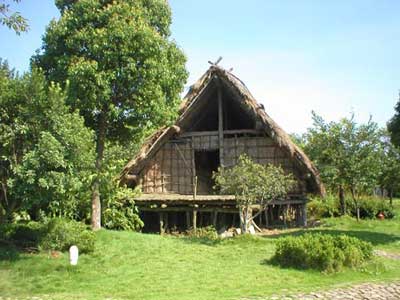
At the site of Kuahuqiao in China, it appears that inhabitants created wooden huts that were perched on stilts above the wetlands – which enabled the rice farmers to utilize natural resources such as fire and flooding to help manage and cultivate rice paddies. Fire would have been used to clear brush and scrub from the area, while flood-prevention methods were organized to prevent brackish, murky swamp water from leaking into the fields.
Flood control was likely managed through the use of earthen dikes called ‘bunds’, and it is possible that dung from humans and/or animals was used as fertilizer. Many of the varieties of rice found in the fields belonged to strains of wild rice, though the grains were much larger than what would typically be found in the wild – large grains almost always mean domestication.
The site has also yielded a dugout canoe from 8,000 years ago, plenty of tools made from wood and bamboo, dog and pig bones, and pottery that used wild rice as a bonding agent.
Why would people in this area begin to farm rice, if there was wild rice around for the taking? Evidence suggests that the climate in the area began to see increased temperatures, which would have acted as a prompt for cultural change. Farming rice would have been a natural, easy option for a stable food source, since warmer and wetter conditions are ideal for growing cereal plants.
The regular flooding of these coastal wetlands enabled the ancient Chinese of this area to begin China’s history of domesticated rice crops – however, rice farming probably evolved independently elsewhere in other parts of Asia, including parts of southern China and northeast India.
Want to read more?


Tomorrow: Edgar of Scotland
By: The Scribe on September, 2007

In the ancient wilderness of China, India and Vietnam, there once existed a very special monkey… actually, he wasn’t a monkey at all, but a giant, 10-foot-tall ape called Gigantopithecus. Coming in at 2 to 3 times bigger than any modern gorilla, the Gigantopithecus was the largest ape to ever have existed – and for some reason, it died out rather suddenly about 100,000 years ago.
As terrifying as it might have been to meet this giant primate on a stroll through the forest, early humans wouldn’t have needed to fear the ape for anything other than its size – all indications are that the Gigantopithecus species subsisted on mostly bamboo, with seasonal plants to supplement its diet! Researchers know this to be the case because, while fossil evidence for these enormous apes is scarce, plenty of huge molars have been found that are nearly one square inch in size.
In total, palaeoanthropologists have three mandibles, or jaw bones, of the giant apes, as well as hundreds of teeth. Based on its size, Gigantopithecus would have weighed at least half a ton – which seems to suggest that the extinction of the species must have come as a result of climate change, and not from being hunted by other animals. These primates were, quite simply, too big to fear threats from predators!

One theory is that Gigantopithecus was a victim of a bamboo crisis, since bamboo crops tend to go through cycles of growth – every twenty to sixty years, bamboo forests tend to experience a shift and die out before regaining crop strength. It is possible that competition with the area’s pandas and other bamboo-eating creatures may have simply caused the short straw to be drawn by these apes.
As one might expect, Cryptozoologists maintain that one Gigantopithecus species – there are three distinctly known species in total – did not die out, and instead managed to survive by adapting to its environment… and which is now known by the more popular names of ‘Bigfoot’ and ‘Yeti’!
Want to read more?


Tomorrow: More Ancient Standard
Previous page | Next page
