Archive for the ‘Ancient Europe’ Category
By: The Scribe on September, 2007
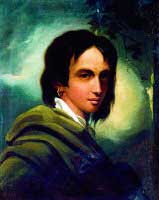 At the workhouse, Mary was persuaded to turn the child over to the Foundling Hospital. In order to do so, she was required to give up personal facts and details – all of which are still on record in the hospital archives – to explain why she could not support the child. What she told the hospital was probably as close to the truth as she had ever revealed: her name was given as Mary Wilcox, unmarried, 25 years old, and the father had been a bricklayer named John Baker who had deserted her after they walked to London together.
For the next several months Mary worked for a family near the hospital, visiting her son every week until he died in October of 1816. He was only about 9 months old. Mary didn’t tell the people she was working for that the child had been in hospital, instead choosing to explain he had died at Mary’s mother’s house. Regardless, the Starling family thought she was an excellent servant, albeit somewhat ‘out of her mind’ – apparently her eccentric behavior manifested itself in terrifying stories about gypsies, which she told to the children each night.
Oddly enough, Mary was eventually fired for the reason that she had set fire to the beds! So, she returned to Devon with money she had saved, and told her parents that her baby was dead and she was going to sail for the East Indies. Ten days later, she sent a trunk with her belongings ahead and departed for Bristol, where she planned to leave on her voyage. However, instead of heading to Bristol, she ended up begging toward Plymouth and – according to Mary herself – stayed for awhile with some gypsies. Finally, in March of 1817, she made it to Bristol.
As she looked for a ship heading to Philadelphia, Mary found that she could leave on one in 15 days if she could only raise the passage money of five guineas. She was able to find lodging in a house run by a woman named Mrs. Neale, where she also made friends with a young Jewish girl. Apparently, Mary and her new friend Eleanor went begging together each day, and on one occasion, Eleanor convinced Mary to make a turban out of her black shawl to “make her look more interesting” – after all, French lace-makers were receiving more interest from people because of their high lace headwear.
Mary kept up her farce as a ‘French beggar’ for awhile, but eventually restlessness set in again, and she left Bristol, UK. She frequently used her own made-up language to entertain people or convince them to give her more money, which worked wonderfully until she inevitably met someone who actually spoke French. Quickly improvising, Mary claimed that she was Spanish… and it was around this time that she met the wheelwright’s son who would eventually give the second testimony against her disguise as Princess Caraboo.
Speaking to the wheelwright’s son and many others in her strange language, Mary found that people were eager to assist her and would offer her food and drink for free. At the pub where she met the wheelwright’s son, she refused most of what she was offered, and eventually managed to escape the attention by heading up the road toward Clifton – wheelwright’s son in tow. As they traveled, they met two men, one who claimed to speak perfect Spanish… forcing Mary to talk to him in her ‘language’. Amazingly, the man said he understood it as Spanish, ‘translating’ her words as saying that her parents were behind her on the road, following along. This, of course, gave Mary an understanding in how to use people’s ‘expertise’ to her own advantage.
Tired and bored of the wheelwright’s son, they had a final dinner together when he purchased steak and tea for himself and Mary, and subsequently Mary managed to lose him in the crowds along the quay in Bristol. She stayed in a local lodging house that night, and the next morning, began her journey toward Gloucester – and international fame as Princess Caraboo.
So, how did she actually pull the whole thing off?
…to be continued…
Want to read more?


Tomorrow: The conclusion of the story!

By: The Scribe on September, 2007
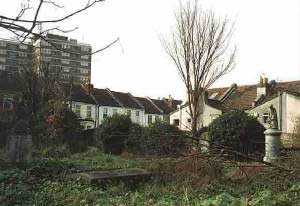 In April 1812, Mary suddenly left the Matthews family, where she had been nanny to the children. She was away for four days – then came back – then left again after an argument. Apparently, she had often told the Matthews family that she would like to live like a wild person in the woods, but in this case, she simply wanted to go abroad. She was somehow able to persuade a friend to write her parents to say she’d “left England with a traveling family”, however instead she applied to the Magdalen Hospital for Reformed Prostitutes under the false name of Ann Burgess – in fact, Burgess was her own mother’s maiden name.
While researching for his book, Mary told Gutch that she had only applied at Magdalen because she had mistaken the place for a nunnery, though this was obviously a lie, since she had told the Magdalen admissions committee an entirely different story: she claimed to have been seduced by a gentleman who’d stayed at a house in Devon where she had worked, and he had taken her to London, only to abandon her after month. She said that after this, she’d started leading a ‘loose life’ – and so the committee at Magdalen admitted her to work as a housemaid.
Only a few weeks later, for some unknown reason, Mary admitted that she had never been a prostitute and that she had given them a false name simply because she needed a place to stay. Although questioned about her family’s whereabouts, Mary continued to lie, saying that her father was dead and that any more talk of her family would cause her to hang herself. They allowed her to stay, and there are records from Magdalen Hospital that confirm Mary was well-behaved – if not rather eccentric and prone to bouts of depression and restlessness – for the duration of her time there. She left the hospital only a few months later.
According to Mary, she went back home after her time in the hospital, disguising herself as a man to avoid the dangers of traveling as a lone woman. She also claims to have been kidnapped along the way, revealed as a woman, and eventually released after begging for her life, but this part of the story may have been simply a figment of her own imagination. It wasn’t until August 1813 that Mary finally arrived home, where her mother was able to find her a job working as a tanner just a few miles from the village.
After three months, Mary left the job after complaining about having to carry the animal hides – and so, after several other failed jobs, she headed back to London, where she began working for a fishmonger. She claimed that during the spring of 1814, while working here, she had a whirlwind love affair with a man named Baker, marrying him after only two months. They apparently lived together near Hastings, but after he sailed off to Calais and promised to return and take her to France with him, she never heard from him again.
Whether this part of the story was true or not is also up for debate, however there is no doubt that Mary was pregnant when she returned to London in 1816. Somehow, Mary managed to weasel herself into a job working at a pub, where she changed her name to Hannah and gained a bit of a reputation for telling highly bizarre stories. The baby was born later that year, but since Mary had no husband to support herself and the child financially, the two of them were shipped off to St. Mary’s Workhouse.
Mary was now alone and penniless with a newborn baby…
…to be continued…
Want to read more?
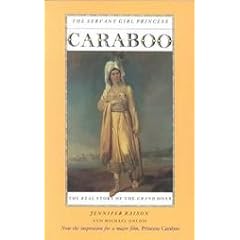
Tomorrow: Part 6 of course!
By: The Scribe on September, 2007
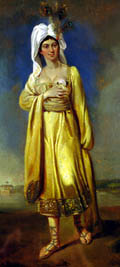 After the unmasking of Princess Caraboo, Mrs. Worrall was still immensely curious as to who Mary Baker was, and why she would have perpetrated such a scheme. As such, she commissioned the editor from the Bristol Journal, John Matthew Gutch, to learn as much as he possibly could about the girl – either from Mary herself, or from anyone else who might know anything about her. What the editor learned was very interesting indeed – and in fact, it was published as a book in August 1817 to great success!
Mary’s parents believed that the girl’s troubles began after contracting rheumatic fever when she was fifteen years old, and from that point on, she was never quite “right in the head”. She was born in 1719, and so was 26 years old by the time she had arrived as a ‘disoriented’ woman in Gloucestershire. Her family had been very poor, and 6 brothers and sisters had died when they were still young. At eight years old, Mary had learned to spin, weave, and took work on local farms to help feed the family. When she was a little bit older, she had also worked as a maid in Exeter – but after 8 weeks at the house, she left, complaining that the work was just too hard.
She returned home to Witheridge, but after her taste of the outside world, found living at home again unbearable. Running away after only a week, Mary apparently attempted suicide by hanging herself from a tree with apron strings – but was stopped when a ‘voice’ in her head told her it was a sin. In seeming confirmation, she met a man along the road who took pity on the disheveled young woman and gave her enough money for three night’s lodging in Taunton. After her time in Taunton, she begged her way to Bristol – and then decided to walk to London.
Mary almost made it to London, however when she was about 30 miles outside of the city, she collapsed from exhaustion – and was subsequently given a ride by a waggoner to Hyde Park Corner with several other women. After being dropped off, the two women realized that Mary was quite ill, and took her to St. Giles’ Workhouse Hospital, where she was taken immediately to the fever ward.
She spent several months in the hospital, where she was treated with hot baths and other treatments to help alleviate the fever – one treatment was called ‘cupping’, which involves operation on the back of one’s head without anesthetic: the skin is cut in several places, and hot glasses are applied to these spots in an attempt to draw the blood out and alleviate fever. Finally, a Presbyterian clergyman took a liking to the eccentric young woman, who drew her into his care. The clergyman was able to find Mary a job as a nanny, and she had a relatively fruitful experience there.
Next door to the family whose children she took care of, there was a Jewish family who had a cook in their employ. Mary became good friends with him, and she developed a strong interest in Jewish prayers, the Hebrew alphabet, and their strict dietary practices – all things which would come in handy four years later as ‘Princess Caraboo’. She also learned to read and write, and frequently wrote letters home to her family. Everything seemed to be going quite well for Mary Baker…
…to be continued…
Want to read more?
Tomorrow: Part 12! Just kidding, Part 5.
By: The Scribe on September, 2007
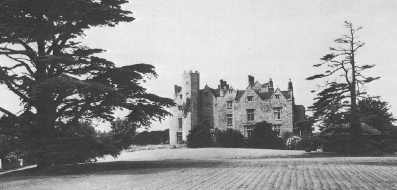
The downside to all the attention – for the so-called Princess Caraboo, anyhow – was that her photo and description was running in all the newspapers… and as it turned out, a woman by the name of Mrs. Neale read a description of the princess in the Bristol Journal – and recognized her immediately. Mrs. Neale ran a lodging house in Bristol, and apparently the “princess” had stayed with her a few months earlier – and had sometimes entertained Mrs. Neal and her daughters by speaking her own made-up language. And to make matters even more convincing… when they last saw her, the young woman had left the house wearing a turban.
Mrs. Neale informed the Worralls of her story, while a second witness also claimed to have met the ‘princess’ several days before she had arrived at the cobbler’s cottage. The man swore that he had eaten steak and had a drink of rum with the woman at a public meeting house! Shocked, Mrs. Worrall confronted Caraboo with the information – and with such secure testimony against her, the girl broke her façade and admitted the truth.
In reality, Princess Caraboo was a cobbler’s daughter from Witheridge in Devon, and was named Mary Baker. Incredulous, Mrs. Worrall was at an impasse for what to do with the girl. If she remained in Bristol, the Worralls would be embarrassed and discredited, and so there was nothing to do but… send the girl to America. On 28 June 1817, Mary and three very religious women whom Mrs. Worrall had asked to care for the young woman set sail for Philadelphia.
Amazingly enough, upon arriving in America, Mary was greeted by throngs of excited people shouting for ‘Princess Caraboo’ – so of course, she willingly gave performances as the princess to all who wished to see it. Her last known letter to Mrs. Worrall was written in November 1817, and after that, she seems to have disappeared for several years. She reappeared in England around 1824, where she attempted to exhibit herself for performances as Princess Caraboo – but to her misfortune, the act was no longer successful.
After traveling to France and Spain, she eventually returned to England and settled in Bristol, giving birth to a daughter in 1829. She managed to make a moderate living for the rest of her years, selling leeches to the Bristol Infirmary Hospital, and eventually died of a heart attack on Christmas Even in 1864: she was 75 years old. Although she lies in an unmarked grave, the location of the burial was in the Hebron Road Burial Ground in Bedminster, Bristol.
Yet the question still remains: how was this young, uneducated girl able to make complete fools of the entire British upper class? Some of these people were highly educated, intelligent individuals, and yet she had managed to fool them all. And perhaps more importantly, why would young Mary Baker ever want to do such a strange thing…?
…to be continued…
Want to read more?
Tomorrow: Part 3
Previous page | Next page
