Archive for the ‘Ancient World’ Category
By: The Scribe on July, 2011
A theory has been put forth that humans lack body hair in an attempt to reduce the number of parasites that affect us. There are many parasites such as ticks, fleas and lice that actually prefer to make their home in coats of deep fur. Humans lack body hair which makes us unique among primates and in a category shared only by a few semi-aquatic species of animals such as hippopotamuses, dolphins and whales.
 The study was developed by a behavioral ecologist and an evolutionary biologist. It basically states that because ancient humans were able to use fire, wear fire and construct shelters they no longer needed the thick coats of fur that early humanoids may have had. The hair on humans still exists in many areas but it has become so fine that it no longer works for heat regulation and no longer can support colonies of annoying parasites.
There are differences in body hair between men and women and the authors of the study say this supports their theory as well. It was believed that hairlessness became a desirable trait in mates and this may have been one reason why women have less body hair than men. A desirable mate was one which was less susceptible to parasitic infestation and being hairless advertised that an individual did indeed possess this desirable trait. It also explained why head and facial hair continued to be so thick. Humans use facial and head hair (or a lack of it) as a way of determining physical attractiveness in a mate. By retaining head and facial hair, this method of determining sexual attractiveness would not have been lost.
In the past, scientists thought that we abandoned our fur coat as a way of surviving in hot environments such as the African savanna. Scientists have accepted this theory even though other primates who lived in the same environment did not lose their hair coats like humans did.
It was also believed that the change in our fur coat came when we left the trees and 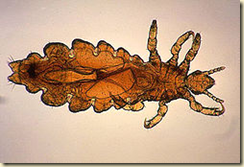 began to dwell on the ground. A third theory stated that we lost our hair coat when we became semi-aquatic approximately 8 million years ago. At that time, humanoids began to swim and to immerse themselves in water. It was not surprising that we would adopt the same kind of thin hair coat that other aquatic mammals had.
Humans were still plagued by parasites even after they became hairless. A number of parasites such as body lice continued to affect early humanoids. They tended to live in the clothing and bedding that humans used on a regular basis. It was much easier to change clothing or bedding than it would have been for humans to get rid of parasites living in a thick coat of hair or fur.
While this theory seems to explain many of the reasons why humans would have lost their body hair it has not totally been proven as fact. Scientists would need to compare the amounts of body hair that populations have against the number of parasites that plague that population. That way they may be able to tell whether humans lost their hair to keep parasites at bay.

By: The Scribe on June, 2011
One of the problems with studying dinosaurs is that there are large gaps in the fossil record. This makes it difficult to tell where some of  the dinosaurs evolved from. Scientists make guesses based on factors such as bone shape and tooth shape. They may find out later that two dinosaurs may be totally unrelated even though they may look the same in many ways. Or, as in the case of the brontosaurus, they may have ended up renaming a dinosaur that already had a name.
Now, scientists may need to do a little rethinking as one of the fossil gaps has been closed a little. It is now possible to connect a dinosaur such as Tyrannosaurus rex with some of the earliest predators. When you think about how ornery the T-rex was, it is no surprise that early predators would have been similarly nasty. The T-rex was quite an evolved predator for the time (between 67 to 65.5 million years ago) so when you think that these creatures were related to an extremely advanced predator it is no wonder that they were so effective at hunting and bringing down their prey.
Paleontologists who were working at the Ghost Ranch fossil site in New Mexico found the fossils and named the creature Daemonosaurus chauliodus which, appropriately enough, is Greek for “buck-toothed evil spirit”. It was named this for the buck teeth that the creature sported. Daemonosaurus was about the size of a large dog in height. The shape of the skull and the kind of teeth that filled it were quite unusual. The front teeth were extremely large, giving rise to the “buck-toothed” nickname. The snout was quite deep and short which scientists have said is unusual for a predator living at the time.
It is not the only buck-toothed dinosaur to have been discovered. A second species of dinosaur was found in China. Called Incisivosaurus gauthieri because of its beaver-like front teeth, this dinosaur was small and extremely quick. It was found to be one of the first oviraptorosaur species and shows that this species of dinosaur was once herbivorous. Although they belong to a group of dinosaurs called theropods (which are carnivorous), it was apparent that Incisivosaurus was actually a plant eater. The skeleton, which was discovered in Liaoning Province in northeastern China has been found to be approximately 128 million years old.
Scientists are still trying to piece together the fossils that have been found into one continuous fossil record. There are many large gaps and it can be difficult to see how changes came about over time. Sometimes the gaps are caused by a total lack of fossils or because earlier testing techniques may have failed to show a connection. Many times scientists are working with only a partial set of fossils from prehistoric creatures, making it difficult to check areas such as skull and tooth shape.
Scientists are also trying to definitively prove where dinosaurs first lived. The best records show that they likely began life in South America. Fossils in that area have been found from as early as the late Triassic period, which was about 230 million years ago.
By: The Scribe on June, 2011
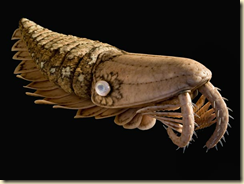 When someone thinks about shrimp they usually think about cocktails and skewers made up of small pink bodies. Now, a fossil belonging to a prehistoric ancestor of modern crustaceans has been found in southeastern Morocco. At just over three feet in length, it is a full foot longer than previous specimens. Experts believe that this creature was edible and that it would have produced enough meat to feed a large group of individuals for a month. This is certainly not a creature that could be hung on the side of a glass and then dipped in sauce.
The massive prehistoric creature is called an anomalocaridid. The name actually means “strange shrimp” due to the fact that they look much like a shrimp or a cuttlefish. Their remains are usually found with fossils that date from the Cambrian period (542 million to 488.3 million years BCE) and these specimens usually max out at around two feet in length. This new specimen, which was discovered in rock from the Ordovician period (488 million to 443 million years BCE), is not only younger than previous specimens it is also a full foot longer.
It was believed that this massive creature was actually a predator and that it likely dominated the waters where it lived. The creatures had many of the features that modern shrimp do, including a similar body shape and two appendages that extended out from the mouth area. They were able to swim freely thanks to swimming lobes located along each side of the body. This made them extremely agile swimmers.
The creatures were thought to live on hard-shelled creatures such as trilobites and that 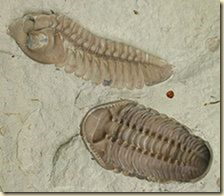 they had developed a ring shaped mouth full of sharp, hard teeth in order to do so. They also had large eyes which enabled them to see their prey.
This discovery raises a lot of questions and issues for scientists who are studying the Cambrian and the Ordovician eras. They want to know whether other animals also grew larger than the fossil records would indicate. The fact that the anomalocaridid was a full foot longer than previous specimens suggested that other animals from the same time might also have been somewhat larger as well.
The discovery of the fossil in the Ordovician period is causing scientists to also rethink when these creatures might have lived. Originally, it was believed that these creatures were not present in rock dating from before about 510 million years CE although there are many examples that have been found in Cambrian-era rocks.
The problem with finding anomalocaridid fossils is that they had soft bodies. This means that there was little remaining to become fossilized the way the bones and exoskeletons of other creatures could be. It took a sediment cloud to protect and preserve these fossils to preserve these anomalocaridids enough that they could be studied.
Anomalocaridids did eventually become extinct although not as soon as scientists had first thought. Although they look like modern shrimp there is no relationship between shrimp and anomalocaridids.
By: The Scribe on June, 2011
Regular posts will be resuming on Monday, thanks for reading!
Previous page | Next page
 The study was developed by a behavioral ecologist and an evolutionary biologist. It basically states that because ancient humans were able to use fire, wear fire and construct shelters they no longer needed the thick coats of fur that early humanoids may have had. The hair on humans still exists in many areas but it has become so fine that it no longer works for heat regulation and no longer can support colonies of annoying parasites.
 began to dwell on the ground. A third theory stated that we lost our hair coat when we became semi-aquatic approximately 8 million years ago. At that time, humanoids began to swim and to immerse themselves in water. It was not surprising that we would adopt the same kind of thin hair coat that other aquatic mammals had.


