Archive for the ‘Ancient World’ Category
By: The Scribe on May, 2011
When archaeologists opened an 18th Dynasty Egyptian tomb in the Valley of the Kings, they made a startling discovery. There, amid furniture, vehicles and other funerary artifacts they discovered vessels full of honey. It had crystallized but was still edible. Honey that was over three thousand years old was not only still in the tomb it was still edible and had not spoiled in any way.
 Honey was used in many different ways by the ancient Egyptians. As well as being used as a natural sweetener for baked goods and other food, it was also a component in the mummification process used by the Egyptians to preserve their dead. Honey was also a part of the religious life of ancient Egypt. It was used as an offering to Min, an Egyptian god of fertility.
Honey was also used in other cultures besides the ancient Egyptians. People have been searching for this natural sweetener for at least ten thousand years. Cave paintings that were discovered in Valencia, Spain showed the process of collecting honey. In the painting, two women are collecting both honey and honeycombs from the nests of wild bees. The painting has been dated to the Mesolithic period.
While many cultures simply looked for honey in the nests of wild bees, the ancient Chinese actually developed beekeeping. It has been mentioned in texts dating from the Spring and Autumn period which lasted from 771 BCE to 453 BCE. In the books, which were written by Fan Li, tips for keeping bees successfully were mentioned. Fan Li, an advisor living in the Chinese state of Yue, stated that the quality of the wooden box used to house the bees was important. He stated that it could affect the quality of the honey that the bees produced.
Honey was used as more than just a sweetening agent or as a food. It was put on wounds by Roman legions as a way to speed up the healing process. Honey contains natural antibacterial properties that can help prevent infection so it was no wonder that it would be used for healing. Even now, many ointments and skin creams contain honey because of its healing properties. Honey was also used to treat skin rashes and burns for the same reason. In Mesoamerica, stingless honey bees have been revered by the Mayan people for thousands of years. They considered the bees to be a sacred animal and cultivated them, a practice which has continued to the present day. 
Honey has also appeared in many different ancient religious texts including the Hebrew Bible, the New Testament and the Qur’an. In Buddhism, honey plays a major role in some religious festivals. One in particular, Madhu Purnima, celebrates the retreat of Buddha into the wilderness as a way of making peace among his various disciples. During this retreat, religious legends state that a monkey brought honey to Buddha so that he could eat. The gift that the monkey brought is one that is common to many pieces of Buddhist art.

By: The Scribe on May, 2011
The first encounter that most people have with lice is when they get a call from their child’s school. They find that their son or daughter is being sent home with a head full of bugs or eggs. The process of combing through hair and treating the scalp will begin. It can be an uncomfortable and embarrassing situation for everyone.
 What they may not realize is that head lice are not the only kind of lice that infest humans. They may also not realize that several discoveries about head lice and body lice have taught us many things about evolutionary history and even the migratory journeys that early humans took part in.
Lice are small, wingless insects that feed off of the blood of their host. They tend to stick to one type of host. For example, the lice that are found on apes, monkeys or other animals would not make their home on a human and vice versa. Lice fall into two main groups: those that chew on their hosts to get blood, and those that suck blood from their hosts. The lice that live on humans are of the sucking rather than the chewing variety.
The lice that live on humans can be further divided into three varieties. The most common is the head louse, which is the plague of school children and their parents in many countries. Body lice live on body hair and in the folds of clothing. They are also quite common and tend to flourish where people are living in crowded conditions. The third type is known as crab lice and these live in the genital region of humans. They are spread from one human to another through sexual contact.
It is believed that lice first split into chewing and sucking varieties between 100 and 145  million years ago. The chewing lice made up the largest group. Sucking lice only have about 500 species including the species that make the lives of human hosts miserable. Further testing showed that head lice found on humans separated from the head lice that are found on chimpanzees about 5.6 million years ago. Using that evidence as well as human DNA evidence, it was possible to prove that human and chimpanzee ancestors also split from one another at the same time.
Head lice are not the only lice that have helped scientists find out more about early humans. For example, scientists who have studied body lice have been able to tell that the invention of clothing only happened about 107,000 years ago. Lice need a place where they can live and breed in between feeding off of the blood of their hosts. Humans do not have enough body hair to support body lice and so body lice evolved to live in clothing. Since they did not exist before about 107,000 years ago, it shows that clothing appeared around the same amount of time.
Although lice continue to plague humans throughout the world they have been useful in helping scientists determine many facts about the lives of ancient humans and how they evolved over time.
By: The Scribe on April, 2011
Crucifixion was believed to be one of the worst punishments that a person could endure. It was not a fast death nor was it one of the more pleasant ways that someone could die. Many people think that the Romans were the only people to crucify their enemies and that a person was always nailed to the cross but this was not always the case. So why was it so unpleasant and how did the actual practice differ from what you see in the movies?
Imagine that you are a prisoner in the ancient Middle East. It was not the best place to commit a crime. If you were caught stealing, you got your hand lopped off. There were other rather nasty punishments for other unlawful undertakings as well. But, at least they were fairly quick and, if you were lucky, you could recover and continue on with your life. Not with crucifixion.
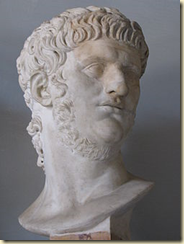 You would be dragged out and tied to a large wooden cross. Wood was a good thing as far as the Roman Emperor Nero was concerned because it burned well as many early Christians discovered. Nero had a particular love for crucifying the Christians he caught and setting them alight in order to provide Roman streets with illumination. Not the cheeriest of streetlights, but it certainly did send a strong message to other Christians: keep your head low and your mouth shut.
Even if you were not about to be used for outdoor lighting, crucifixion was unpleasant. There was a lot of very warm sun in the Middle East and crucified individuals were simply left out in the elements until they died. They were not given food or water, and the strain on their arms was terrible. If you were nailed to the cross (which was done when the Romans really wanted to make a point), you would have had the nails driven in through your wrists and feet. Often, you were also completely naked, since the Romans wanted to make the experience as humiliating as possible. Finally, victims would simply die. On many occasions, their bodies remained up on display even after death had occurred.
The Romans were not the only ancient people who thought that this was a great way to 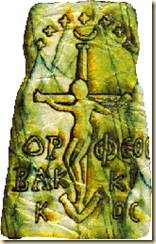 deal with criminals and political prisoners. Carthaginians, Macedonians and Persians also used this method of punishment and execution. In Carthage, it was a regular method of execution and was even something that was used on generals who had lost major battles. Some rulers such as Alexander the Great were known for crucifying large numbers of prisoners or enemy soldiers as well.
While crucifixion was used by many ancient cultures, there were some that relied on other methods of punishment. The Greeks tended to avoid crucifying their own people although they didn’t hesitate to execute a Persian general named Artayctes who was captured during the second Persian invasion of Greece.
Over time, the Romans moved away from crucifixion and began using other methods of executing prisoners. In fact, it was abolished completely in 337 CE by the Emperor Constantine I, otherwise known as Constantine the Great.
By: The Scribe on April, 2011
One ancient custom that is still celebrated in the Middle East is Thursday of the Dead. It is an Arabic celebration that is observed by both Muslims and Arabic Christians. The holiday is normally celebrated on the Thursday before the Easter weekend. In other countries, the same day is known as Maundy Thursday or Holy Thursday.
Although the two celebrations fall on the same day, they are quite different. Thursday of the Dead is traditionally a day when the souls of the dead are honored. This is accomplished by visiting local cemeteries. They reach the cemeteries before dawn and pray there. After, they distribute dried fruit and special bread cakes or rolls to children, their relatives and the poor in the area.
There are different traditions depending on which Middle Eastern countries you happen to be in. In Jerusalem, the women carry dyed eggs with them and visit cemeteries in the afternoon instead of before dawn. In Syria, women living in Homs, a city, tend to purchase sweets and hand these out to the poor and to children as well. There, the celebration is known as “Thursday of Sweetness” instead of by its traditional name.
It is believed that the celebration may have dated back to the Middle East during the twelfth century although it may be older than that. Tradition states that it may have been started when Saladin, a Muslim leader who lived from 1138 CE to 1193 CE, began trying to foster understanding and tolerance between the Muslims and non-Muslims who were living in the region.
In contrast to the Thursday of the Dead, which is celebrated in the morning or early in the day, Maundy Thursday or Holy Thursday usually is celebrated in the evening. This is because this celebration commemorates the Last Supper shared between Jesus Christ and his Apostles. It is celebrated both by Orthodox Christians and other Christians as well.
 The events that are traditionally held on this day usually include the Washing of the Feet, an ancient rite of hospitality and humility. It was mentioned in the Bible and has been practiced by many other ancient cultures as well. At the Last Supper, Jesus washed the feet of the twelve apostles before they all dined together. There are also special masses said in church and often communion is also taken on this day as well.
In England, it became a custom for the monarchs to hand out money on Maundy Thursday. In earlier times, one penny per year of the Sovereign’s age was handed out but now Maundy money is used in the place of other coins. The monarchs were also known to wash the feet of commoners as well. In Malta, the tradition is to visit a series of seven churches. In other countries, candy and easter eggs are handed out or colored and individuals prepare for the upcoming holiday.
While both Thursday of the Dead and Maundy Thursday are still being celebrated, the celebrations have changed somewhat since their earliest days.
Previous page | Next page
 Honey was used in many different ways by the ancient Egyptians. As well as being used as a natural sweetener for baked goods and other food, it was also a component in the mummification process used by the Egyptians to preserve their dead. Honey was also a part of the religious life of ancient Egypt. It was used as an offering to Min, an Egyptian god of fertility.


