Archive for the ‘Ancient World’ Category
By: The Scribe on February, 2011
In modern times when we need to add a touch of cinnamon or ginger to our cooking it is easy to do so. Even if we do not have any in the house, we can simply run to the local grocery store and buy them there. The most expensive spices are still fairly affordable when compared to other ingredients. But this was not always the case. Spices were hard to get and, in some cases, were so expensive that they were actually worth their weight in gold.
Certain spices have been in high demand since Roman times. Adding spices to food helped to disguise the taste of food that may have been improperly stored or which may have been suffering due to a lack of refrigeration. They were added to just about everything including the beverages. In the ancient world, spices such as turmeric, ginger, cinnamon and cardamom were used for commerce as well as cooking. Traders would travel thousands of miles over land and sea with their precious cargo and were able to sell it at a massive profit. They brought other things with them as well. Ebony, silk and textiles were transported along with incense, hemp, opium and other drugs.
Spices were transported over both land and sea. A major system of land- and sea-based trade routes became known as the Silk Road. It allowed traders to bring goods from various parts of Asia to buyers in Europe, the Mediterranean and even certain parts of Northern Africa. Along with physical goods, traders also brought with them the learning and knowledge that flourished in the areas where the trade goods came from. In some cases, they also brought disease with them as well. The bubonic plague was one disease that travelled along the Silk Road along with the traders. Traders were moving along parts of the Silk Road as early as 114 BCE. The full Silk Road is approximately 4000 miles long.
Because the trade routes were often long and treacherous, explorers set out to try and find faster and safer routes to bring the spices to the eager crowds in Europe. It was these attempts to find new spice routes that changed the map of the world in a major way. When black pepper became popular in Europe, traders began to travel around the Cape of Good Hope to obtain it. This was an extremely dangerous route and many sailors lost their lives on the voyage.
In an attempt to find shorter routes to Asia and the source of spices and other trade goods, explorers set out and ultimately discovered the American continent. The first discovery of the American continent by explorers looking for trade routes took place in 1492, when Christopher Columbus discovered The Bahamas. A Portuguese navigator by the name of Pedro Alvares Cabral discovered Brazil eight years later.
Much of the discovery and colonization that would shape the map of the world took place due to the search for spices and other exotic goods. One wonders how the world would have been different without them.

By: The Scribe on February, 2011
Scipio Aemilianus Africanus was well known for his destruction of Carthage in 146BCE but he was also involved in several other military campaigns, one of which was the Numantine War that lasted from 143BCE to 133BCE. The Numantine War was one of several Celtiberian Wars fought by the Romans in the area alongside the Ebro river in Spain. The area had been settled by Celtiberians, Lusitanians, Arevacis and five additional tribes, all of which were of Celtic origin.
 Although battles were fought and won by various Roman generals, it was Scipio that won the final war in the series with a brutal siege against the city of Numantia. Numantia was the main city of the Celtiberians. Previously, many Roman troops had been killed during skirmishes and ambushes and the Romans were finding the Celtiberians to be very difficult to defeat.
The situation in Iberia was a bad one for the Romans for other reasons. Wars had been going on for a decade and because of this, and the kind of warfare that was going on, morale among the troops had started to decrease. The area was a bad one for plunder, and because of this, many of the traditional methods used to get new recruits were not available. Scipio was able to raise troops and by the time the siege took place he had managed to amass an army that was approximately 60,000 strong. Of this, two thirds were allied and mercenary troops.
Scipio knew that it would be difficult to attack the city of Numantia directly. It was protected by three earthwork walls. Palisades and towers strengthened the walls and made them very difficult to breach. They made it entirely possible that the force of 3,500 soldiers inside could hold off the Roman army very effectively. Because of this, Scipio decided to use a different tactic. He would starve them out.
When you have 60,000 troops, it is easy to surround a city, even one as large as Numantia. Instead of trying to break through the walls, Scipio built additional walls and added ditches and booby traps as well. He also built a wooden palisade that was made from 16,000 wooden stakes.
Although the tribesmen inside tried to break through in a series of sorties, they were unable to. The leader of the Numantians, Retogenes, escaped from the city and tried to find help from the other tribes in the area. He was only able to raise 400 troops and the Romans retaliated by maiming the youth of the Vaccei troops that had sent additional warriors.
Conditions inside the city were brutal. The Numantians were reduced to cannibalism in an attempt to survive. Many individuals opted to kill themselves and large areas of the city were burned. The Numantians knew that if they surrendered that they would be sold into slavery. They were correct. When the city surrendered nine months after the siege began, the surviving residents were sold into slavery by the Romans.
The brutal siege was hailed as a victory and Scipio added the title “Numantius” to his name when he returned to Rome.
By: The Scribe on January, 2011
It seems like a lot of changes have been going on in the cosmos. First, Astronomers talked about Pluto, the planet that was suddenly not a planet. The next discovery came in the form of an announcement that a “new” Zodiac symbol had been discovered. This new Zodiac symbol was believed to have thrown the entire system on its head. Or did it? The announcements surrounding this symbol, Ophiuchus, have sent many people running to figure out what their new symbol was, and lamenting that their birth date no longer falls under the symbol they have lived with all of their lives.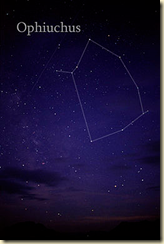
What many people do not realize is that Ophiuchus is far from being a “new” Zodiac symbol. It was actually listed by Ptolemy, a famous second century astronomer. It was a part of the sidereal astrological system that is used by Jyotish or Hindu and Indian astrologers. It is not a common part of the system normally used by Western astrologers. While Ptolemy identified 48 different constellations, there are actually 88 modern constellations that are visible in the sky.
The name Ophiuchus actually means “serpent bearer” in Greek. This translates to the word Serpentarius in Latin, and this is a former name for this constellation. The image that is connected with this constellation is of a man grasping a snake. This snake is represented by the constellation Serpens.
Each of the Zodiac constellations has a story or symbol that goes along with it. The Gemini twins are Castor and Pollux, Sagittarius is believed to represent the centaur Chiron and Taurus represents the bull form that Zeus took when he seduced Europa. Each of the symbols has their own link to Greek mythological figures. The symbol Ophiuchus was believed to represent Asclepius, a healer who was killed by Zeus when he discovered the secret of immortality.
Another theory is that the symbol represents a Trojan priest named Laocoon. Laocoon warned the Trojans to refuse the Greeks’ gift of the Trojan horse that ultimately led to their downfall. It was believed that the gods sent a pair of sea serpents to kill Laocoon. It is believed that the Babylonians knew about this constellation as well but that they followed it in the form of the constellation known as the Sitting Gods.
Still other possibilities for Ophiuchus include Apollo wrestling with a python, and Phorbas. Phorbas was a Thessalonian who was able to rescue people living on the island of Rhodes. It was believed that he was placed in the sky after he saved the people of Rhodes from a plague of snakes. This is why this constellation is in the shape of a human grasping a snake. 
There are several significant stars in this constellation. One is Barnard’s Star. This is one of the stars which lie closest to our own Solar System. The star that gave rise to Keppler’s supernova was also part of this constellation prior to it going supernova in 1604. Other celestial discoveries surrounding this constellation include a cavity in the solar system known as a super bubble, the discovery of several star clusters, a nebula, and the presence of a planet that orbits in the constellation. Studies have shown that this planet may possess large quantities of water, a trait that can be seen by this planet’s low density.
By: The Scribe on January, 2011
When you see people chewing gum, what you may not realize is that it is actually one of the oldest treats around. Samples of chewing gum have been dated that were as much as 5,000 years old. Early gum samples, complete with tooth marks and dating from the Neolithic period, have been found in Finland. These samples were made from birch bark tar.
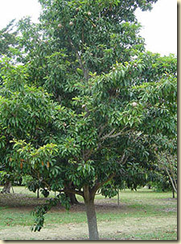 Early chewing gum was not just chewed for fun and enjoyment. Some cultures, such as the Aztecs, used chewing gum as a breath freshener. In this case, the Aztecs made their chewing gum from a substance known as chicle. Chicle is a natural latex product that is still being used in some areas of Japan and other countries as a base for chewing gum. It is harvested from the Manilkara chicle tree, an evergreen that grows naturally in the region. Chicle has a high sugar content and a subtle flavor that makes it popular with many people today. The name means “sticky stuff”. In order to harvest chicle, a series of cuts are made in the trunk in a zig-zag pattern. This allows the sap to drip out and it is collected and boiled. The methods for gathering and processing chicle have not changed in many years.
Mastic gum is a form of chewing gum that was used by the Ancient Greeks. Like chicle, mastic was used for health reasons rather than just as a treat. Mastic was made from the sap of the mastic tree and is used by many as a cure for snake bites. It has also been used in India and Persia as a way to fill dental cavities. It was also believed to be a good cure for digestive problems, bronchitis, and for blood conditions as well.
Mastic was capable of making the breath fresh and whitening the teeth and was often used in harems as a way for the women to care for their teeth. Some of these claims of health benefits may have been legitimate. Mastic has proven antibacterial and antifungal properties and contains antioxidants that can help a person maintain good health. 
In North America, the sap of spruce trees was used as chewing gum. Spruce gum was also chewed by New England settlers as well and other parts of the spruce tree were used to maintain good health and ward off scurvy as well.
Unfortunately, many of these natural resins were difficult and expensive to produce in any large quantity, so it was not surprising that substitutes were found. In 1850, gum was produced that was made from paraffin wax instead of spruce wax. It became more popular than spruce gum in North America and it was no wonder that in 1869, methods of chewing gum were patented.
Although much of the gum that is chewed today is made from synthetic ingredients there are some manufacturers who are still making gum from chicle. As well, gum has come full circle, as many chewers use it to help whiten and clean their teeth and ward off tooth decay.
Previous page | Next page


