By: The Scribe on Monday, April 25, 2011
One of the most popular places to see in London is the Tower of London. The building has stood since its construction in 1078 CE by order of William the Conqueror. William was both King of England from 1066 CE to 1087 CE and Duke of Normandy from 1035 CE to 1087 CE. As well as having two noble titles, he also had several names. In England, he was known as William I. In Normandy, he was known as William II. Privately, people called him William the Bastard. It was a reflection both of the fact that he was illegitimate by birth, and also that he was not particularly well loved.
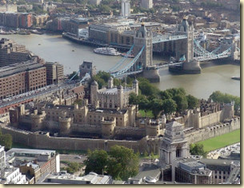 In its early days, the tower was actually used as a royal residence and was called The White Tower instead. The English really did not like the fact that the Normans had conquered England and saw the Tower of London as a symbol of that oppression. It was a beautiful residence and was actually a complex of several buildings inside a wall and moat rather than a single tower. Later rulers such as Richard the Lionheart, Edward I and Henry III expanded on the complex.
Although most people think of the beheadings that were held there, the tower was actually used on joyous occasions as well. Monarchs would stay overnight at the tower and then travel from the tower to Westminster Abbey where they were crowned. During the Tudor period, it was used as a royal residence less and less and as a prison on an increasingly regular basis.
The tower gained attention due to some of the prisoners that were kept there. It was usually a place for prisoners who were royalty or who were politically important. Sir Thomas Moore was one of the most famous prisoners. He was sent to the tower after publicly disagreeing with King Henry VIII over his marriage to Anne Boleyn. Anne Boleyn herself was kept at the tower prior to her beheading in 1536. Executions were held on the Tower Green and a total of 112 prisoners were executed there during the tower’s use as a prison.
Some of the most famous residents of the tower are not even human. A group of common ravens have lived at the tower for hundreds of years. The ravens living at the tower are connected to a popular legend. It is said that if the ravens leave the tower that the tower will fall. If that happens, it is said that the monarchy will come to an end. The ravens that live at the tower are fed well and tended by the tower guards. Their wings are now clipped so that they cannot fly away. They strut around the grounds and are a popular site with the tourists who visit the tower.
Tower guards take place in a ceremony called the Ceremony of the Keys. This has taken place every night since the 14th century. The ceremony starts with the locking of the tower gate with keys that are held by the Chief Warder of the tower. They are then carried to a building known as the Queen’s House and the last post is played on a trumpet.
By: The Scribe on Friday, April 22, 2011
Crucifixion was believed to be one of the worst punishments that a person could endure. It was not a fast death nor was it one of the more pleasant ways that someone could die. Many people think that the Romans were the only people to crucify their enemies and that a person was always nailed to the cross but this was not always the case. So why was it so unpleasant and how did the actual practice differ from what you see in the movies?
Imagine that you are a prisoner in the ancient Middle East. It was not the best place to commit a crime. If you were caught stealing, you got your hand lopped off. There were other rather nasty punishments for other unlawful undertakings as well. But, at least they were fairly quick and, if you were lucky, you could recover and continue on with your life. Not with crucifixion.
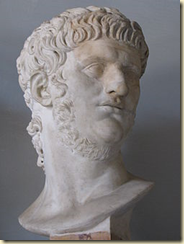 You would be dragged out and tied to a large wooden cross. Wood was a good thing as far as the Roman Emperor Nero was concerned because it burned well as many early Christians discovered. Nero had a particular love for crucifying the Christians he caught and setting them alight in order to provide Roman streets with illumination. Not the cheeriest of streetlights, but it certainly did send a strong message to other Christians: keep your head low and your mouth shut.
Even if you were not about to be used for outdoor lighting, crucifixion was unpleasant. There was a lot of very warm sun in the Middle East and crucified individuals were simply left out in the elements until they died. They were not given food or water, and the strain on their arms was terrible. If you were nailed to the cross (which was done when the Romans really wanted to make a point), you would have had the nails driven in through your wrists and feet. Often, you were also completely naked, since the Romans wanted to make the experience as humiliating as possible. Finally, victims would simply die. On many occasions, their bodies remained up on display even after death had occurred.
The Romans were not the only ancient people who thought that this was a great way to 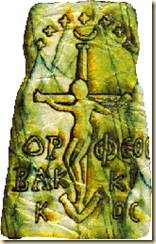 deal with criminals and political prisoners. Carthaginians, Macedonians and Persians also used this method of punishment and execution. In Carthage, it was a regular method of execution and was even something that was used on generals who had lost major battles. Some rulers such as Alexander the Great were known for crucifying large numbers of prisoners or enemy soldiers as well.
While crucifixion was used by many ancient cultures, there were some that relied on other methods of punishment. The Greeks tended to avoid crucifying their own people although they didn’t hesitate to execute a Persian general named Artayctes who was captured during the second Persian invasion of Greece.
Over time, the Romans moved away from crucifixion and began using other methods of executing prisoners. In fact, it was abolished completely in 337 CE by the Emperor Constantine I, otherwise known as Constantine the Great.
By: The Scribe on Wednesday, April 20, 2011
One ancient custom that is still celebrated in the Middle East is Thursday of the Dead. It is an Arabic celebration that is observed by both Muslims and Arabic Christians. The holiday is normally celebrated on the Thursday before the Easter weekend. In other countries, the same day is known as Maundy Thursday or Holy Thursday.
Although the two celebrations fall on the same day, they are quite different. Thursday of the Dead is traditionally a day when the souls of the dead are honored. This is accomplished by visiting local cemeteries. They reach the cemeteries before dawn and pray there. After, they distribute dried fruit and special bread cakes or rolls to children, their relatives and the poor in the area.
There are different traditions depending on which Middle Eastern countries you happen to be in. In Jerusalem, the women carry dyed eggs with them and visit cemeteries in the afternoon instead of before dawn. In Syria, women living in Homs, a city, tend to purchase sweets and hand these out to the poor and to children as well. There, the celebration is known as “Thursday of Sweetness” instead of by its traditional name.
It is believed that the celebration may have dated back to the Middle East during the twelfth century although it may be older than that. Tradition states that it may have been started when Saladin, a Muslim leader who lived from 1138 CE to 1193 CE, began trying to foster understanding and tolerance between the Muslims and non-Muslims who were living in the region.
In contrast to the Thursday of the Dead, which is celebrated in the morning or early in the day, Maundy Thursday or Holy Thursday usually is celebrated in the evening. This is because this celebration commemorates the Last Supper shared between Jesus Christ and his Apostles. It is celebrated both by Orthodox Christians and other Christians as well.
 The events that are traditionally held on this day usually include the Washing of the Feet, an ancient rite of hospitality and humility. It was mentioned in the Bible and has been practiced by many other ancient cultures as well. At the Last Supper, Jesus washed the feet of the twelve apostles before they all dined together. There are also special masses said in church and often communion is also taken on this day as well.
In England, it became a custom for the monarchs to hand out money on Maundy Thursday. In earlier times, one penny per year of the Sovereign’s age was handed out but now Maundy money is used in the place of other coins. The monarchs were also known to wash the feet of commoners as well. In Malta, the tradition is to visit a series of seven churches. In other countries, candy and easter eggs are handed out or colored and individuals prepare for the upcoming holiday.
While both Thursday of the Dead and Maundy Thursday are still being celebrated, the celebrations have changed somewhat since their earliest days.
By: The Scribe on Monday, April 18, 2011
While Easter is an important time due to its’ religious associations, many of the secular symbols that are used to represent the holiday have ancient meanings that predate the religious observances that take place during this time.
The name Easter comes from the goddess Eostre, whose name was used to mark a month in the Anglo-Saxon calendar that was roughly equivalent to April. The name was used to identify this time of the year well before 899 CE and was mentioned by Bede, an English monk who lived from 672 CE to 735 CE. Eostre was a fertility goddess who was believed to be connected to fertility and growth. 
One common event that many people take part in during Easter is an Easter egg hunt. The Easter egg is actually a pagan symbol that is used to represent the Earth being reborn in the spring. Some of the most well-known decorated eggs are pysanky which come from the Ukraine. This traditional method of decorating eggs involves covering a raw egg in wax to create patterns and then dipping the egg in a series of dye baths. After each dye bath, the egg is once again coated in wax in order to preserve different colors and build further layers into the pattern. In the Ukrainian tradition, the yolk of the egg represents the sun and many of the symbols that are used relate to the worship of the sun god Dazhboh. It is believed by some Ukrainians that the world will end if people stop decorating pysanky.
In Medieval Europe, one was not allowed to consume eggs during Lent which was a time for sacrifice, prayer and self-denial. Because eggs were still being produced by chickens during this time, it was necessary to preserve them so that they would not go to waste. Because of this, eggs were often boiled in order to keep them from going bad. They were then served as part of Easter dinner and were given as gifts as well. Eggs are included in many different religious ceremonies as well.
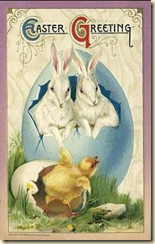 The Easter Bunny is one of the most widely recognized secular symbols and is the one that most children look forward to the most. Now, he is known as someone who leaves behind baskets of candy, chocolate and gifts for children to enjoy. In some countries, the Easter Bunny is known as the Easter Hare or the Spring Bunny. The tradition of the Easter Bunny was brought to the United States by German settlers in the 18th century. Historically, rabbits and hares have been symbols of fertility for much longer than that. This is due to the large litters that both animals give birth to.
In many cases, religious legends and ancient traditions have been combined. The Easter egg is one example of this. According to some legends, Mary approached the soldiers who were at the cross when Jesus was crucified. She gave them eggs and wept as she begged them to be less cruel. When her tears struck the eggs, they became decorated with spots of color.
Previous page | Next page
 In its early days, the tower was actually used as a royal residence and was called The White Tower instead. The English really did not like the fact that the Normans had conquered England and saw the Tower of London as a symbol of that oppression. It was a beautiful residence and was actually a complex of several buildings inside a wall and moat rather than a single tower. Later rulers such as Richard the Lionheart, Edward I and Henry III expanded on the complex.


