By: The Scribe on Monday, March 28, 2011
 Greece and Persia were never known for getting along well. In fact, Persia had an almost permanent hatred for Greece and tried to invade several times. The first Persian invasion of Greece took place in 492 BCE. The Greeks were able to defeat them although it took them two years to do so. The final battle of this invasion was the Battle of Marathon. Persia hated Athens and Eretria because they had helped support the cities of Ionia when they revolted against Persia.
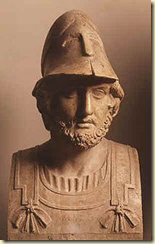
One man who fought at the Battle of Marathon was the Athenian general and politician Themistocles. He lived from 524 BCE to 459 BCE. One of his main goals was to increase the naval power of Athens and began his campaign to do so after being elected to the position of archon in 493 BCE. It is believed that he acted as one of 10 Athenian generals during the Battle of Marathon.
After the Greeks defeated the Persians, there was a temptation on behalf of the Athenians to divert money away from the navy into other areas that needed funding. Themistocles didn’t agree with this plan. He wanted the Athenian navy to remain strong and managed to convince the Athenians that the people of Aegina were an ongoing danger to Athens. This wasn’t actually the case but because of this, the Athenians were willing to build a new fleet made up of 100 triremes which made them a powerful naval force that was very difficult to defeat.
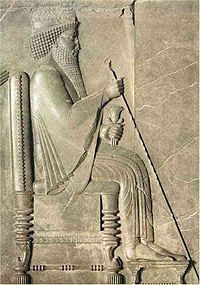
Themistocles used subterfuge in order to give Athenians the advantage during the second Persian invasion, which took place from 480 BCE to 479 BCE. This time, instead of Darius trying to punish Athens and Eretria, the second invasion was an attempt by Darius’ son, King Xerxes I, to completely conquer Greece altogether. It was believed that Themistocles was sending messages to Xerxes. He claimed that some of Xerxes’ allies, the Ionians, were actually much less loyal than they actually were. He also sent messages to the Persians which stated that the allied Greek navy was in a much worse condition than it actually was.
Not only did Themistocles manage to cause problems within the Persian army, he was also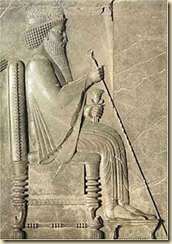 able to find out important information that gave the Greek soldiers the advantage at the battle of Salamis. This gave the Greeks the upper hand and made it possible for them to eventually defeat the Persians at the Battle of Plataea that ended the second invasion.
After the second Persian invasion, Themistocles’ career began to go downhill. He continued to be an important political figure in Athens but in the process, he earned the hostility of Sparta, a sister state of Athens. He ended up alienating the people of Athens and was ultimately ostracized in either 471 BCE or 472 BCE. After that happened, he travelled to the Argos where he lived in exile. Ultimately, he ended up in the service of the Persians under King Artaxerxes I. He ended up becoming a governor of Magnesia, an ancient Greek city that was located in Anatolia. He ultimately died in 459 BCE of natural causes.
By: The Scribe on Friday, March 25, 2011
Anyone who has studied French history or watched the movie The Messenger is likely  familiar with the story of Joan of Arc, Maid of Orleans. Joan lived from 1412 CE to 1431 CE and was noted for leading the French army to victory in several battles of the Hundred Years’ War. Whether or not you believe she had divine guidance the fact is that she did have a strong belief in God, and her actions did change the history of France forever. She was sold to the English and ultimately burned to death at the stake. Hundreds of years later, she was beatified and then canonized and has since become one of France’s patron saints.
While she may have lived a pious life, some of her companions certainly did not. One of the most notorious was Gilles de Rais who lived from 1404 CE to 1440 CE. While he is known as one of Joan of Arc’s companions, his actions during the war are vastly overshadowed by his actions as a serial killer who slaughtered many children during the years between 1432 CE and 1440 CE.
Gilles’ military career was a distinguished one. He was known for his recklessness and bravery on the field of battle and was present when Joan of Arc ended the Siege of Orleans, one of the turning points of the Hundred Years’ War and her first military victory. Some of his rewards for valor in battle and military actions included being made a Marshal of France and the awarding of letters patent that allowed Gilles to add the fleur-de-lys to his coat of arms.
After Gilles retired from military duty and public life, he began to change his lifestyle. He constructed a chapel where he officiated. He also staged a theatrical spectacle that ended up almost bankrupting him. He was even forced to sell off his family properties in order to bring in the money needed to support his lifestyle. He also began to have a deeper interest in the occult. According to records at his trial, Gilles met a man named Francesco Prelati who convinced Gilles that regaining his fortune would be possible if he were to sacrifice children.
Gilles de Rais not only killed children he performed unnatural acts on them before their death and would often dismember them once they were dead. Many of the unpleasant details that came out at his trial were furnished by Etienne Corrillaut, a body servant of Gilles de Rais. While it was known that he had killed many children, the exact number is not known. Many people feel that the numbers are much higher than the 80 to 200 children he is commonly believed to have killed. Many peasants who lived around his castle claimed that their children had begged for food at the castle and then were never seen again.
Gilles de Rais’ crimes would likely have taken much longer to come to light if he had not kidnapped a priest in 1440. The following investigation turned up evidence of his heinous crimes and massive amounts of testimony was unearthed. Henriet (another of Gilles’ body servants) and Corrillaut testified about his crimes and Gilles also confessed. All three of the men were hung and then burned although Gilles’ body was removed from the flames and later buried at a monastery in Nantes.
By: The Scribe on Thursday, March 24, 2011
In many ancient civilizations, your social position was set at birth. It was almost unheard of for a commoner to ever achieve a position of importance in a royal court. When someone did, it usually sent ripples through society and was such a massive departure from what was normal that it often caused more problems than it solved. There have been some notable exceptions to this, such as Imhotep. This was a commoner who became so important in Ancient Egypt that not only was he depicted on artwork alongside a pharaoh, he was also deified in the years following his death in 2600 BCE.
In Ancient China, a similar situation arose in the form of Lu Buwei. He lived from 291 BCE to 235 BCE, during a period of time known as the Warring States Period. Although there were many states that were at war, the State of Qin managed to dominate the others and its ruler became the first Emperor of a unified China. Lu Buwei had started his life as a merchant but was able to attain the position of Chancellor of China, the highest ranking official in Imperial China. During the Qin Dynasty, which lasted from 221 BCE to 206 BCE, the Chancellor of China acted as the head of all of the civil service officials.
According to a biography of Lu Buwei, he had apparently managed to amass a lot of wealth as a travelling merchant. While travelling, he met Prince Yiren who had been sent to a rival state as a political hostage. It was Lu Buwei that managed to arrange for Yiren’s return to Qin where he was adopted as the heir of Lady Huayang, a concubine who had been promoted to the primary wife of the Kin of Qin. Yiren’s name was changed to Chu after his adoption as heir.
Lu Buwei had many people in his household. One was a dancing girl that was so beautiful that Chu became infatuated with her and took her as his courtesan. Her son Zheng would eventually become the first Emperor, Qin Shi Huang.
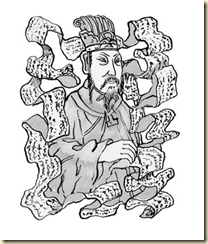 There were many rumors that surrounded Lu Buwei. One was that he was the father of Qin Shi Huang and not Chu. This rumor followed Lu Buwei for quite some time and is still being passed on today. Another rumor was that he plotted with the Queen Dowager in order to permit her to carry on many illicit sexual relationships including one with a man by the name of Lao Ai. She became pregnant by Lao Ai and bore a son. A revolt took place in 238 BCE. This failed but as a result, Lao Ai was executed and Lu was banished to Shu.
In 235 BCE, Lu committed suicide rather than be executed by the Emperor. While he had lived, his scholars and officials had attained a lot of power within the court but this was all destroyed when Lu was exiled.
Lu Buwei is regarded in several different ways depending on whether you are studying Chinese or Western historical accounts. To the Chinese he helped bring about one of the worst events possible: the unification of China. To the West, he is seen as a wise counselor and a patron of both literature and culture.
By: The Scribe on Monday, March 21, 2011
There have been many reports in the news about Mayan predictions that the world will end in December of 2012. However, there are likely just as many individuals who are arguing about what this means for the world as there are reports to argue about. A great number of people believe that the world will literally end on the date predicted in the Mayan long count calendar. But the actual prediction says something very different.
The Mayan or Mesoamerican Long Count calendar is a complicated system that calculates 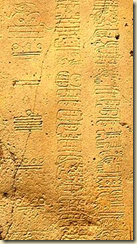 dates based on the number of days that have passed since the world was created. According to the calendar, this equated to August 11th, 3114 BCE according to a variation on the Gregorian calendar that much of the world follows today. This variation is known as the Proleptic Gregorian calendar. The Long Count calendar was one of several that were used to mark the passage of time. They included the Haab’, a 365-day solar calendar, and a 260-day calendar known as the Tzolk’in.
While the other two calendars could be used to identify days that would happen within a 52 year period. If someone needed to identify a date that would fall outside of that 52 year period, they needed a different way to identify it and, in these cases, the Long Count calendar was used instead. The passage of time could be measured in units of 20. A uinal was made up of 20 days. A group of 18 uinals made a tun, which worked out to 360 days. 20 tuns made a unit of time known as a k’atun and 20 k’atuns made a unit of time known as a b’ak’tun. This equaled 144,000 days. On December 20th, 2012, the 13th b’ak’tun since the creation of the world will end.
However, when the Mayans talked about the end of the world, they were not necessarily talking about the destruction of the planet Earth itself. Instead, they believed that there were a progression of different “world ages” and that we are currently living in the fourth world age. It is this that is supposed to be ending in 2012 and that the time will be one of transformation. There has been some argument over whether or not this transformation will be accompanied by the destruction of the planet or some other great apocalypse.
 There have been some Mayan texts found that do mention the end of B’ak’tun 13, the day that correlates to December 20th, 2012. In many of the books, it mentions that great and important events will take place, and in at least one it states that at least one god will return to the Earth to visit his children. There have also been written records that mention dates that take place after December, 2012, something which would be totally unlikely if the Mayans thought the world was ending.
Whether the Mayans’ view of a period of transformation and rebirth, or the modern doomsday beliefs that the world will end will come true remains to be seen. All around the world, people watch and wait to see what the future will bring.
Previous page | Next page
 Greece and Persia were never known for getting along well. In fact, Persia had an almost permanent hatred for Greece and tried to invade several times. The first Persian invasion of Greece took place in 492 BCE. The Greeks were able to defeat them although it took them two years to do so. The final battle of this invasion was the Battle of Marathon. Persia hated Athens and Eretria because they had helped support the cities of Ionia when they revolted against Persia.
  able to find out important information that gave the Greek soldiers the advantage at the battle of Salamis. This gave the Greeks the upper hand and made it possible for them to eventually defeat the Persians at the Battle of Plataea that ended the second invasion.


