By: The Scribe on Friday, January 11, 2008

Twelve years passed without excavations at Zhoukoudian. Finally, in 1949, the political situation was stable enough for the work to continue, and work seasons were held in 1951, 1958-60, and again from 1978-80. A surprising number of additional fossils were found during these excavations:
1959: Almost full mandible belonging to an older female.
1966: Frontal and occipital skull fossils, allowing for a complete skullcap reconstruction. The skull fossils found here belonged to the same individual whose bones had been excavated in 1934-36.
Between the years of 1921 and 1966, the Peking Man fossils that were excavated brought the findings to a total of 6 almost full crania/skullcaps; 19 large skull fragments; many small skull fragments; 15 partial or incomplete mandibles; 157 isolated teeth; 3 humerous bone pieces; 1 clavicular; 1 lunate; and 1 tibia.
 Studies on these fossil fragments then made several conclusions about this ancient man. Peking Man walked upright, like modern humans, and had a similar skeletal morphology – males were between five and six feet tall (about 5’11”), with the women just under five feet (about 4’73”). However, despite all the study done on the physical aspects of the people and examinations of cranial capacity… there is little that can be actually learned about Peking Man from fragments of bone. Instead, it’s the material remains that really makes a difference.
Fortunately, plenty of mammal fossils, ash piles, and other artifacts were found at the dig locations! Around 118 animal fossils were recovered, and reportedly about 100,000 other items were collected from the site – nothing was left behind, just in case it might provide some clue about Peking Man’s background.
The recovered stone tools from Zhoukoudian were made with various types of rock, which seems to suggest an aesthetic appreciation for different textures and densities – everything from vein quartz, to flint, to sandstone, to quartz crystals were used, alone with boulders and cobble to assist in tool creation. The tools were also made using different methods as time progressed!
Peking Man’s tool-making proficiency is often divided into three stages: in the early period, the artifacts were mostly middle to large, and typically made of quartz and sandstone. The flaking technique here is known as ‘block on block’ or ‘anvil technique’ – the large core rock is actually struck against a large, stationary rock (an “anvil”) to remove flakes of stone In the middle stage of tool industry, this manufacturing style was abandoned and a ‘bipolar technique’ was used, a modification of the first method. In this case, the core is placed on the anvil as support, and then struck with another object to function as a ‘hammer’, compressing the stone at both ends and causing the rock to shatter into hopefully usable pieces.
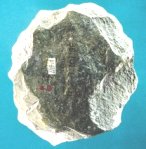 Unfortunately, both methods give very little control over the stone and the pieces that fly off it, creating rather dangerous and extremely sharp rock projectiles! Naturally, Peking Man wanted to find something better, and so the late stage of tool making was far more advanced. Tools became much smaller, were higher quality, and semi-translucent quartz was used for most of the objects. The technique used was called ‘direct percussion’: the core is held in one hand, and stuck with a hard hammer stone to remove the flakes, giving the flintknapper very close control of the object and the size of flakes that are removed.
But even more interesting? Peking Man had fire…
Want to read more?

Tomorrow: Part 3 of course!
By: The Scribe on Friday, January 11, 2008

Much of the information that exists about ancient Egypt comes from the burials of ancient pharaohs and the massive structures they commissioned in memorial of themselves – but what about the average person who lived in ancient Egypt? What about the middle class workers, the typical Egyptian who went to work every day to make a living, and came home at night to his family? Historically, very little time and effort has been put into understanding the common people of ancient Egypt, when in reality, it was their work that shaped the nation – no nation prospers without the help of its people, and there were far, far more average citizens than royalty!
An enormous stepping stone toward understanding the lives of the average citizen in ancient Egypt has come in the form of a rare, middle-class tomb found at Abusir, an ancient necropolis used during the 5th and 26th dynasties. The tomb dates back to the Old Kingdom, and perhaps even more shocking – it was fully intact upon discovery, having remained undisturbed for almost 4,500 years.
The man buried inside lived during the 5th dynasty, and according to archaeological observations, was a priest and politician in the Old Kingdom. He was considered “upper middle class” for the time, which placed him below the nobles but higher up in the social scheme than the lower class. The burial chamber was considerably smaller than royal officials or nobles – the room was about 10 meters below ground and had just enough room to pack in the body and a pile of personal effects and offerings: it was 2 meters by 4 meters in total.
Contrary to what many people think of when it comes to ancient Egyptian tombs, this tomb held no gold or silver – but the information gleaned was infinitely more valuable. Located behind a mud-brick wall in an ancient burial shaft, there were dozens of artifacts which are considered “ceremonial”: more than 80 miniature limestone vessels, 10 sealed beer jars, a small jug for perfume, and cups and plates for symbolic food and drink offerings. In addition, four small canopic jars were present – special jars used to hold the ‘important’ organs of the deceased after mummification.
The body rested inside a sarcophagus, but since the burial was done in the Old Kingdom – before the mummification process was perfected – the mummy was in an advanced state of decomposition. However, the same amount of care was given to his preservation: there were hundreds of faience beads inlaid on the burial wrappings, and his 2-meter long, gold-tipped walking stick was buried at his side. In addition, there was a wooden scepter in the sarcophagus that Neferinpu had the right to hold during his lifetime as a symbol of his seniority.
It was a false door to the tomb that revealed who Neferinpu was and why he was buried here. According to the inscriptions, he was part of the administration for two rulers during the 5th dynasty, holding dual posts of both priest and administrative assistant. He was likely responsible for some building projects, as was the custom, but even so would not have been considered part of elite society. During his lifetime, he would have been financially well-off – perhaps even considered “rich” by some – but not in the way that the elite members of society were.
Instead, Neferinpu probably lived comfortably off his salary, but remained part of ancient Egypt’s upper middle class. He was quite apparently loyal to whoever sat on the throne – considering he was able to sit for two administrations without getting deposed or replaced, and as a result, he was probably an individual who was very good at his job. Finding the undisturbed burial has revealed quite a bit about ancient Egypt’s everyday people – something which has, until recently, been a mystery.
Want to read more?


Tomorrow: Greek Goddess of Hygiene!
By: The Scribe on Thursday, January 10, 2008

For decades, scientists believed that ancient cave bears which lived around the same time as prehistoric humans were nothing to worry about – they were supposedly the ‘gentle giants’ of the time, vegetarian animals that thrived on berries and roots…
Unfortunately for these human ancestors, that no longer appears to have been the case. Along with saber-toothed lions, man-eating birds of prey, and dire wolves, ancient cave bears can now be added to the list of terrifying predators that prehistoric humans struggled to avoid in their fight to survive.
New bones found in the Carpathian mountains indicate that the ancient cave bears – named ‘Ursus spelaeus’ or ‘cave bears’ since their bones have been commonly found in caves – have caused scientists to throw away the idea that all these bears were largely herbivores.
For 30 years, studies of their skulls, teeth and jaws revealed the same long-term wear as other herbivores, and the bones of the bears had very low levels of nitrogen-15. Nitrogen-15 is something accumulated by all animals, but carnivorous animals build up far more nitrogen-15 in their bones than herbivores. Oddly enough, these new bones from the Carpathians had quite the opposite results from previous cave bear bones, with extremely high levels of nitrogen-15.

The bones were quite difficult to retrieve, located within a cave where the entrance had collapsed thousands of years before. In order to reach the back rooms, archaeologists had to wade through a spring and then swim underwater across an underground river, using scuba gear. To get up into the cave, climbing equipment was needed.
So far, the cave bear bones from this location are the only bones that show signs of carnivorous activity. The question that arises is whether certain regions of Europe were home to carnivorous Ursus spelaeus while other regions were strictly occupied by herbivores, or whether these bears practiced a degree of bear-bear cannibalism. There are examples of bear cannibalism from a cave in Western Turkey, where a young bear’s skull holds tooth marks from a larger bear.
This discovery might also shed some light on the rituals that were practiced by ancient humans, who often deposited large amounts of cave bear bones inside of caves that they had taken over and occupied themselves. One theory is that if humans and bears were competing for food resources and living space – assuming that there were more meat-eating bears than just the group found at this one Carpathian cave – humans might have found the bears compelling, and felt the need to venerate or honor them in some way.
Want to read more?


Tomorrow: More Ancient Standard
By: The Scribe on Wednesday, January 9, 2008
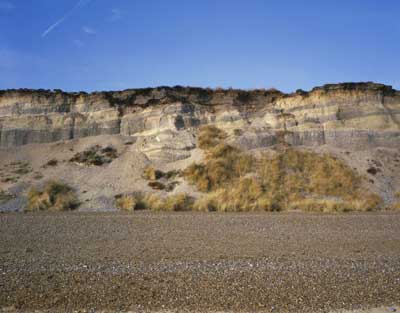
For the first time since its discovery, Britain’s very own underwater “Atlantis” is likely to finally be revealed and examined. The town under investigation is the lost city of Dunwich, located off the coast of Suffolk.
This ancient British town was considered lost until the 1970s, when marine archaeologist Stuart Bacon located the city’s debris underwater. Since that time, dives have been conducted on the site, but it wasn’t until recently that high-tech underwater cameras were developed that could massively improve researchers’ ability to take accurate images of the city as it sits on the seafloor.
An expedition is planned for 2008 that will make use of the latest sonar, scanning equipment, and underwater cameras, in order to build an accurate picture of what the ancient sunken city looked like before it was submerged. Currently, the city lies between 3 and 15 meters below the surface.
About 1,500 years ago, Dunwich was the capital of East Anglia – and at this point, divers have found three churches and one chapel, though the silt levels in the water are so high that visibility for the sunken city is no more than a few centimeters.
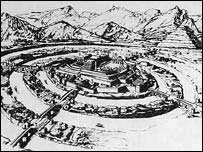 During the city’s height, it was a prosperous seaport that specialized in the wool and grain trade, boasting a population of around 3,000 people. Historical texts from the time have identified that the city had about eight churches, three chapels, two hospitals, and five houses for various religious orders – though it is likely that there were even more churches at the city during its most prosperous period, considering the size of the population.
The decline of the city began in 1286 AD, when the East Anglian coast was hit by a sea surge that began to erode the coastline. Since Dunwich literally sat right on the coast, the city was gradually claimed by the sea as the coastline eroded over a period of time. According to ancient reports, after the storm of 1286 had swept away a large part of the town, the residents banded together to try and save the harbor – but in 1328, a second storm destroyed it and the entirety of a neighboring village a little way up the coast.
In 1347, another storm swept around 400 houses into the sea, and longshore drift set in to reduce the city to what is visible today; the Dunwich buildings that currently sit on cliffs were once at least a mile inland. According to local legend, there are certain tides where a person can stand on the shore and hear church bells underneath the waves.
Want to read more?


Tomorrow: More Ancient Standard
Previous page | Next page
