By: The Scribe on Thursday, August 16, 2007
![The ancient training grounds at Olympia.]](http://ancientstandard.com/images2/palaestra.jpg "The ancient training grounds at Olympia.]")
While the modern-day Olympics have certainly changed since their inception in 776 BC, one thing has certainly remained the same: all athletes, past and present, have been concerned with their diet. An athlete’s mealtime can make or break his performance, which the ancient Greeks were well aware of. In fact, food historians are realizing that the diet of the first Olympians wasn’t that far off from what people in the 21st century would identify with the popular “Atkins” diet!
There are a wealth of Greek and Latin texts, such as The Deipnosophists – or in English, The Philosopher’s Banquet – which is a 15-volume tale of a long feast that was written around 200 AD, wherein food origins and quality are discussed at length. This tale, written by a Greek named Athenaeus, centers around a banquet where diners talk extensively about all different kinds of food and where it came from – and not only that, but each character provides the ancient literary source for their own words! Essentially, it’s an ancient document wherein the characters talk about food using quotes from other real, ancient documents.
Unfortunately, out of the 1,500 documents that were cited in the work, only 15 still survive. Still, these documents provide valuable insight into ancient Mediterranean cuisine and how it was prepared.
For most people, a regular diet would consist of items like bread, fruit, and vegetables, while fish was the primary meat source for an average citizen. But Olympians, who typically came from the upper social classes in ancient Greece, had families who could afford to feed their children heartier meats and other protein-rich foods that helped to condition and build muscle.
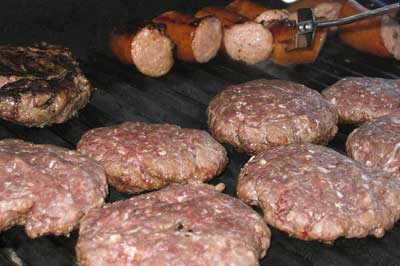
Although the earliest reports of Olympic diets seemed to center around eating mostly cheese and fruit, the focus was shifted toward meat somewhere along the way. Apparently, this happened after one ancient Olympic runner won multiple competitions after eating a meat-only diet – which naturally started a copycat craze. The athletes were also advised to avoid eating bread right before their competition, and to snack instead on dried figs.
The Deipnosophists also includes this intriguing tale about a wrestler named Milon of Croton, who is recorded to have attended six different Olympic games and won competitions at each one:
“Milon of Croton used to eat 20 pounds of meat and as many of bread, and he drank 3 pitchers of wine. And at Olympia he put a four-year-old bull on his shoulders and carried it around the stadium; after which, he cut it up and ate it all alone in a single day.”
– Theodorus of Hierapolis’ “On Athletic Contests”, cited by Athenaeus.
Want to read more?


Tomorrow: Pointy teeth are not just for vampires.
By: The Scribe on Wednesday, August 15, 2007
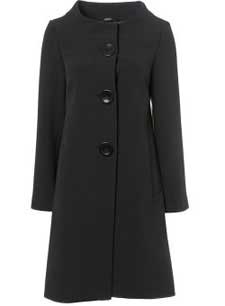 It’s no secret that the British have a long history of following European fashion trends – however, it now seems that instead of a decades-long devotion, fashion-conscious Brits have been at it for centuries.
Studies on 1,700 Anglo-Saxon graves at several settlements from the mid-6th century have revealed that people living in England at the time often wore outfits that were more typically found in northern France and west of the Rhine. Some of these pieces were things like front-fastening coats with brooch clasps, which might not be all that out of place on the modern Parisian catwalk.
Although very few pieces of art that depict humans from the 5th to 7th centuries have survived from this area, the Anglo-Saxons preferred to bury their dead instead of cremate them, placing the bodies in graves while fully clothed. While none of the items of clothing have fully survived the passing centuries, some smaller squares of fabric have lasted, typically around the areas where the clothes were fastened.
This is highly fortunate, because in order to recreate a certain kind of fabric, all that is needed is a small square – it contains information about the weave structure and density, the kind of yarn or other material used, and in some cases, even the kind of dye.
Some of the French garment styles that the Anglo-Saxons copied 1,400 years ago include: the rounded neckline; A-line coats fastened with a brooch and cinched at the waist; modest, floor-length skirts; vertical, raised trimlines enhanced with various colors; naturally dyed or uncolored fabrics.
Want to read more?


Tomorrow: Ancient Olympians on the Atkins diet!
By: The Scribe on Tuesday, August 14, 2007
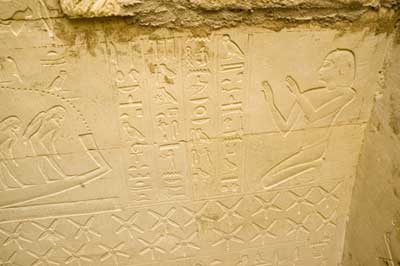
A necropolis just south of Cairo, once used for burials by Egypt’s royal family in the 5th dynasty, was apparently selected for an extreme makeover courtesy of the nobles of the 26th dynasty, after it had fallen into disrepair. Never mind that the burial grounds were 2,000 years old – why build a bunch of new chambers when these ones would work just fine with a fresh coat of inscriptions?
The 5th dynasty’s reign was rather minimal to begin with, spanning only the period between 2498 and 2345 BC. At this time, Egypt’s capital was the city of Memphis, although it was shortly put into disuse when the next dynasty of nobles came into power. Twenty centuries afterward, the royal family of the 26th dynasty wanted to be buried near the temples of Saqqara – which is fairly close to Memphis – and this seemed like the perfect place to do it!
So, the burial chambers at the necropolis were recycled for the 26th dynasty’s own purposes – and what they did to the place has been described as “gentrification”, which means that they fixed it up to look excessively refined and elegant. One of the most interesting recycled burial chambers at the site was actually that of a royal scribe, named Menekhibnekau, who lived during the 5th dynasty.
The chamber is about 20 meters underground, and the shaft entrance seems to have been inspired by the nearby step-pyramid at Saqqara. Inside the burial chamber itself, there was a vaulted ceiling, completely covered with stars for decoration. There were also two large sarcophagi: one that appeared to be an exterior coffin, made from limestone, while the other was human-shaped and was made out of dark green sandstone called greywacke. Both sarcophagi were also thoroughly covered with religious texts.
Excavators of this burial chamber could easily tell it had an extreme makeover, due to the vastly different style of decoration on the walls of the chamber. The south side was decorated with a chapter of text from the Book of the Dead and images of guardsmen, while the east and western sides had pictures of figures that represented Time, alongside a solar barque and additional sacred texts.
Although this chamber is one of few that can conclusively be said was redecorated, there are many more burial chambers at the necropolis that have yet to be examined – hopefully these will provide another look into just how extensive the redecoration project was!
Want to read more?

Tomorrow: Brits have always liked French fashion
By: The Scribe on Monday, August 13, 2007

The ancient town of Tiberias is located on the western shore of the Sea of Galilee in Israel, and is perhaps most famous for its prominent place in Jewish history – even though its origins are situated in Rome, since it was built by around 20 AD by Herod Antipas, son of Herod the Great, and named after the Roman Emperor Tiberius.
Recent excavations in Tiberias have exposed finds that date to the town’s founding during the 1st century, as well as a Byzantine church from sometime between the 4th and 5th centuries AD. The mosaics that were uncovered in this church are incredibly detailed and extremely colorful, and are decorated with geometric patterns of shapes and crosses.
In addition, there are three inscriptions written in ancient Greek that appear to be dedications – part of one of the inscriptions begins: “Our Lord, protect the soul of your servant…”. Another mosaic has a prominent medallion in the center with a large cross inside and the Greek letters alpha and omega, which was a typical Byzantine monogram for the name of Jesus.
Since this is the oldest church to be discovered in Tiberias thus far, it is interesting to see that the buildings which surrounded the church in ancient times were far from religious – they were typical public buildings, including a bathhouse, some shops, and a basilica. What is more, the church was built right in the center of the city, which falls contrary to the previous notion about Christian and Jewish relations at the time.
It was originally theorized that the Jewish leadership at Tiberias prohibited Christians from establishing their own places of prayer in the middle of the town, instead claiming this area for exclusively Jewish religious needs. The position of this church now disproves the theory conclusively – apparently town planning and Christian-Jewish relationships at Tiberas during the Byzantine era were not as straightforward as previously thought.
Although the exact date of the church’s construction is not yet known, there was a decree issued in 427 AD that prohibited the placement of crosses in mosaic floor designs, after it was decided that stepping on a sacred symbol was not appropriate. Since there are a large number of crosses in the mosaic designs from this church, at the very least, it was constructed before the ban was put into place.
Want to read more?

Tomorrow: Extreme home makeover…in ancient Egypt!
Previous page | Next page
